


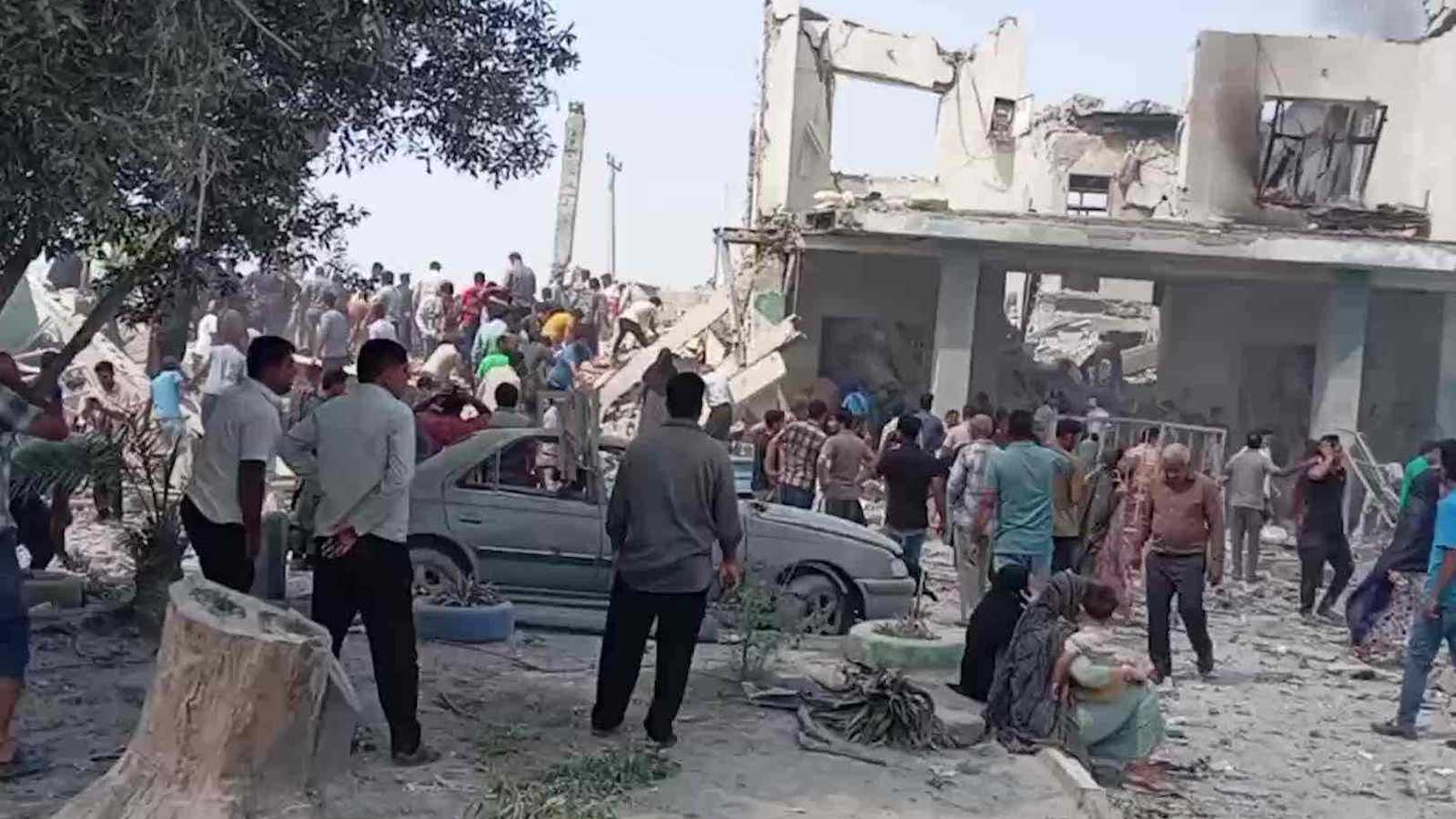
A United Nations-backed panel of human rights experts has concluded that there are reasonable grounds to believe the United States committed war crimes during military strikes on civilian infrastructure in southern Iran in February 2026. According to findings released by the independent UN fact-finding mission and reported by Al Jazeera, two separate attacks resulted in indiscriminate civilian casualties and structural destruction that violate international humanitarian law.
The investigation focused on twin bombardments conducted on February 28, 2026. The first involved a Tomahawk cruise missile strike against an elementary school in the southern Iranian city of Minab. The second involved precision-guided missiles scattering tungsten submunitions over a marked sports facility and adjacent residential neighborhood in Lamerd. Investigators established that both sites were clearly identifiable as civilian structures at the time of the operations, raising critical questions regarding intelligence protocols, targeting decisions, and proportionality under the law of armed conflict.
Targeting Analysis and Munitions in Populated Zones
The conclusions published by the fact-finding mission highlight the severe civilian toll caused by specialized air-launched and sea-launched weaponry. In Minab, the destruction of the educational facility occurred during daytime hours, causing immediate casualties and destruction of municipal infrastructure. In Lamerd, the deployment of tungsten pellet submunitions—designed to maximize anti-personnel impact across wide surface areas—spread high-velocity shrapnel across both the athletic center and nearby family homes.
International legal frameworks, including the Geneva Conventions and customary international humanitarian law, strictly prohibit indiscriminate attacks that fail to distinguish between military objectives and civilian populations. The UN mission noted in its formal statement that following joint and unilateral actions on February 28, the available evidence provided reasonable grounds to categorize the operations as unlawful indiscriminate attacks. Under Rome Statute provisions and broader customary norms, launching strikes with the knowledge that incidental civilian loss or damage will be clearly excessive in relation to the concrete military advantage anticipated constitutes a war crime.
The disclosures come as the White House presents a contrasting public narrative regarding the trajectory of the Middle East conflict. President Donald Trump told reporters that the United States is “hopefully toward the end” of military engagements with Tehran, adding that direct communications with Iranian officials had taken place. However, the UN panel’s findings complicate Washington’s diplomatic posture and intensify international scrutiny over accountability mechanisms for civilian deaths incurred during the campaign.
Diplomatic Strains and Strategic Realignments
The legal determination by the UN panel intersects with severe diplomatic frictions across Europe and the Middle East. Parallel to the publication of the report, the Iranian Foreign Ministry announced the expulsion of a Swedish diplomat from Tehran in a direct tit-for-tat response to Stockholm ordering an Iranian embassy representative to leave Sweden a day earlier. Iranian state officials condemned Western diplomatic measures while reiterating that external pressure would not alter Tehran’s defense calculus.
Former Iranian diplomat and political analyst Abbas Khameyar observed that Tehran views time as a strategic asset against Washington’s economic and naval pressure. Commenting on the situation to Al Jazeera, Khameyar noted that persistently elevated global energy prices, domestic political debates within the United States, and widespread public opposition to prolonged military entanglements strengthen Iran’s position. He emphasized that the Iranian government has implemented strategic rationing and supply chain interventions to absorb sanction shocks while simultaneously maintaining military readiness along maritime chokepoints.
At the same time, regional powers in the Persian Gulf are balancing competing security demands. Professor Cyrus Schayegh of the Geneva Graduate Institute highlighted to Al Jazeera that countries such as the United Arab Emirates and Saudi Arabia face acute strategic dilemmas. While the UAE recently restricted formal trade links with Tehran, leadership maintained direct high-level engagement with the Iranian presidency during multilateral summits. Meanwhile, Riyadh faces ongoing security threats from Houthi forces in Yemen without direct US intervention, compelling Gulf capitals to explore independent diplomatic channels with Iran and Oman to mitigate regional escalation risks.
Broadening Ground Conflict and Accountability Next Steps
While international legal bodies examine the strikes in Minab and Lamerd, military instability continues to escalate along critical maritime corridors. Ground combat between Yemeni government forces and Houthi fighters has intensified around the strategic Kahbub mountain range overlooking the Bab al-Mandeb strait and Mayyun Island. Joint government brigades, backed by Saudi airstrikes and local combat formations, reported repelling heavy Houthi attempts to advance toward maritime outlooks.
The UN fact-finding mission’s formal findings are expected to be transmitted to the UN Human Rights Council and relevant international judicial forums. Legal experts note that while Washington is not a signatory to the International Criminal Court, the documentation of potential war crimes puts systemic pressure on the US Department of Defense to conduct transparent internal investigations and provide formal explanations regarding targeting intelligence in southern Iran. As diplomatic talks and regional clashes proceed in parallel, the UN findings establish an authoritative evidentiary record that will shape international debates over command responsibility and civilian protection.