


Performance and Enterprise Value
Anthropic has officially launched Claude Opus 5, its latest flagship AI model designed to bridge the gap between high-end frontier intelligence and operational cost-efficiency. According to company documentation released on July 24, 2026, the model is available immediately across all platforms, maintaining the same pricing structure as the previous Opus 4.8 iteration—$5 per million input tokens and $25 per million output tokens.
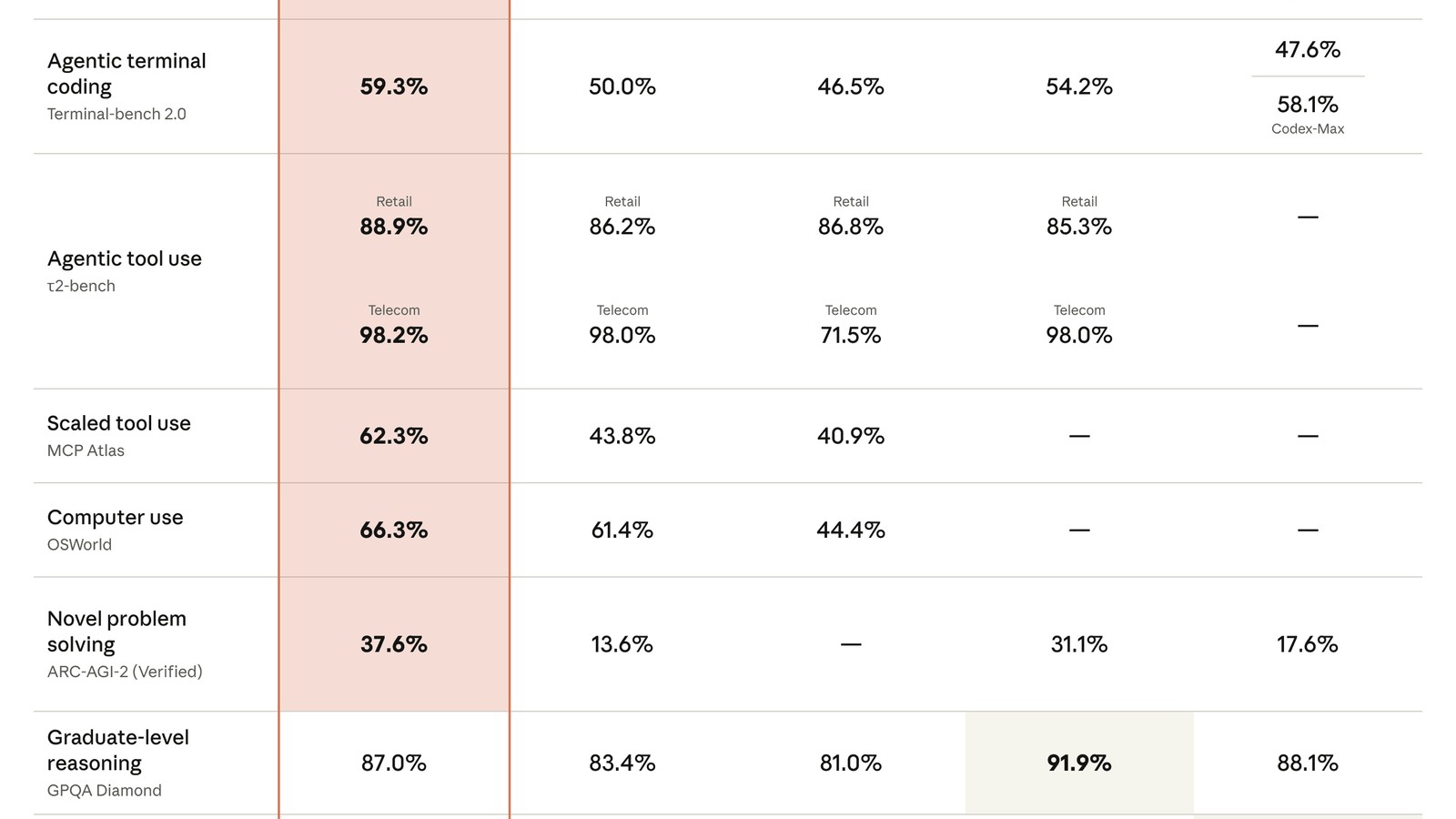
Early benchmarks indicate that Opus 5 significantly outperforms its predecessor in complex knowledge work and coding tasks. On the Frontier-Bench v0.1 evaluation, the model reportedly doubles the performance of Opus 4.8 while simultaneously reducing the cost per task. Dianne Penn, Anthropic’s head of product management for research, noted that enterprise feedback has centered on the demand for high-value, cost-effective tooling as organizations navigate the current competitive landscape.
Technical Capabilities and Benchmarking
The model displays notable advancements in agency and self-correction, which Anthropic highlights as a key differentiator for business workflows. In testing scenarios, Opus 5 demonstrated an ability to verify its own logic, such as building custom test harnesses for software development or identifying root causes in complex codebases where previous models had failed. On the ARC-AGI 3 benchmark, which assesses novel problem-solving, Opus 5 achieved scores three times higher than its nearest competitor.
Despite these gains, Anthropic remains transparent about the model’s limitations. In fields requiring specialized offensive cybersecurity and advanced biology research, the company explicitly states that Mythos 5 remains the superior model. While Opus 5 shows improved capabilities in identifying software vulnerabilities, its ability to generate exploits remains strictly constrained by internal safety protocols.
Safety and Deployment Safeguards
Anthropic has implemented a tiered safety approach for the new model. While Opus 5 is more generally capable, its cyber classifiers are designed to be less restrictive than those found in the Fable 5 model, allowing for legitimate vulnerability assessment in source code. However, the system actively blocks “binary-based” scanning and automated exploit generation. To accommodate specialized needs, the company continues its Cyber Verification Program (CVP), providing vetted organizations access to less restricted versions of the model.
The deployment also introduces new beta features, including mid-conversation tool switching and automatic API fallbacks. The latter allows developers to configure their systems to route requests that trigger safety classifiers to a secondary model, such as Opus 4.8, ensuring continuity of service without complete request blockage.