


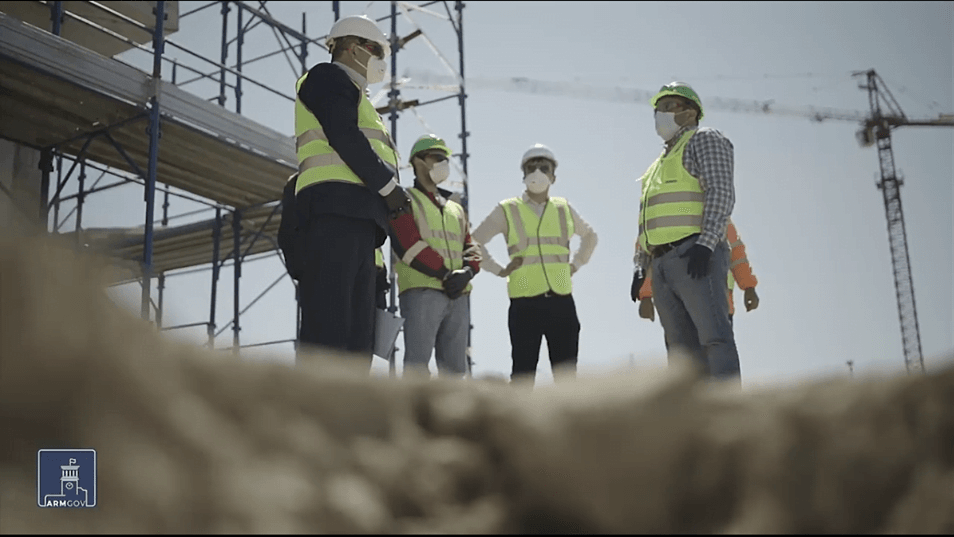
Yeghiazar Vardanyan, Chairman of the Urban Development Committee of Armenia, highlighted significant challenges related to the renewal of the country’s housing stock during a press conference summarizing the results of 2024. Despite increasing construction volumes in recent years, Vardanyan noted that only 1-2% of the total housing stock is renewed annually.
According to Vardanyan, over 60% of the more than 19,000 apartment buildings in Armenia were built before 1980. This indicates that a significant portion of the housing stock is now physically and technically outdated. Many of these buildings, constructed during the Soviet era, no longer meet modern safety and energy efficiency standards, presenting substantial risks to structural integrity and sustainability.
Vardanyan emphasized that housing stock renewal requires long-term and consistent construction programs. However, the current renewal rate of just 1-2% per year is insufficient to prevent further deterioration. Considering population growth and contemporary housing demands, a more aggressive strategy is needed to ensure the steady renewal and construction of new housing.
The issue faces several obstacles. First, current construction programs are primarily concentrated in the capital and larger cities, often neglecting regional areas. Second, the slow pace of renewal reflects systemic challenges in the construction sector, including limited financing, high material costs, and bureaucratic barriers to urban planning.
Against this backdrop, Vardanyan’s remarks underscore the need for a comprehensive overhaul of Armenia’s housing policy. A robust and inclusive strategy must not only aim to increase construction volumes but also integrate modern technologies, promote energy efficiency, and prioritize regional housing development. Without these steps, the pace of housing stock renewal and preservation will remain inadequate to meet the needs of modern Armenia.