


The Return of Regional Warfare
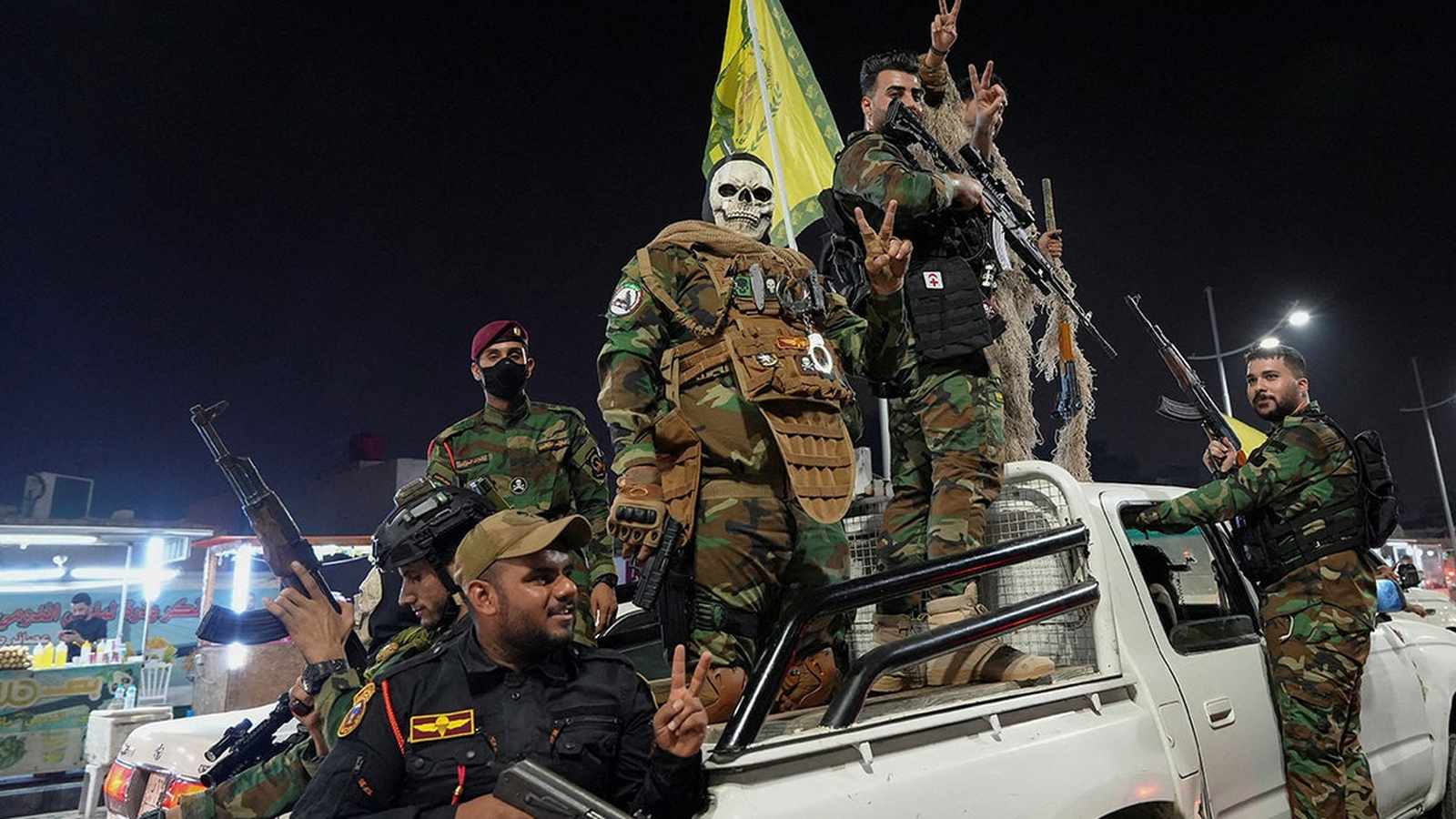
Following a brief, days-long lull in direct hostilities, the conflict between the United States, its regional allies, and Iran has escalated dramatically. In the early hours of Wednesday, July 29, 2026, joint military operations conducted by the United States and Saudi Arabia targeted several facilities of the Iran-backed Popular Mobilization Forces (PMF) across Iraq. The coordinated aerial campaign marks a significant expansion of the theater of operations, demonstrating a tightening security partnership between Washington and Riyadh as they seek to contain Iranian influence and secure vital regional infrastructure.
According to reports from DW and official military statements, the airstrikes killed at least 20 PMF members and wounded 32 others. The PMF, an umbrella coalition of Iraqi militias officially integrated into the Iraqi armed forces but containing factions fiercely loyal to Tehran, confirmed that its headquarters and logistics bases in seven different provinces—including Baghdad, Basra, and Nineveh—were targeted. PMF leadership described the joint strikes as a “dangerous escalation” and a flagrant violation of Iraqi sovereignty, signaling that the militia network may prepare a retaliatory response against Western assets in the region.
The Retaliatory Calculus: Drones, Missiles, and Sovereign Defense
The joint intervention by American and Saudi forces was not an isolated incident but rather a direct response to a surge in hostile actions. US Central Command (CENTCOM) reported that the operation followed more than 30 drone attacks over the preceding 72 hours targeting US military interests and critical Saudi energy infrastructure. The Saudi Defense Ministry confirmed its direct participation in the strikes, emphasizing its legitimate right to self-defense. Saudi officials noted that the joint airstrikes were specifically designed to neutralize launch sites and storage facilities used by Iraqi militants to target oil facilities in Riyadh and the eastern province of Sharqiya.
The escalation follows a thwarted surprise attack on Tuesday afternoon, during which the Islamic Revolutionary Guard Corps (IRGC) launched multiple ballistic missiles from Iranian territory. CENTCOM confirmed that all incoming projectiles were successfully intercepted by US air defense systems. While official military releases did not specify the exact target, reports from US news outlet Axios indicated the missiles were heading toward a strategic US military installation in Jordan. The IRGC later claimed responsibility for the launch, declaring that the strikes were in retaliation for ongoing US actions against Iranian interests and warning that operations would continue as long as “unlawful and hostile actions” by Western forces persist.
Iraq’s Fragile Sovereignty and Internal Splits
The strikes have plunged the Iraqi government into a severe political crisis. Prime Minister Ali al-Zaidi, who assumed office in May 2026 with a mandate to bring independent armed groups under centralized state control and disarm non-state militias, convened an emergency meeting of Iraq’s National Security Council on Wednesday morning. Zaidi faces the near-impossible task of balancing relations with Washington, which provides essential security assistance, and managing the powerful pro-Iran political and military factions that wield immense influence within Baghdad’s political establishment.
The PMF’s unique status complicates any official state response. Established in 2014 to combat the Islamic State, the coalition was later formally integrated into the Iraqi state security apparatus. However, several of its constituent factions operate under the banner of the Islamic Resistance in Iraq, a transnational network that routinely executes attacks against US bases without the authorization of the formal Iraqi military command. The joint US-Saudi strikes highlight the limitations of Baghdad’s authority and the ease with which Iraqi territory can be transformed into a proxy battlefield.
The Strait of Hormuz and Global Energy Stakes
Parallel to the military escalation in Iraq, the diplomatic standoff over the Strait of Hormuz continues to threaten global energy security. According to diplomatic sources cited by Reuters, Tehran has officially rejected a regional proposal floated by Oman to jointly manage the strategic waterway. The Omani plan sought to establish a 50-50 management framework to secure transit through the narrow passage, which controls the southern side of the strait at its narrowest point. Iranian officials rejected the plan, accusing the United States and Saudi Arabia of utilizing Muscat to advance “unrealistic plans” that do not serve Tehran’s strategic interests.
The Strait of Hormuz has been one of the world’s most volatile maritime chokepoints since February 2026, when the outbreak of the US-Iran war triggered widespread disruptions. Prior to the conflict, the strait carried approximately 20% of the world’s global oil supply. While shipping traffic has not completely halted, Iran’s frequent targeting of commercial vessels as a leverage tool in ceasefire negotiations has driven up maritime insurance costs and forced international shipping firms to navigate highly contested waters under constant threat of drone and missile attacks.
The Trump-Netanyahu Convergence and Diplomatic Spats
The military escalation coincided with high-level diplomatic maneuvers in Washington. Israeli Prime Minister Benjamin Netanyahu met with US President Donald Trump in the Oval Office on Tuesday for a 90-minute closed-door session. The meeting—the first since the outbreak of the war in February—was described by both administrations as “positive and productive,” despite previous public tensions between the two leaders. Netanyahu praised the discussions, stating they focused on their shared objective of preventing Iran from acquiring nuclear weapons. Observers note that Netanyahu is also seeking Trump’s explicit backing ahead of the crucial Israeli elections scheduled for October 27, 2026.
Meanwhile, Iran’s diplomatic relations have frayed in unexpected quarters. Venezuela formally summoned Iran’s ambassador in Caracas, Ali Chegini, to protest “disparaging” remarks made by Iranian Foreign Minister Abbas Araghchi. During discussions regarding negotiations with the United States, Araghchi made a comparison to Venezuela, remarking, “This is not Venezuela, where they take one person and everyone else gets scared and backs down.” The statement was a clear reference to the US capture of former Venezuelan leader Nicolas Maduro on January 3, 2026. Under acting President Delcy Rodriguez, Caracas has moved to restore diplomatic ties with Washington, creating a notable ideological rift with its former close ally in Tehran.
As the conflict enters this high-stakes phase, the joint US-Saudi operations in Iraq indicate that the geographical boundaries of the war are expanding. With ceasefire negotiations stalled and regional proxy networks actively engaged, the risk of a broader, multi-front conflagration remains at its highest level since the war began.