

Quick Read
- Seven Armenian hostages have petitioned the UN, citing the lack of legal recourse in Azerbaijan.
- The detainees were tried in closed military proceedings without access to legal counsel.
- The appeal argues that the detainees are prisoners of war under the Geneva Conventions, not criminals.
A Formal Challenge to Arbitrary Detention
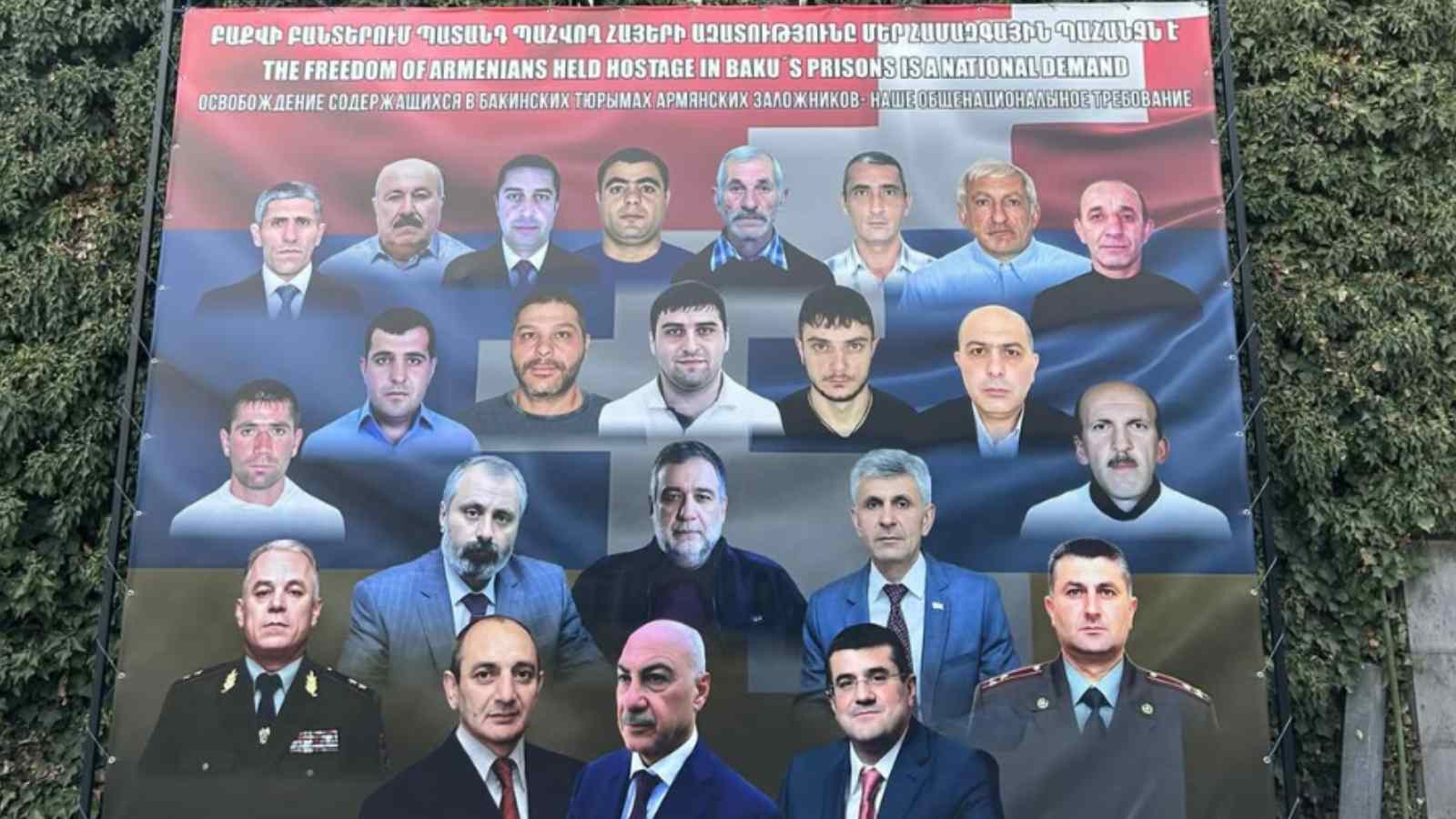
Families representing seven Armenian hostages held in Azerbaijan have submitted a formal petition to the UN Working Group on Arbitrary Detention, demanding the immediate and unconditional release of their relatives. Filed on April 24, 2026, the appeal challenges the legitimacy of the criminal convictions handed down in Baku, framing them as a calculated violation of fundamental human rights and international legal norms.
The detainees—including former Artsakh officials David Ishkhanyan, David Babayan, and Levon Mnatsakanyan—were captured between September and October 2023. Following military proceedings that international observers have criticized as opaque and procedurally flawed, three of these individuals were sentenced to life imprisonment in February 2026. The legal team argues that because these individuals were combatants during an international armed conflict, they are entitled to prisoner-of-war status under the Third Geneva Convention, rendering their current criminal prosecution under Azerbaijani law legally baseless.
The Erosion of Judicial Accountability
The petition highlights a critical breakdown in due process, noting that the detainees were subjected to collective trials without access to their chosen legal counsel. Furthermore, the failure of the Azerbaijani authorities to officially transmit the written verdicts to the convicted individuals has effectively barred them from pursuing any domestic legal remedies. This procedural obstruction, combined with the expulsion of the International Committee of the Red Cross (ICRC) from the country in September 2025, has left the detainees in a total vacuum of independent oversight.
The legal team’s submission emphasizes that the charges—ranging from terrorism to mercenary activity—are not only factually contested but legally incoherent. Under both international law and Azerbaijan’s own penal code, the status of a mercenary cannot be applied to residents of the conflict zone. By labeling these political figures as criminals, the state aims to delegitimize the decades-long push for self-determination in the region, effectively criminalizing political dissent.
The Path to International Scrutiny
- Legal Precedent: The appeal aims to set a standard that could eventually benefit all 19 identified Armenian hostages, not just the seven currently named in this specific filing.
- Human Rights Crisis: The absence of the ICRC has removed the final layer of protection for detainees, heightening concerns regarding potential coercion or mistreatment.
- Institutional Accountability: By engaging the UN Working Group, the families are attempting to bypass a domestic judicial system that has shown itself to be an instrument of state policy rather than an arbiter of justice.
The move to internationalize this case underscores a growing realization that domestic legal channels in Baku are entirely compromised. For the families, this is not merely a legal dispute but a desperate effort to secure human rights protections in an environment defined by systemic ethnic discrimination. As the international community weighs the merits of this appeal, the case serves as a stark indicator of the fragility of rule-of-law principles in the region, where the politicization of justice continues to override the protections guaranteed by international humanitarian law.