


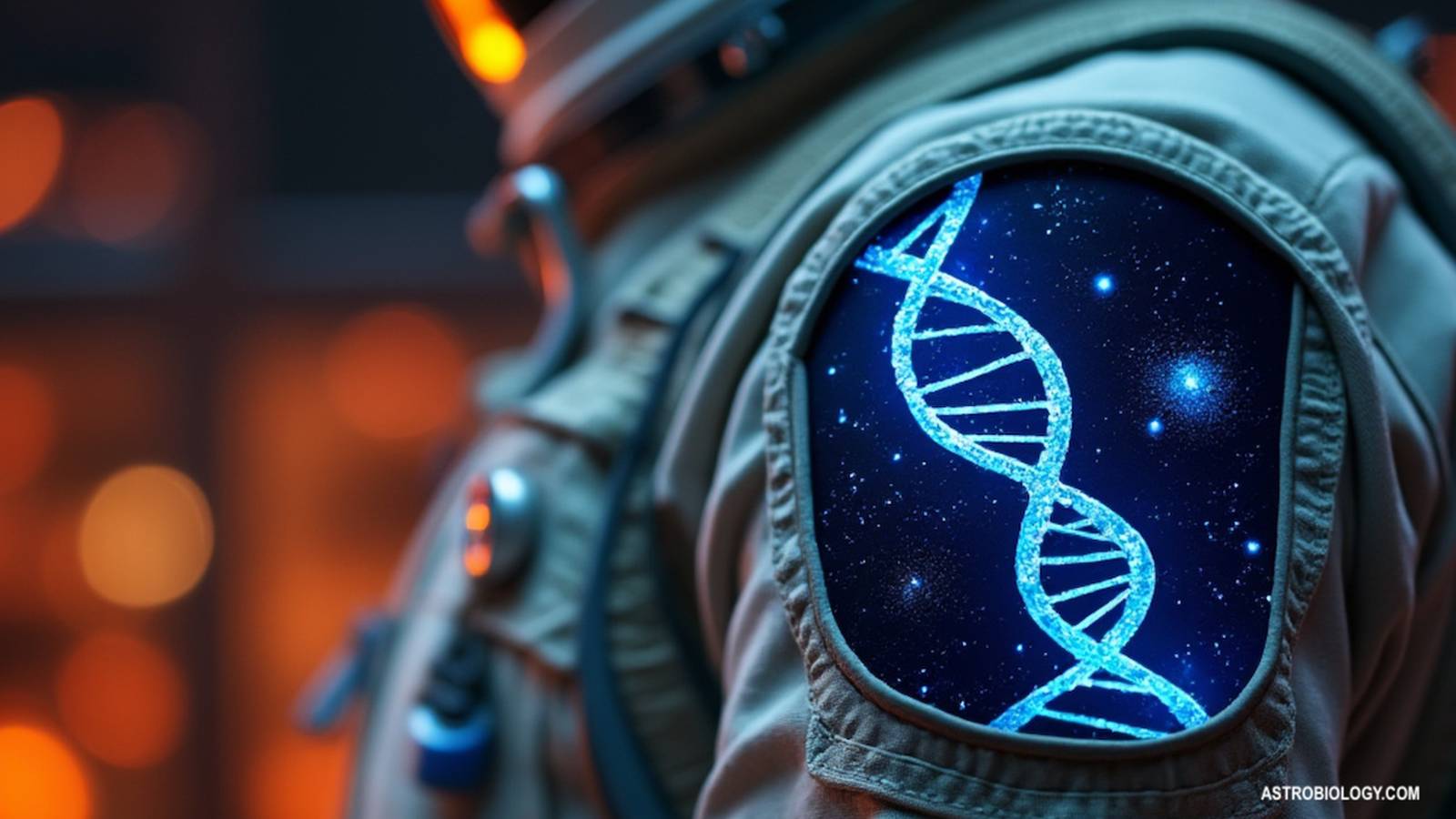
Astrobiology, often referred to as the science of life beyond Earth, is a multidisciplinary field that seeks to answer one of humanity’s most profound questions: Are we alone in the universe? By integrating biology, chemistry, physics, and astronomy, this field investigates the origins, evolution, and distribution of life in the cosmos. From studying extreme life forms on Earth to searching for biosignatures on distant planets, astrobiology represents humanity’s endeavor to understand our place in the universe.
The Foundations of Astrobiology
The formal study of astrobiology began with questions about the origin of life on Earth. Researchers sought to understand the conditions under which life could arise and the chemical pathways that might lead to self-sustaining biological systems. These studies laid the groundwork for exploring the potential for life beyond Earth.
NASA has played a pivotal role in the development of astrobiology as a scientific discipline. In 1998, the agency established the NASA Astrobiology Institute, which brought together researchers from diverse fields to collaborate on questions related to life’s origins and its potential existence elsewhere. The institute’s work included studying extremophiles—organisms that thrive in extreme environments such as hydrothermal vents or acidic lakes—providing insights into the kinds of conditions where life might exist beyond Earth.
Searching for Life in the Solar System
The search for extraterrestrial life often begins in our own solar system. Mars, Europa (a moon of Jupiter), and Enceladus (a moon of Saturn) are prime targets due to evidence of liquid water—an essential ingredient for life as we know it. NASA’s missions, such as the Perseverance rover on Mars, are designed to seek signs of past or present life by studying soil samples and identifying organic molecules.
Europa and Enceladus are particularly intriguing because their subsurface oceans, hidden beneath layers of ice, may harbor environments suitable for microbial life. Future missions, like the Europa Clipper and Dragonfly, aim to explore these worlds in greater detail, analyzing their chemical compositions and potential habitability.
Exoplanets and the Search for Habitable Worlds
Beyond the solar system, astrobiologists focus on exoplanets—planets orbiting stars outside our solar system. Since the first exoplanet discovery in 1995, over 5,000 such worlds have been identified, many of which reside in the so-called “habitable zone.” This is the region around a star where conditions might allow liquid water to exist on a planet’s surface.
Using advanced telescopes and techniques like spectroscopy, scientists study the atmospheres of exoplanets to detect potential biosignatures—chemical markers such as oxygen, methane, or chlorophyll that could indicate the presence of life. Upcoming projects like the Habitable Worlds Observatory and the Nautilus telescope constellation promise to revolutionize this search by providing sharper, more detailed data on distant planets.
Expanding Definitions of Life
One of the greatest challenges in astrobiology is defining life itself. While life on Earth is carbon-based and relies on water as a solvent, astrobiologists consider the possibility of alternative biochemistries. Could life exist in environments dominated by liquid methane, as on Saturn’s moon Titan, or in sulfuric acid clouds, as speculated for Venus? Exploring these questions requires innovative frameworks that go beyond Earth-centric assumptions.
For example, the Quantitative Habitability Framework developed by researchers allows scientists to evaluate the probability of life in a given environment based on known and hypothetical organism models. This approach moves away from binary classifications of “habitable” or “not habitable” and instead provides probabilistic assessments based on available data.
The Broader Implications of Astrobiology
Astrobiology is not just about finding alien life—it also has profound implications for understanding our own origins and future. By studying how life might arise and evolve under different conditions, we gain insights into the resilience and adaptability of life. Moreover, the search for extraterrestrial life inspires technological advancements and fosters international collaboration, uniting humanity in a shared quest to explore the cosmos.
Astrobiology also engages the public imagination, encouraging interest in science, technology, engineering, and mathematics (STEM). The possibility of discovering life beyond Earth captures our collective curiosity and reminds us of the interconnectedness of all living things.
Astrobiology represents humanity’s enduring curiosity about our place in the universe. By exploring the potential for life beyond Earth, this field not only seeks to answer profound questions but also pushes the boundaries of science and technology, inspiring generations to come.