


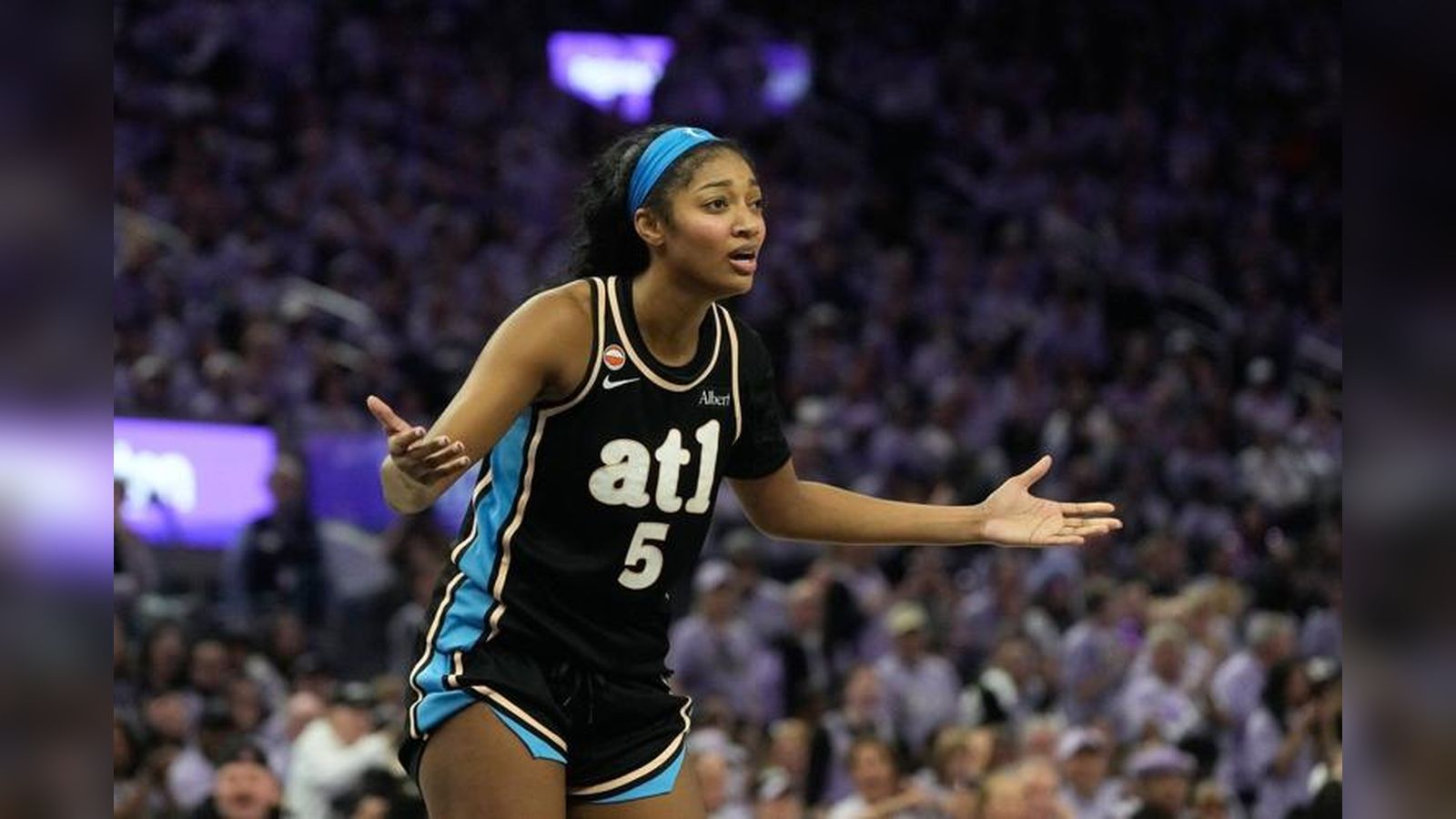
SAN FRANCISCO (Azat TV) – The physical intensity of the 2026 WNBA Finals reached a boiling point on Monday night as the Atlanta Dream fell 64-55 to the Golden State Valkyries in Game 5. Following the loss, which pushed Atlanta to the brink of elimination, star forward Angel Reese and head coach Karl Smesko openly criticized the officiating and the level of physical contact permitted on the floor. Reported by Fox Sports, the defeat leaves the Dream needing a victory in Game 6 to keep their championship hopes alive.
Reese managed just seven points and 15 rebounds on eight field-goal attempts during the defensive struggle, battling constant contact in the paint. Throughout the second half, the forward registered visible frustration, raising her hands and shaking her head after being whistled for offensive fouls. Coach Smesko defended his player postgame, arguing that the officiating standard created an uneven playing field that heavily benefited Golden State’s defense.
The Officiating Controversy and Physicality
Coach Smesko did not hold back when assessing the officiating crew’s performance, pointing to missed calls and unpenalized contact. While acknowledging Golden State’s defensive capabilities, Smesko argued that Reese faced a level of physical play that went unpunished compared to standard league enforcement. He asserted that the Dream should have earned significantly more trips to the free-throw line based on the physical collisions in the paint.
“The contact they allow on Angel compared to everybody else is just ridiculous, just ridiculous, and we should have gone to the foul line six to eight more times just on that,” Smesko said, as Fox Sports reported. He also highlighted missed floor violations, including uncalled double-dribbles and travels that directly translated into scoring opportunities for the Valkyries, emphasizing that high-level championship games demand greater precision from officials.
Reese echoed her coach’s sentiments while addressing the mental and physical adjustment required to play through the contact. She noted that discussions with referees during game stoppages often yielded promises of future whistles that rarely materialized, creating a difficult environment for the team.
“Honestly for me, I’m still trying to figure out how to play through the physicality,” Reese said. “A lot of us are getting fouled and they’re not calling it or we’re talking to the ref after and they’re saying, ‘Oh, we’ll get you next time,’ so it is a little frustrating especially in the moment of it.”
Valkyries Response and Series Stakes
On the opposing bench, Golden State head coach Natalie Nakase dismissed concerns regarding the physical nature of the series, viewing the intense collisions as a natural byproduct of the championship stakes. Nakase’s defensive game plan has successfully slowed Atlanta’s offensive engine over the course of the series, forcing the Dream into difficult perimeter shots and contested interior looks.
“It’s the Finals this is it,” Nakase stated, noting that both franchises are competing with maximum intensity. The Valkyries’ defensive approach has consistently emphasized physical rebounding and interior containment, neutralizing individual threats on the Dream roster.
Despite the physical toll and the Game 5 setback, Atlanta will look to regroup quickly as the series shifts back to home court. The Dream are scheduled to host Game 6 on Thursday at 12:30 p.m. EDT, where they will face elimination. A win on Thursday would force a deciding Game 7 back in the Bay Area, keeping the championship battle alive.