


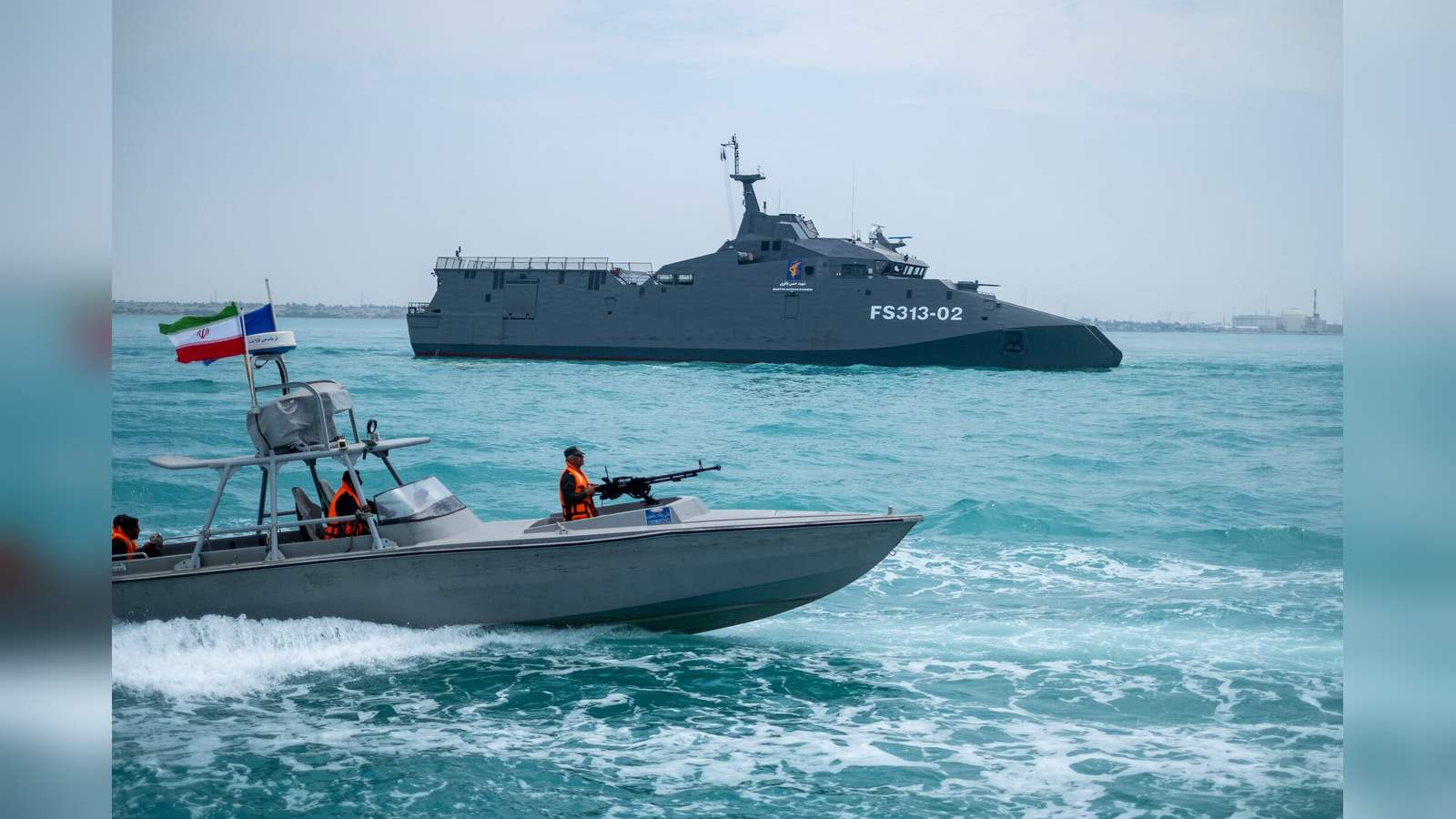
Direct Confrontation in the Gulf
In a significant shift in regional hostilities, Iran’s Islamic Revolutionary Guard Corps (IRGC) has intensified direct military operations against United States positions in Bahrain and commercial shipping in the Strait of Hormuz. According to reporting by Al Jazeera on November 22, 2026, the IRGC claims to have carried out coordinated missile and drone strikes against US military installations at the al-Riffa and Awali bases in Bahrain. These actions are framed by Tehran as retaliation for a US strike on a radar installation on Iran’s Hengam Island.
The escalation, which has spiked over the week leading up to November 22, includes the targeting of at least 25 tankers in the Strait of Hormuz. This critical maritime chokepoint, through which approximately one-fifth of the world’s oil and gas supply flows, has seen a sharp decline in traffic. UK Maritime Trade Operations (UKMTO) reported that ship transit through the strait dropped by 15 percent between November 12 and 18 compared to the previous week, with oil tanker volume seeing a notable decrease.
Impact on Global Energy Security
The persistent attacks have transformed the maritime corridor into a high-risk zone, causing insurance premiums for vessels to surge from pre-war levels of 0.10–0.25 percent to between 3.5 and 7.5 percent. The International Energy Agency (IEA) has noted that cumulative supply losses from the conflict have reached 2.8 billion barrels of oil and 60 billion cubic meters of gas. While global oil prices spiked to over $100 per barrel before stabilizing near $83, the volatility remains acute as Iran leverages its control of the strait as a primary bargaining chip.
The strategic intent behind this escalation, according to analysts, is to force a shift in the current status quo of what Iranian President Masoud Pezeshkian has termed a “silent economic war.” By targeting both US military infrastructure and the economic interests of regional allies, Tehran aims to demonstrate the limitations of US security guarantees in the Gulf. Rami Khouri, a public policy fellow at the American University of Beirut, noted to Al Jazeera that the strategy is designed to ensure that Iran no longer bears the economic burden of the conflict alone, potentially pressuring Arab governments to seek a diplomatic resolution with Washington.
Military Tensions and Conflicting Claims
The security situation in Bahrain has grown increasingly unstable. On November 21, local authorities in Manama reported that an Iranian strike hit a civilian industrial facility, resulting in a fire. Simultaneously, the IRGC claimed to have destroyed two US Patriot air defense radars at the al-Riffa and Awali bases. While Iranian state media reported that an interceptor missile launched from the US Fifth Fleet base crashed on Sitra Island, US Central Command (CENTCOM) has denied Iranian claims regarding the downing or damaging of US assets, asserting that all US fighter jets in the region remain safe and accounted for.
Despite these denials, the frequency of engagement continues to rise. The IRGC reported the downing of another MQ-1 drone east of the Strait of Hormuz on November 22, marking what it claims is the 20th such loss for the US since the conflict began in late February. The ongoing cycle of retaliation—involving drone operations, missile defenses, and tanker strikes—indicates a transition from traditional proxy-based warfare to a direct, high-stakes confrontation that continues to challenge international maritime security and regional stability protocols.