


An Unprecedented Duty of Care in Extreme Isolation
In an extraordinary intersection of pandemic preparedness and workplace mental health, the Australian federal government has announced the temporary evacuation of all 24 personnel from its historic Macquarie Island research station in the Southern Ocean. The decision, coordinated by the Department of Climate Change, Energy, the Environment and Water alongside the Australian Antarctic Division (AAD), is driven not by an immediate physical threat to human life, but by the anticipated “psychosocial risk” of witnessing a catastrophic mass mortality event among the island’s southern elephant seal population due to the H5N1 avian influenza virus.
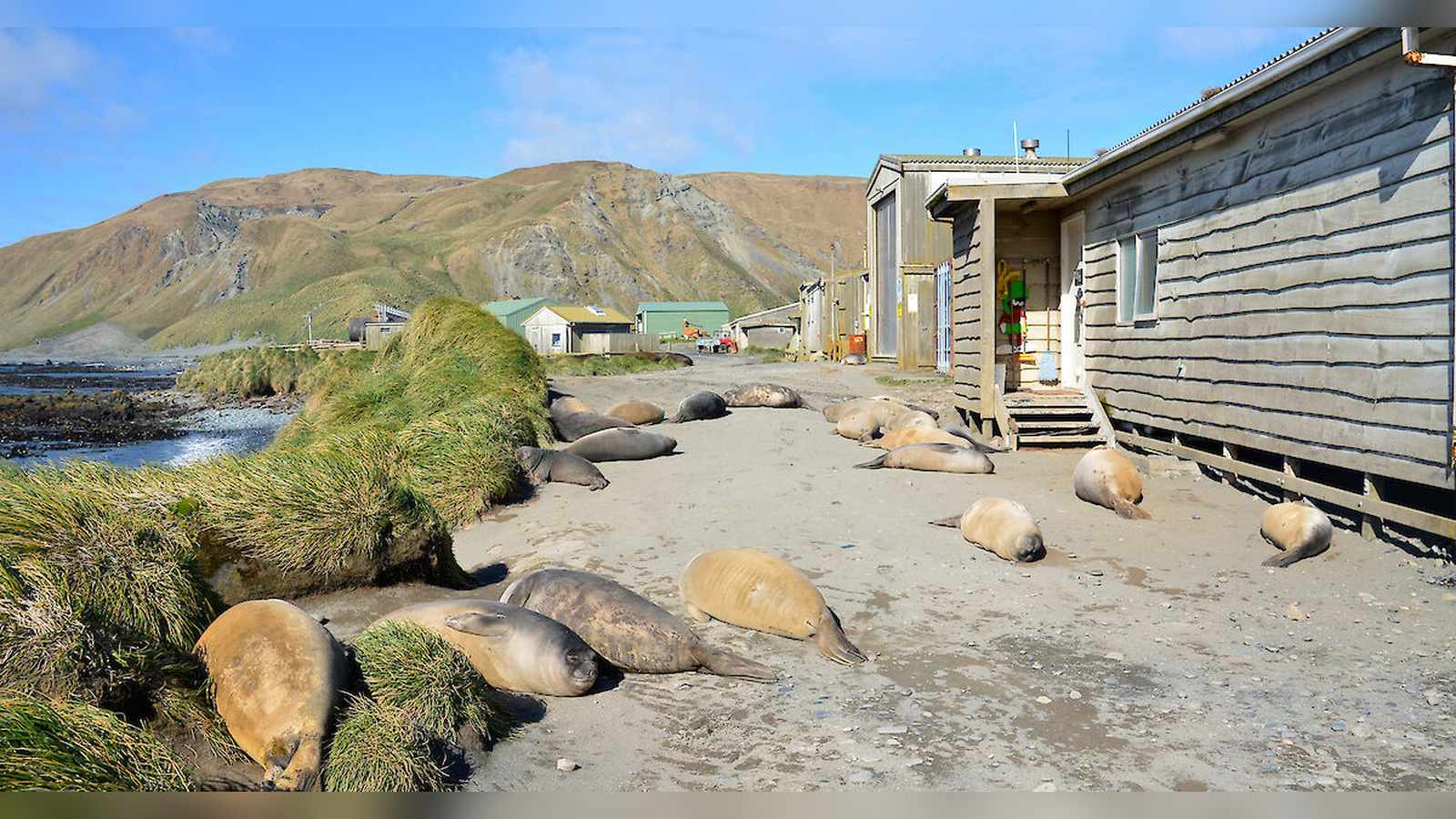
Macquarie Island, a remote sub-Antarctic outpost established as a research station in 1948 and located approximately 1,500 kilometers southeast of Tasmania, is home to one of the planet’s most significant elephant seal breeding colonies. Every spring, thousands of elephant seals congregate near the station’s immediate perimeter to give birth and mate. However, veterinary and ecological risk assessments have warned of a “high likelihood” of a devastating outbreak of the highly pathogenic H5 bird flu during the upcoming breeding season. Based on previous disasters in other sub-Antarctic territories, authorities concluded that forcing a small, isolated team of tradespeople, scientists, and support staff to live amidst thousands of dying and decaying marine mammals would inflict severe, long-term psychological trauma.
This report draws on information published by The Guardian.
The Shadow of Heard Island: 90% Mortality Rates
The Australian government’s proactive stance is heavily informed by recent ecological tragedies in the region. According to Sean Sullivan, Deputy Secretary of the Department of Climate Change, Energy, the Environment and Water, the operational reality of H5N1 has already been demonstrated with devastating clarity. “We’ve seen what this disease can do, based on our experience at Heard Island and McDonald Islands,” Sullivan stated. On those remote external territories, drone surveys conducted during 2025 and 2026 revealed the horrific scale of the virus’s impact, recording more than 13,000 dead southern elephant seal pups, with mortality rates exceeding 90 percent in some monitored breeding colonies.
Unlike mainland research sites or larger Antarctic stations, Macquarie Island’s unique topography forces researchers and seals into constant proximity. The elephant seal colonies are situated directly adjacent to the station’s main living quarters and laboratories. “No other Australian Antarctic station is in this position, and there are no elephant seal colonies on mainland Australia,” Sullivan explained. The prospect of an isolated 24-person crew being subjected to the sights, sounds, and smells of thousands of dying animals—while entirely powerless to intervene due to the lack of viable treatment or mitigation measures—was deemed an unacceptable occupational hazard.
The Logistical Reality of Temporary Closure
The evacuation will be executed using Australia’s state-of-the-art icebreaking research and supply vessel, the RSV Nuyina. The vessel is scheduled to depart for Macquarie Island in late September or early October 2026 to retrieve all 24 expeditioners along with essential scientific cargo. In the interim, the AAD is developing comprehensive plans to winterize and secure the station’s extensive infrastructure for a period of temporary closure, while attempting to mitigate the disruption to Australia’s international scientific and meteorological monitoring obligations.
This temporary retreat represents a significant setback for long-term sub-Antarctic research. Macquarie Island has long served as a crucial data collection point for climate science, oceanography, and wildlife biology. The island’s ecosystems had recently shown remarkable resilience following a multi-million-dollar, decades-long conservation effort that successfully eradicated invasive rabbits, rats, and mice. While this pest-free status has boosted the native wildlife’s baseline health, it offers no protection against the airborne and migratory spread of the highly infectious H5N1 virus.
A Regional Crisis: Mammalian Detections and Conservation Desperation
The evacuation announcement coincided with a series of alarming ecological developments across southern Australia, underscoring that the H5N1 threat is no longer a distant possibility. In South Australia, state authorities confirmed that a common dolphin found deceased near Goolwa on the Fleurieu Peninsula tested positive for H5N1. This represents only the second native mammalian species in Australia confirmed to have contracted the virus, following earlier detections in long-nosed fur seals at Beachport and the Pages Islands, as well as a feral red fox near Port Adelaide.
Dr. Skye Fruean, South Australia’s Chief Veterinary Officer, emphasized the gravity of the dolphin detection, noting that marine mammals are proving highly susceptible to the virus. To expedite response times, the South Australian government announced it will transition to confirming H5 cases through local laboratories, bypassing the previously mandatory and time-consuming verification process at the CSIRO’s Australian Centre for Disease Preparedness in Geelong.
Meanwhile, in Tasmania, wildlife authorities are investigating a mass mortality event at Stokes Point on King Island, where approximately 100 dead little penguins were discovered. Regrettably, the advanced state of decay of the carcasses has prevented definitive testing for H5 bird flu, leaving the exact cause of death unresolved. In response to the widening threat, the New South Wales government has taken the unprecedented step of initiating wild vaccination programs for vulnerable little penguin populations at Manly and Barunguba Montague Island, alongside trial vaccinations of captive endangered birds at Taronga Zoo.
The Evolution of Workplace Safety in the Anthropocene
The decision to prioritize “psychosocial risk” over continuous data collection marks a paradigm shift in how governments and research institutions manage remote operations in an era of ecological instability. Historically, polar and sub-Antarctic expeditioners were expected to endure extreme environmental hardships as part of the operational territory. However, the sheer scale of modern ecological collapses—driven by rapidly spreading wildlife pandemics—presents a novel form of mental health hazard: ecological grief and secondary traumatic stress.
By acknowledging that witnessing the agonizing demise of an entire ecosystem is a psychological hazard equivalent to physical danger, the Australian government is setting a new benchmark for the duty of care in scientific research. While the long-term goal remains to return researchers to Macquarie Island in future seasons, the immediate priority is clear: protecting the human sentinels of the Southern Ocean from the devastating emotional fallout of a planetary crisis they are powerless to stop.