


On September 13, 2026, Russian drone strikes targeted critical transit corridors just kilometers from the Polish border, prompting Polish Prime Minister Donald Tusk to issue a stark warning about impending hybrid threats directly facing NATO territory. According to reports by Newsday and Al Jazeera, a Kyiv-Warsaw passenger train locomotive was struck in Ukraine’s Volyn region, a mere two kilometers from the Polish frontier, signaling a dangerous proximity to the military alliance’s eastern flank.
A Calculated Strike Near Transit Corridors
The strike on the passenger locomotive occurred under circumstances that have heightened political tensions across Europe. Ukrainian state rail operator Ukrzaliznytsia reported that the attack took place minutes after a high-level Western diplomatic delegation, which included former British Prime Minister Boris Johnson, former Swedish Prime Minister Carl Bildt, and former CIA Director David Petraeus, had passed through the same station. Ukrainian President Volodymyr Zelenskyy accused Moscow of “deliberately” targeting the train. Though no casualties were reported, the incident damaged critical infrastructure near the Yahodyn-Dorohusk international border crossing, one of the primary arteries for humanitarian and military aid flowing from Western allies into Ukraine.
The proximity of the strikes to Polish territory has forced Warsaw to re-evaluate its immediate defense posture. Prime Minister Donald Tusk, speaking after an emergency briefing at Poland’s Government Security Center, warned that the coming weeks and months would see highly intensified Russian actions. Tusk highlighted Moscow’s deployment of faster, jet-powered long-range strike drones, which are significantly harder to intercept than older propeller-driven models, noting that even well-prepared air defense systems struggle to achieve total interception rates.
Warsaw Prepares for Unprecedented Hybrid Warfare
Poland’s defense establishment is preparing for a shift in Russian tactics. Deputy Defense Minister Cezary Tomczyk stated that any potential spillover into European territory would likely manifest as sabotage or a sharp intensification of hybrid warfare “on a scale that we have not seen before.” This assessment is reinforced by recent intelligence briefings, including a CIA briefing delivered to Polish officials, suggesting that Moscow intends to target border transit points and orchestrate sabotage operations within Europe to deter Western support for Kyiv.
On the maritime front, Defense Minister Władysław Kosiniak-Kamysz confirmed that the Polish military recently recovered what is believed to be a Russian military drone from the Baltic Sea near the coastal village of Jaroslawiec. The discovery underscores the multi-dimensional nature of the security threats facing Poland, stretching from its land borders in the east to its maritime boundaries in the north.
The Geopolitical Friction: NATO Deterrence and Economic Realities
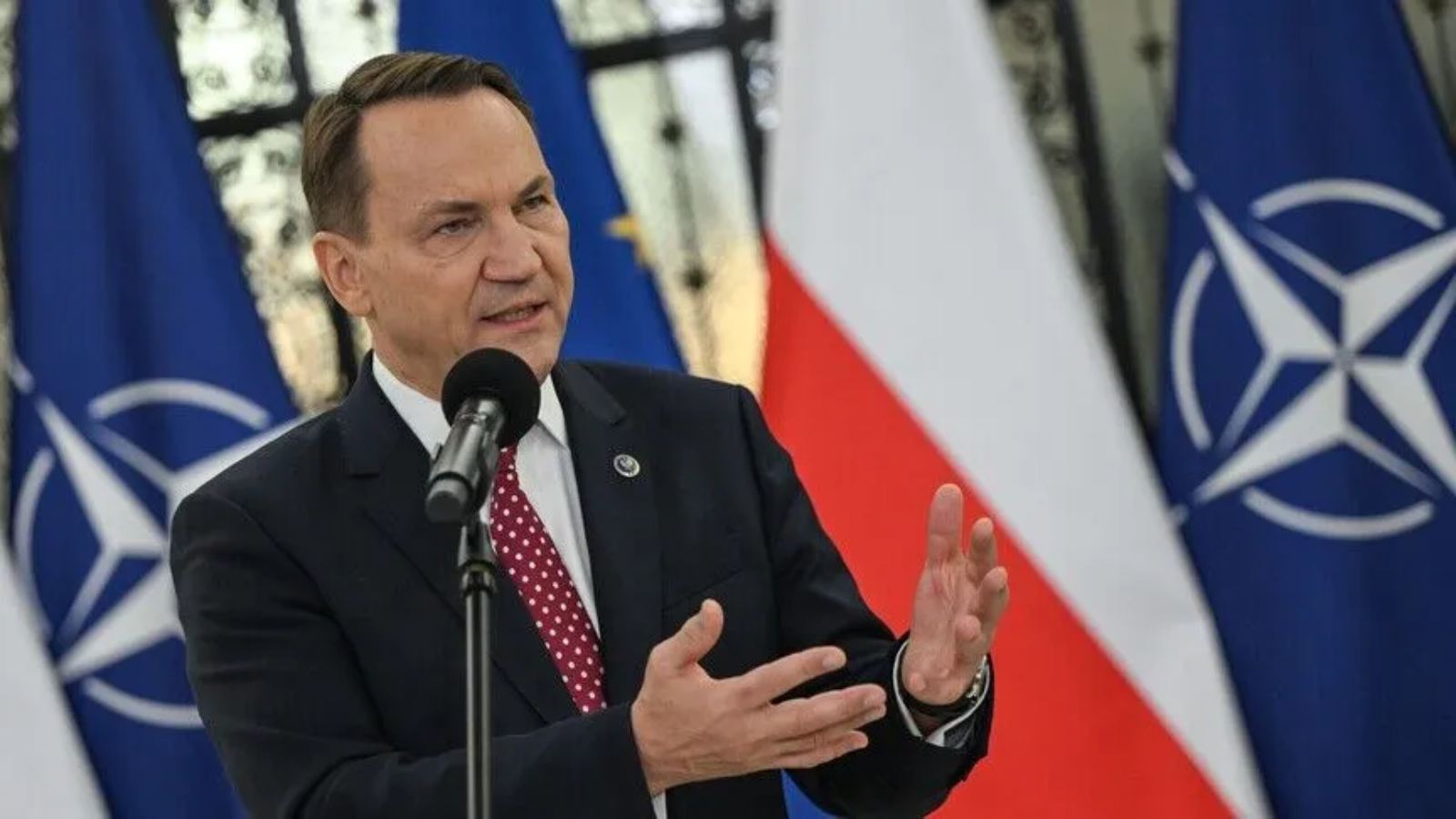
The escalation has triggered sharp rhetoric from Polish officials regarding NATO’s military capabilities. Foreign Minister Radoslaw Sikorski emphasized the alliance’s defensive edge, asserting that European NATO air forces, even without United States participation, possess the capability to destroy half of Russia’s oil refineries faster than Ukraine can. Sikorski called on Western allies to “double” their support for Ukraine in response to the border strikes, arguing that the security of Polish citizens is directly impacted when strikes land just hundreds of meters from the frontier.
However, this European push for increased military resolve faces potential economic friction with Washington. U.S. President Donald Trump has publicly urged President Zelenskyy to halt long-range strikes on Russian oil refineries and diesel production facilities. Speaking from Ireland, Trump expressed concern over rising global energy costs, noting that diesel prices in the United States had recently surpassed $6 per gallon. Trump argued that while Ukraine has other viable military targets, targeting Russian diesel fuel infrastructure directly harms global economic stability.
In Moscow, Kremlin spokesman Dmitry Peskov maintained that Russian forces would continue to operate across the entirety of Ukrainian territory. Peskov dismissed Western concerns about the border strikes, while welcoming Trump’s calls for Kyiv to cease attacks on civilian economic infrastructure. Peskov also pointed to potential mediation roles for Global South nations, mentioning that Chinese President Xi Jinping and Indian Prime Minister Narendra Modi had expressed willingness to help broker a settlement during recent discussions with Russian President Vladimir Putin.