


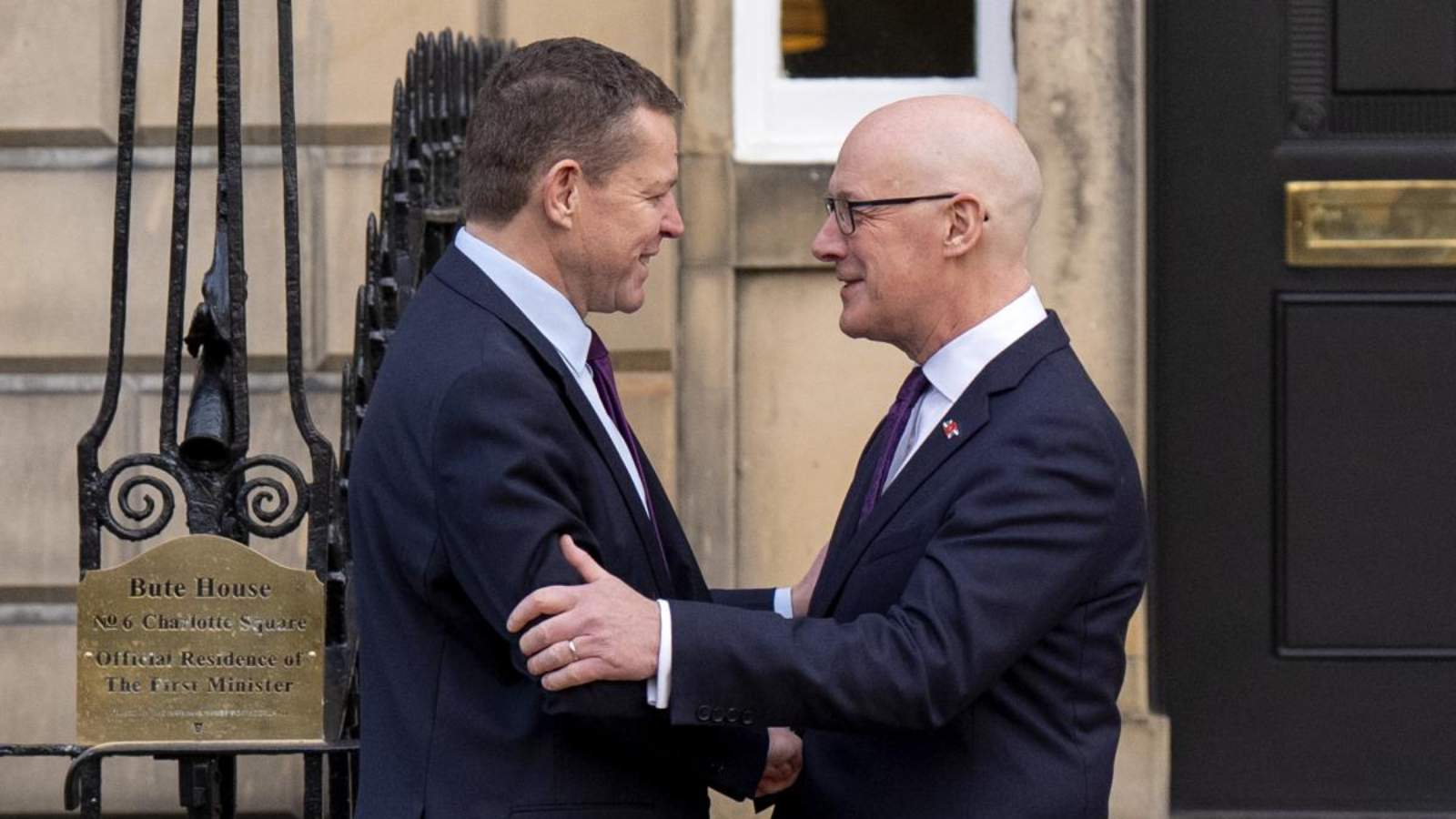
Leaders of Scotland, Wales, and Northern Ireland are gathering in Cardiff for an unprecedented summit to demand self-determination rights and challenge Westminster’s constitutional authority over independence referendums. The meeting at St David’s Hotel brings together Scottish First Minister John Swinney, Welsh First Minister Rhun ap Iowerth, Northern Ireland First Minister Michelle O’Neill, and Irish opposition leader Mary Lou McDonald.
A Tri-Nation Front in Cardiff
The summit marks a historic shift in regional politics across the United Kingdom, as pro-independence or republican parties hold governing power simultaneously across all three devolved administrations for the first time. Plaid Cymru became the largest party in the Welsh Senedd following elections in May, while Sinn Féin has led the Northern Ireland Executive since 2024, and the Scottish National Party (SNP) continues to govern Holyrood. According to reporting by The Telegraph and Times of India, the four leaders plan to sign a joint declaration asserting that constitutional decisions belong strictly to the citizens of the devolved nations rather than the central government in London. Swinney highlighted the political moment, declaring that the momentum behind serious constitutional change is undeniable as the three nations push for formal legal mechanisms to determine their own futures.
Diplomatic Sparks and Transatlantic Friction
The gathering follows significant diplomatic friction caused by remarks from U.S. President Donald Trump during a visit to his Doonbeg golf resort in Ireland. As reported by TIME, Trump departed from traditional Washington neutrality by publicly backing Irish reunification, calling a single Irish state one of the naturals of all time and stating he would love to see it happen. Trump also hinted at future commentary regarding Scottish independence, noting that he would save that discussion for another day. While Irish Taoiseach Micheál Martin characterized the U.S. President’s comments as typical of his distinct perspective, Sinn Féin President Mary Lou McDonald argued that the conversation on Irish unity had irrevocably shifted, calling on the Dublin government to begin formal preparations.
Westminster’s Pushback and Legal Thresholds
In London, political leaders across party lines reacted with sharp criticism to foreign interventions and devolved demands. British Prime Minister Andy Burnham previously stated that holding a border poll in Northern Ireland was off the table, emphasizing the need to avoid divisive constitutional votes following the turbulence of Brexit and the 2014 Scottish referendum. U.K. Northern Ireland Secretary Chris Bryant publicly cited provisions of the 1998 Good Friday Agreement, reminding political actors that a referendum can only be triggered by the Secretary of State if a clear majority for reunification appears likely. Opposition leaders also condemned Trump’s intervention, with Conservative leader Kemi Badenoch describing the remarks as loose talk that creates unnecessary diplomatic tension, while Reform UK leader Nigel Farage maintained that Northern Ireland remains an integral part of the U.K. whose public rejects reunification.
Constitutional Realities and Next Steps
Despite the symbolic force of the Cardiff summit, significant legal and constitutional hurdles remain before any of the devolved nations can hold binding referendums. Under current U.K. constitutional law, power over union matters remains reserved to the Westminster Parliament, meaning any formal referendum requires central authorization. However, with pro-independence leadership firmly established across Holyrood, the Senedd, and Stormont, the joint declaration places relentless political pressure on Prime Minister Burnham’s administration, setting the stage for prolonged legal and constitutional confrontations between London and the devolved capitals.