


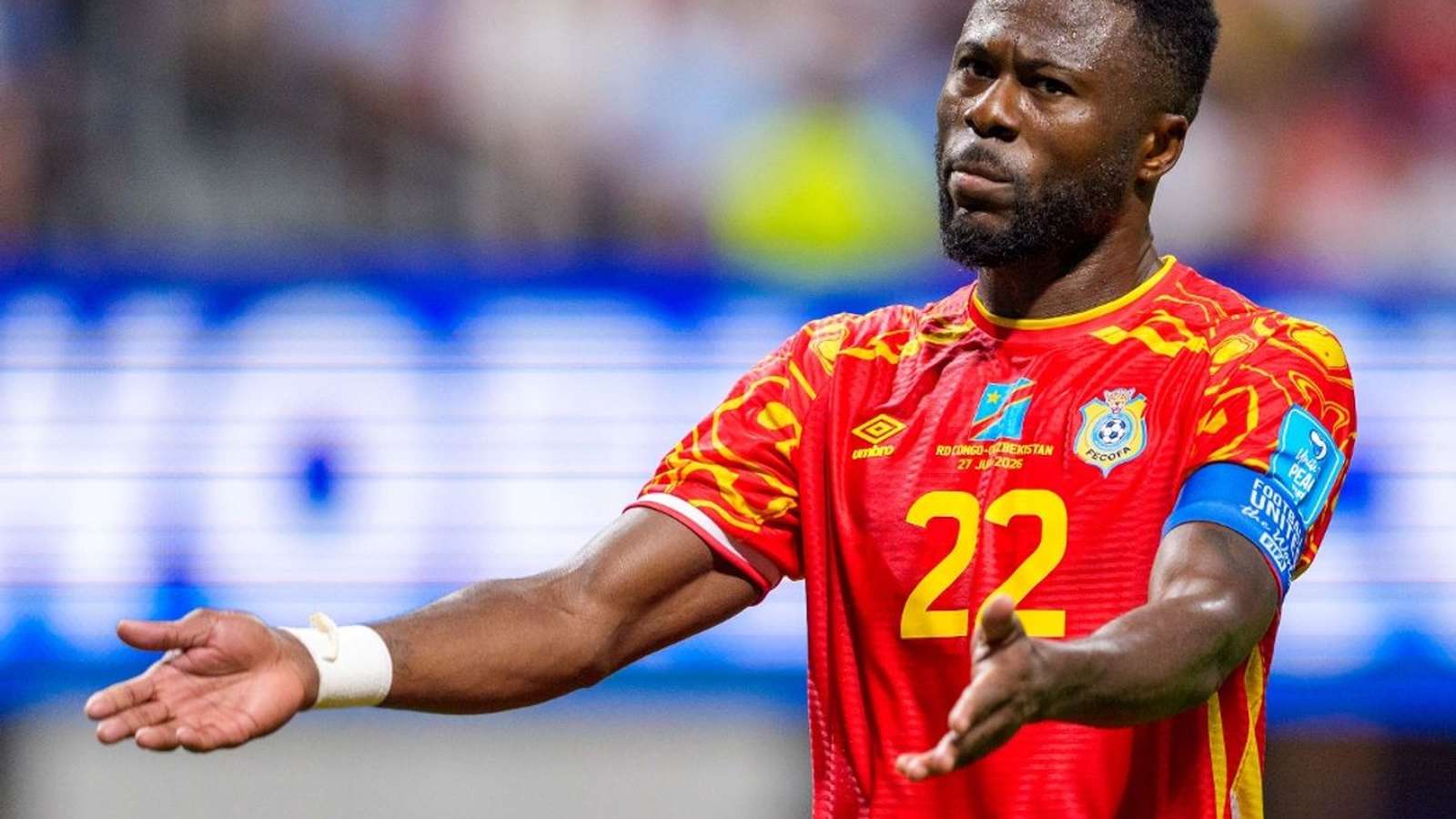
A Defensive Masterclass Ends in Heartbreak
The 2026 FIFA World Cup journey for the Democratic Republic of the Congo came to a dramatic close in Atlanta, following a narrow defeat to England in the Round of 32. At the heart of the Leopards’ resilient display was captain Chancel Mbemba, whose leadership and defensive acumen kept the European giants at bay for nearly the entire match.
Mbemba’s impact was immediate. In the 7th minute, he provided the assist for Brian Cipenga’s opening goal, a moment that stunned the crowd and shifted the tactical burden onto England. For much of the contest, Mbemba anchored a backline that frustrated England’s star-studded attack, earning praise for his organization and composure under pressure. It was only a late brace from Harry Kane in the 75th and 86th minutes that finally breached the defensive wall, ending DR Congo’s tournament run.
The Intersection of Performance and Scrutiny
While his recent performances on the global stage have highlighted his status as one of Africa’s most accomplished defenders, Mbemba’s career has long been shadowed by administrative scrutiny. The defender has frequently faced questions regarding his birth date documentation, an anomaly that has persisted since his early years in European football.
Reports indicate that during his transition to European leagues, including his move to Anderlecht in 2012, his official birth date was established as August 8, 1994. However, earlier youth records and various administrative logs from his time in the Congo have historically listed birth years ranging from 1988 to 1991. These discrepancies have occasionally sparked intense media debate, yet Mbemba has consistently refuted allegations of intentional fabrication. He has previously cited the complexities of record-keeping in his home country and emphasized that his biological age has been verified through forensic testing.
A Legacy of Professionalism
Beyond the off-field narratives, Mbemba’s professional trajectory speaks to a high level of endurance. From winning the Belgian league with Anderlecht to lifting the Championship trophy with Newcastle and securing domestic titles with Porto, he has maintained a consistent presence at the top tier of international football. His role as the captain of the Leopards represents the culmination of a career defined by overcoming both competitive and external pressures.
As he departs the 2026 World Cup, Mbemba leaves behind a performance that suggests he remains a vital figure for his nation. Regardless of the historical administrative debates, his influence on the pitch—particularly in the high-stakes environment of a World Cup knockout match—remains his most tangible contribution to the sport.