


Strategic Shift in Maritime Autonomy
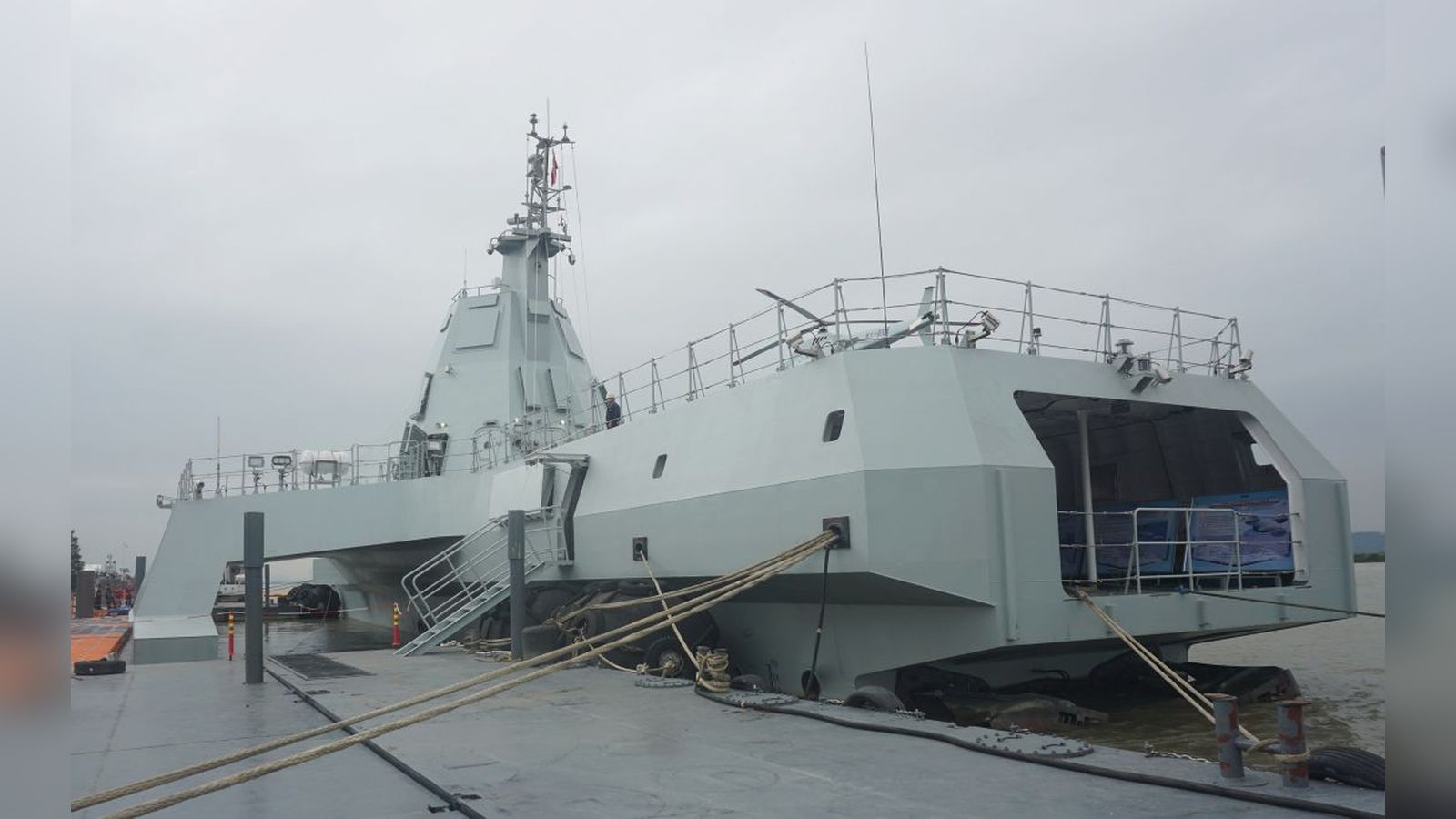
Satellite imagery from the Hudong-Zhonghua shipyard in Shanghai, released on September 17, 2026, by the U.S. defense intelligence firm Vantor, has confirmed that China is constructing a specialized vessel likely intended to function as a mothership for uncrewed underwater vehicles (UUVs). The vessel, which features a distinctive red hull, marks a significant development in China’s naval capabilities, specifically concerning the integration of extra-extra-large uncrewed underwater vehicles (XXLUUVs).
According to analysis provided by H.I. Sutton for Naval News, the ship is configured with a stern well deck and an internal hangar system. These features are assessed to be dedicated support mechanisms for the launch, recovery, and maintenance of at least four XXLUUVs. This development places China at the forefront of a specialized maritime arms race, as the scale of these vehicles—ranging from 35 to 45 meters—far exceeds the dimensions of current Western counterparts like the U.S. Navy’s Orca XLUUV.
Operational Implications and Regional Security
The strategic stakes of this platform are high. China has previously conducted tests of its XXLUUV prototypes near Hainan Island in the South China Sea. The combination of a mobile mothership and these large, autonomous, long-endurance vehicles could significantly extend the reach of China’s maritime surveillance and strike capabilities. While some analysts have questioned whether the vessel could serve a civilian or research role, the hardware configuration strongly points toward military utility.
This naval advancement arrives amid broader regional tensions. During a recent speech, Chinese Defense Minister Dong Jun emphasized the need for vigilance against “hegemony and militarism,” remarks which some analysts, as cited by The Telegraph, interpreted as an indirect reference to ongoing security friction with Japan. As the mothership nears completion, the international focus remains on how these autonomous systems will alter the balance of power in the Indo-Pacific, particularly regarding deep-sea operations and long-range intelligence gathering.