


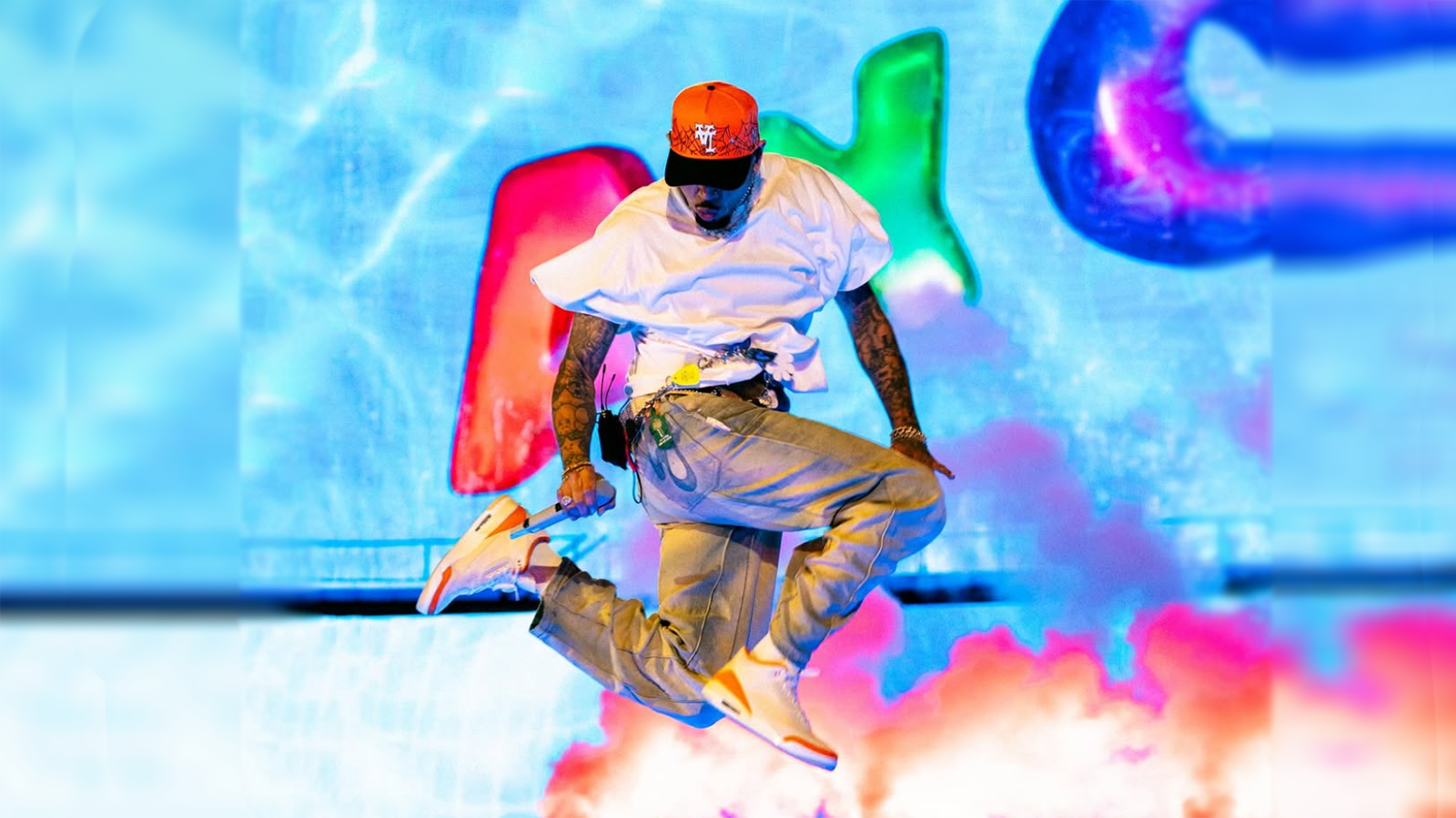
In the heart of London, amidst a sold-out crowd, Chris Brown delivered a performance that transcended the boundaries of music. While fans came expecting a night of chart-topping hits, they left with something far more profound—a moment of shared humanity in the wake of tragedy.
A Tribute That Resonated
Midway through his electrifying set, Brown paused to address the audience, his voice heavy with emotion. “Tonight is not just about music,” he began, his words hanging in the air. “It’s about love, unity, and remembering those who have touched our lives in ways words can’t describe.” The room fell silent as Brown dedicated the next song to Charlie Kirk, a conservative activist who was tragically assassinated just days prior.
The news of Kirk’s death had sent shockwaves across the United States, sparking debates, grief, and moments of introspection. Known for his fiery rhetoric and unwavering political convictions, Kirk was a polarizing figure. Yet, in this moment, Brown chose to focus not on politics but on the human being behind the headlines. “No matter what you believe or who you stand for,” Brown said, “loss is universal. And tonight, we honor that.”
The Power of Music in Mourning
As the first notes of “Say Goodbye” filled the arena, a hush fell over the crowd. This wasn’t just another performance—it was a collective act of mourning. Fans lit up their phones, creating a sea of light that seemed to pulsate with the rhythm of the song. Tears streamed down faces, strangers embraced, and for a fleeting moment, the divisions that often define us seemed to dissolve.
Brown’s tribute was a poignant reminder of music’s ability to unite, to heal, and to provide solace in times of sorrow. It was a stark contrast to the charged political climate surrounding Kirk’s death, which had been marked by heated debates and pointed accusations.
Reactions From Around the World
The reaction to Brown’s tribute was immediate and overwhelming. Social media platforms were flooded with messages of gratitude, not just from fans but from people who had never attended a Chris Brown concert. “I’ve never been a fan of his music,” one Twitter user wrote, “but tonight, he showed the world what it means to be human.”
Even those who had criticized Kirk in life found themselves moved by the gesture. “I didn’t agree with Charlie on much,” admitted a commentator on Instagram, “but seeing a room full of people come together to honor him was powerful. It reminded me that at the end of the day, we’re all just people trying to make sense of this crazy world.”
Looking Beyond the Headlines
While the tribute was undoubtedly the emotional high point of the evening, it also sparked conversations about the broader implications of Kirk’s death. A prominent conservative voice, Kirk had been both celebrated and vilified for his role in shaping modern American politics. His assassination at Utah Valley University had raised questions about the state of political discourse, the role of activism, and the ever-present threat of violence in public life.
For Vice President J.D. Vance, who had been a close friend of Kirk’s, the loss was deeply personal. In a heartfelt social media post, Vance described Kirk as a guiding force in his political journey, someone who had believed in him when few others did. “Charlie was fascinated by ideas and always willing to learn and change his mind,” Vance wrote. “He was skeptical of Donald Trump in 2016, but like me, he came to see him as a transformative figure.”
Vance’s tribute, coupled with Brown’s emotional performance, highlighted the multifaceted legacy of Charlie Kirk—a man who, despite his polarizing views, had left an indelible mark on those who knew him.
Finding Common Ground
In a world increasingly defined by division, moments like these serve as a reminder of our shared humanity. Chris Brown’s tribute was not about politics or ideology; it was about acknowledging the fragility of life and the connections that bind us all. It was a moment of unity in a time of discord, a testament to the power of art to transcend even the deepest divides.
As the final notes of the concert echoed through the venue, the audience erupted into applause—not just for the music, but for the message. In honoring Charlie Kirk, Chris Brown had reminded everyone in that room of the importance of compassion, understanding, and the simple act of showing up for one another.
In a time when the world often feels fractured beyond repair, Chris Brown’s heartfelt tribute served as a powerful reminder that empathy and unity are not just ideals—they are necessities.