


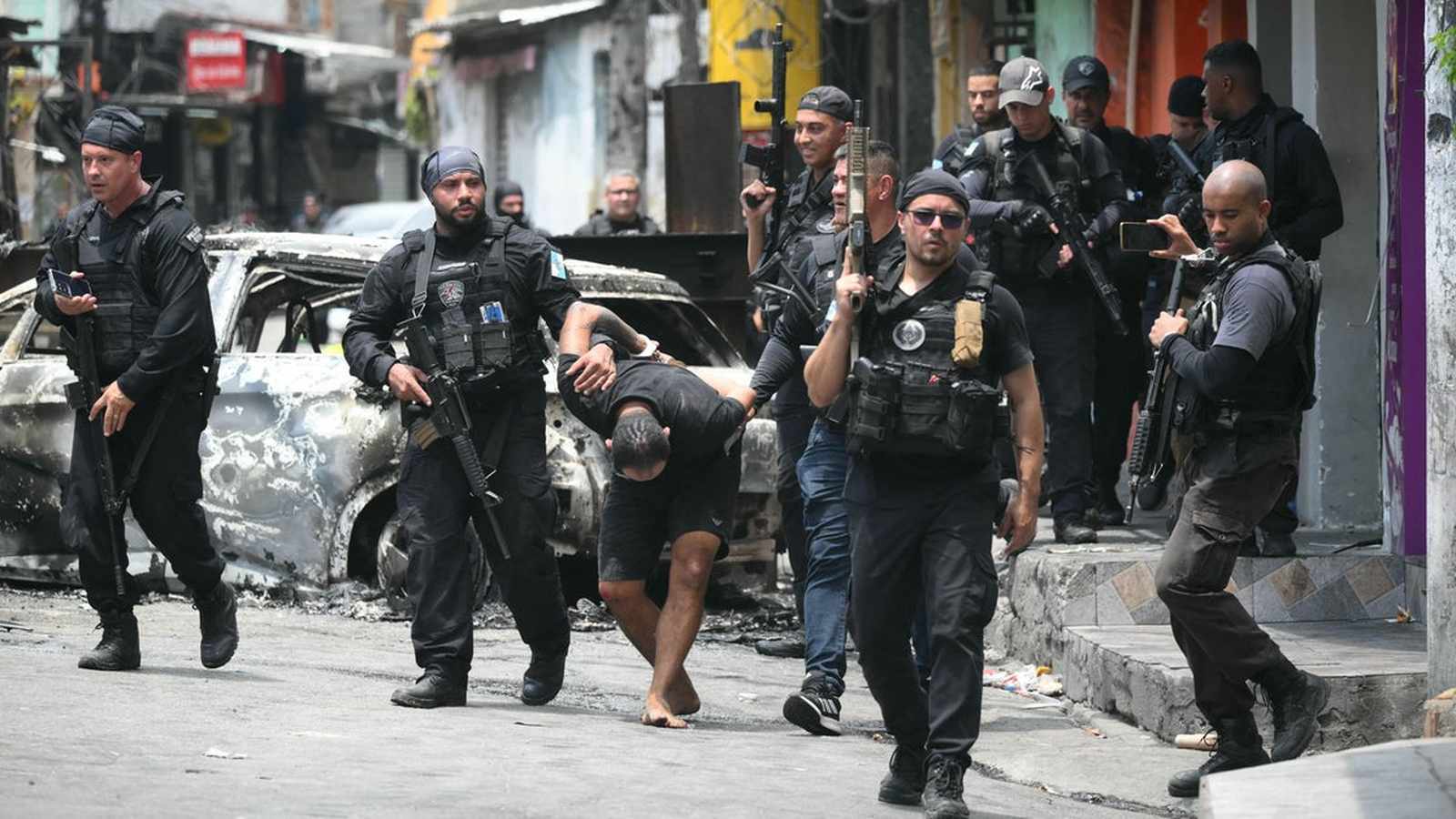
Rio’s North Zone Erupts: A City in the Crossfire
On October 28, Rio de Janeiro was transformed almost overnight. The city’s North Zone, already known for its labyrinthine favelas and long-standing criminal turf wars, became the focal point of one of Brazil’s deadliest police operations in recent memory. By the end of the raid, at least 64 people were dead—including four police officers—and the city was left grappling with a new reality: criminal gangs wielding drones as weapons of war.
According to BBC News and CBS News, about 2,500 police officers, backed by armored vehicles and helicopters, descended on neighborhoods like Complexo de Alemão and Penha at dawn, targeting the infamous Red Command (Comando Vermelho) gang. The raid, years in the making, was designed to cripple a criminal network that had grown into a transnational force, stretching deep into the Amazon and, increasingly, into neighboring countries.
Criminals Go High-Tech: Drones Redefine Urban Conflict
The operation marked a turning point in the city’s battle against organized crime. For the first time, authorities reported that gang members used first-person-view (FPV) drones to drop explosives on police positions—a tactic more familiar from war zones than city streets. In dramatic footage shared by Rio’s governor, a drone launched a projectile from the sky, underscoring the evolving threat police now face.
“Drones dropping bombs is now a trend used by heavily armed criminal groups,” explained Dr. Carlos Solar of the Royal United Services Institute, speaking to BBC News. These groups purchase civilian drones from open markets and modify them for attacks, forcing police to adapt with counter-drone strategies even as government budgets tighten.
Dr. Irene Mia from the International Institute for Strategic Studies highlighted that cartels exploit these technologies not only to fight rivals and law enforcement but also to intimidate communities, presenting themselves as alternative centers of power. The gangs’ resourcefulness extends beyond drones: some have begun assembling semi-automatic weapons using Airsoft components, often sourced from China, making them cheaper and harder to trace.
Life Interrupted: Civilians and Tourists Caught in the Turmoil
As armored vehicles rolled through the streets and helicopters circled above, the city’s daily rhythm ground to a halt. Residents scrambled for shelter, shops shuttered, and the city’s bus system was paralyzed as gang members commandeered at least 70 buses to build roadblocks. The Education Department closed 46 schools in the affected neighborhoods, while the nearby Federal University of Rio de Janeiro suspended night classes, urging students and staff to stay indoors.
The violence spilled far beyond the North Zone. Tourists in hotels near Galeão International Airport and even in the famous South Zone beach districts like Copacabana and Ipanema were warned to remain indoors and avoid venturing out after dark. The turbulence rattled Rio’s vital tourism sector, threatening the city’s image just months after celebrating the launch of the UN Tourism Regional Office for the Americas.
“We’re left without buses, without anything, in this chaos and not knowing what to do,” said Regina Pinheiro, a 70-year-old retiree trying to get home amidst the turmoil, quoted by CBS News. For many, the sense of security—never robust—felt shattered.
Human Rights Concerns and the Debate Over Police Tactics
The scale of the operation drew sharp criticism from human rights organizations and community leaders. The United Nations’ human rights body said it was “horrified” by the death toll and called for thorough investigations, reminding Brazilian authorities of their obligations under international law. César Muñoz, director of Human Rights in Brazil, labeled the events “a huge tragedy” and a “disaster,” demanding clarity on each death.
The Marielle Franco Institute, founded in memory of a slain councilwoman, was blunt: “This is not a public safety policy. It’s a policy of extermination, that makes the everyday life of Black and poor people a Russian roulette.”
Experts agree that while such large-scale raids may disrupt gang operations temporarily, they rarely lead to the capture of masterminds, instead targeting underlings who are quickly replaced. Sociologist Luis Flavio Sapori told CBS News, “There’s a lack of strategy in Rio de Janeiro’s public security policy. Some lower-ranking members of these factions are killed, but those individuals are quickly replaced by others.”
What Comes Next: A City’s Resilience Tested
For officials, the immediate goal is clear: restore order, reopen streets, and prevent more bloodshed. Vice President Geraldo Alckmin and other ministers rushed to coordinate an emergency response, while local authorities emphasized that emergency services remained active, even as routine functions were strained.
Travel industry groups and foreign consulates advised caution: avoid active zones, monitor official advisories, and allow extra time for airport transfers. Favela tours—popular among some visitors—were discouraged unless operators could guarantee safety.
Amid the chaos, Rio’s broader challenge remains unresolved. The city is locked in a struggle not just with organized crime, but with the economic and social forces that sustain it. The Red Command, which emerged from Rio’s prisons decades ago, continues to wield influence in the favelas, expanding its reach even as police attempt to contain it.
Whether this operation marks a decisive shift or simply the latest chapter in Rio’s long-running battle with criminal networks is uncertain. What’s clear is that the city’s resilience is being tested anew—by technology, by violence, and by the day-to-day fears of its people.
Rio de Janeiro stands at a crossroads, its reputation and future shaped by how it responds to this crisis. The city’s struggle is not just against gangs, but for the safety and dignity of all its residents—where the line between urban warfare and daily life grows ever thinner.