

Quick Read
- Donald Tusk arrived in Yerevan for the 8th European Political Community summit.
- The summit, themed ‘Building the Future: Unity and Stability in Europe,’ is scheduled for May 4.
- Tusk is actively promoting democratic institutional reform and rule of law across Europe.
A Strategic Gathering in Yerevan
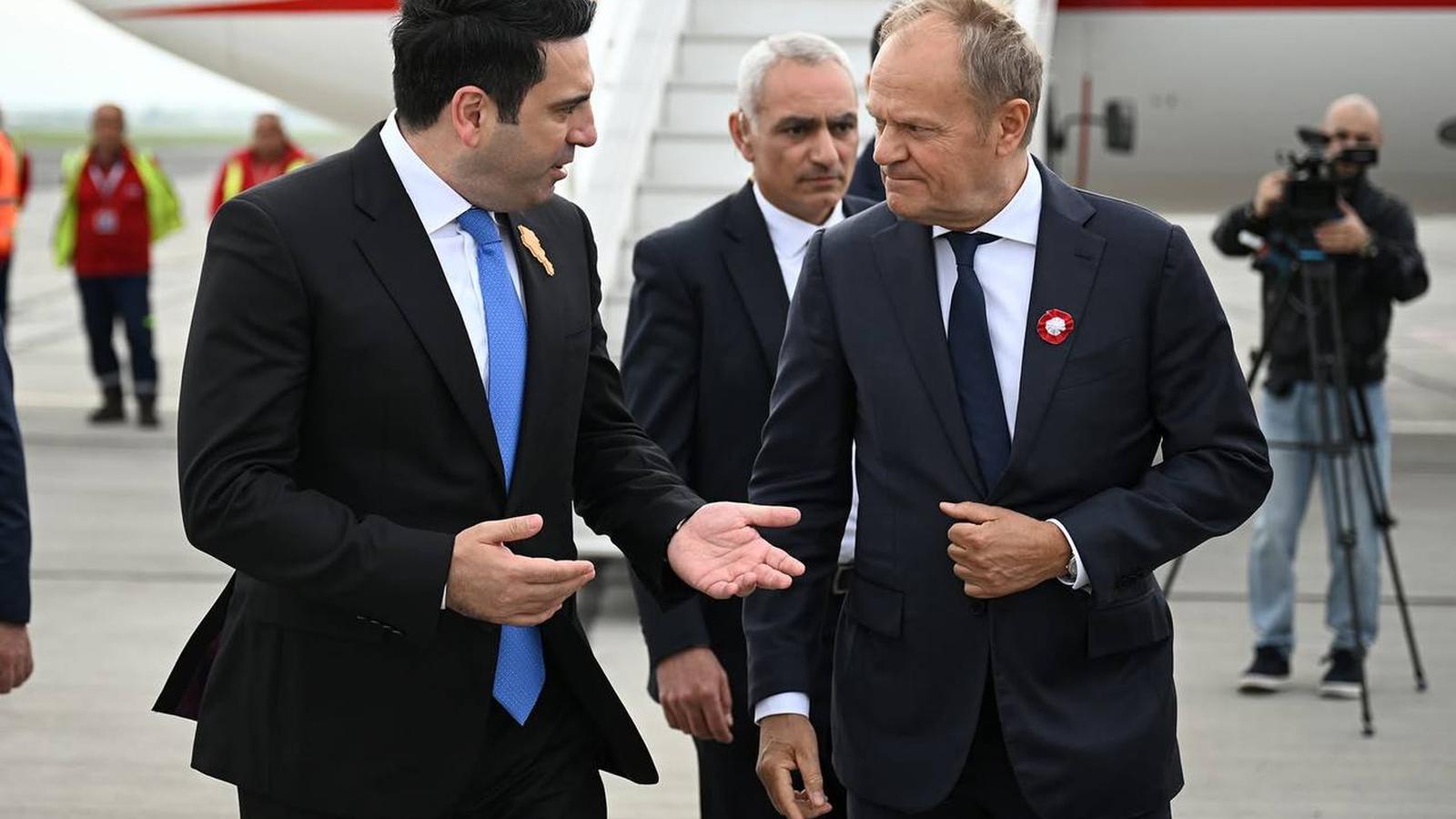
Polish Prime Minister Donald Tusk arrived in Yerevan on May 3, 2026, to participate in the 8th European Political Community (EPC) summit. The event, themed Building the Future: Unity and Stability in Europe, is scheduled to take place on May 4. Upon his arrival at Zvartnots International Airport, Prime Minister Tusk was greeted by the Speaker of the Armenian National Assembly, Alen Simonyan. His presence in the Armenian capital underscores the growing importance of the EPC as a platform for dialogue among approximately 50 European leaders, aimed at addressing shared security, stability, and prosperity challenges without replacing existing institutional frameworks.
The Broader Geopolitical Context
Tusk’s visit to Yerevan occurs at a critical juncture for European democratic consolidation. Beyond the immediate agenda of the EPC, the Polish Prime Minister has emerged as a central figure in advising fellow leaders on the difficult path of restoring the rule of law after periods of democratic backsliding. Recent reports indicate that Tusk is actively sharing his experience with leaders like Hungary’s new Prime Minister, Péter Magyar, who seeks to reverse years of illiberal governance and mend relations with the European Union. This collaborative approach suggests that Tusk is positioning himself as an architect of a renewed, resilient European order.
Institutional Accountability and Democratic Values
The summit comes amid significant domestic attention, with public protests taking place in Yerevan ahead of the proceedings. These demonstrations reflect the intense scrutiny civil society places on international gatherings, demanding transparency and accountability from both local and visiting officials. For Armenia, hosting such a high-level delegation offers a unique opportunity to demonstrate its commitment to democratic reforms and integration into European political dialogues. The practical implication of this summit lies in whether the participating leaders can translate the rhetoric of unity into concrete mechanisms for regional stability. As Tusk noted in recent discussions regarding European political renewal, the continent is at a point where it must prove that it is not condemned to authoritarian governance. The success of this summit will ultimately be measured by its ability to reinforce the institutional foundations of democracy, ensuring that the political dialogue held in Yerevan translates into tangible benefits for the security and human rights of citizens across the region.