


Navigating Transatlantic Tensions: The Turnberry Compromise
On May 20, 2026, the European Union reached a critical provisional agreement to implement the long-debated trade pact with the United States. This legislative breakthrough, finalized after exhaustive overnight negotiations between the European Parliament, the European Commission, and the Council of the EU, serves as a strategic maneuver to avert threatened U.S. tariff hikes. President Donald Trump had explicitly warned that if the agreement was not formalized by the July 4 deadline, the U.S. would raise tariffs on European automobiles from the current 15% to 25%.
The Legislative Architecture of the Deal
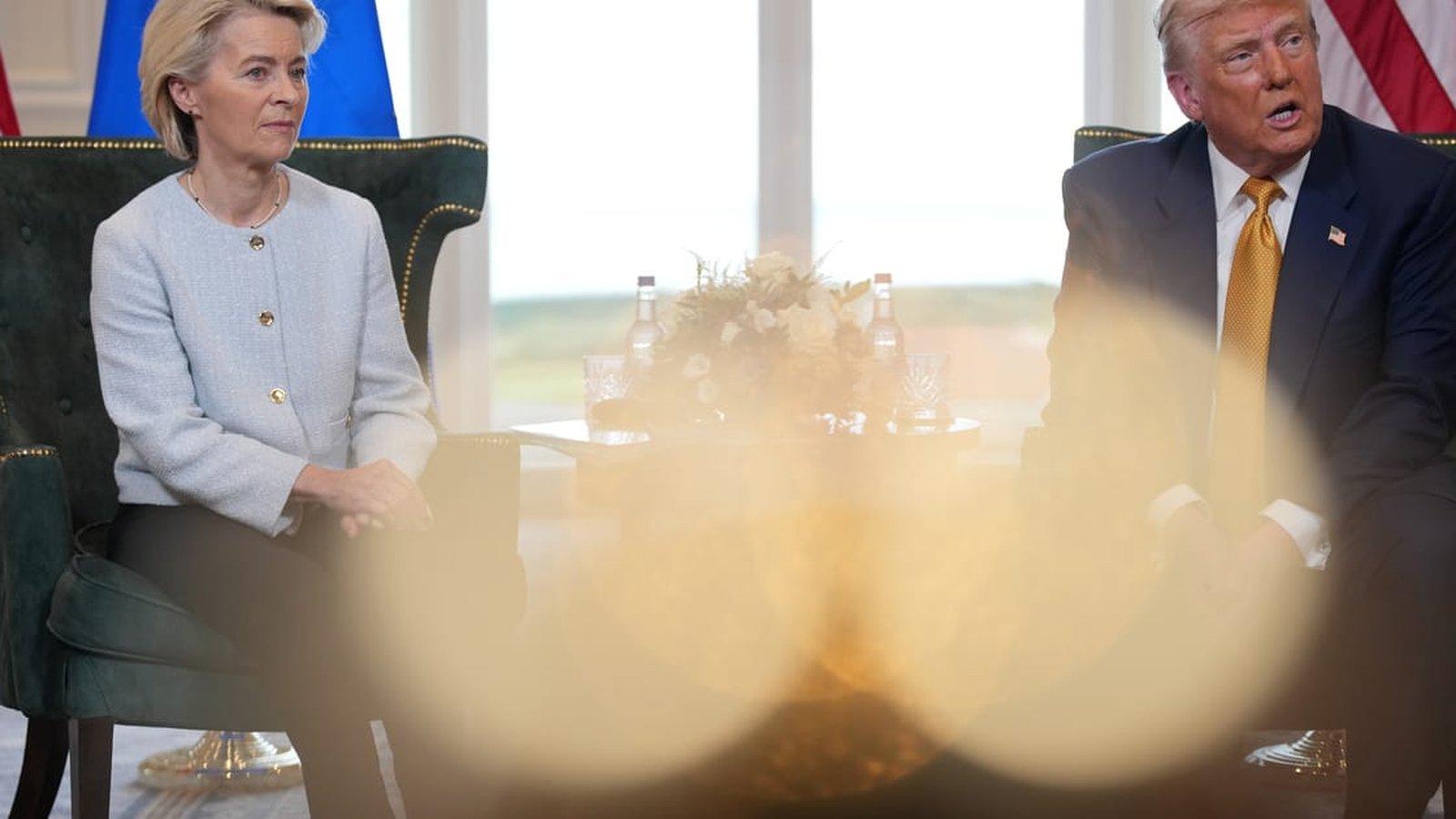
The agreement is rooted in the original ‘Turnberry Agreement’ reached last summer between European Commission President Ursula von der Leyen and President Trump. To address internal political resistance within the European bloc, lawmakers introduced significant amendments. These include a robust ‘suspension clause,’ which grants the EU the legal authority to freeze the pact if the United States breaches the terms—such as by imposing unilateral tariff increases. Furthermore, the legislation includes specific safeguards designed to prevent a market saturation of cheap American industrial goods, a primary concern for several EU member states.
Economic Stakes and Strategic Balancing
The trade relationship between the EU and the U.S. remains the world’s largest, accounting for approximately 30% of global trade in goods and services. However, the imbalance in the goods trade—characterized by a persistent EU surplus—has been a focal point of U.S. trade policy. Under the current deal, the EU has committed to purchasing $750 billion in American energy products over three years and investing $600 billion in U.S. military equipment. While supporters, such as the European People’s Party, argue that the pact provides essential certainty for European businesses, critics, including members of The Left, have characterized the deal as an act of ‘political surrender’ that risks institutionalizing a subordinate status for the EU in its dealings with Washington.
Ratification and Future Outlook
With the provisional agreement secured, the process now moves to a final ratification vote, expected between June 15 and June 18. This timeline is critical, as it precedes the July 4 deadline set by the White House. While the incorporation of sunset clauses—extending the deal’s validity beyond the current U.S. administration—signals a desire for long-term stability, the political climate remains fragile. Analysts note that the failure to include specific provisions regarding territorial disputes, such as those involving Greenland, reflects a cautious strategy to avoid further diplomatic friction, yet it leaves the bloc vulnerable to future ‘coercive pressure’ from the U.S. executive.
The conclusion of this agreement underscores the immense pressure under which the European Union currently operates when navigating its primary strategic partnership. By prioritizing immediate economic stability and the avoidance of a trade war, the EU has opted for a pragmatic, albeit controversial, path. The success of this deal will ultimately depend on the strict adherence of both parties to the newly established suspension mechanisms, as the bloc attempts to balance its commitment to rules-based multilateralism with the realities of a transactional and increasingly volatile transatlantic trade environment.