


The Breakdown of Europe’s Flagship Defense Collaboration
Europe’s ambitious attempt to build a unified sixth-generation combat aircraft has officially fractured, exposing systemic rivalries and strategic divergence between the continent’s two largest industrial powers. Following months of escalation over leadership and technical specifications, French President Emmanuel Macron and German Chancellor Friedrich Merz canceled the joint Future Combat Air System (FCAS), according to reporting by The Guardian. The collapse marks the end of an initiative launched in 2018 that was envisioned as the cornerstone of European strategic autonomy.
The project’s final undoing came when French engine manufacturer Safran announced it was terminating its joint venture with Germany’s MTU Aero Engines, dismantling the propulsion pillar of the project. Industrial friction had reached an impasse between Dassault Aviation and Airbus Defence and Space over primary design authority and intellectual property sharing. Operational divergence further doomed the initiative: Paris demanded a lighter, carrier-capable airframe suitable for deployment on France’s future nuclear aircraft carrier, whereas Berlin, lacking naval aviation requirements, sought a heavy air-defense platform focused on continental and NATO commitments.
Echoes of History and the Dilemma of Industrial Scale
The failure of FCAS strongly mirrors the European fighter disputes of the early 1980s, when France withdrew from a multi-nation consortium to build what eventually became the Eurofighter Typhoon. Dassault subsequently developed the Rafale independently, forcing Europe into decades of internal industrial competition for foreign export orders. Industry figures interviewed by The Guardian warn that repeating this historical split creates Severe economic vulnerabilities, as no single European air force possesses an order book large enough to sustain the enormous capital investments required for sixth-generation technology.
Dassault Chief Executive Éric Trappier confirmed that France intends to press forward with an independent next-generation fighter program, targeting a operational flight demonstrator by 2031. However, with France operating approximately 228 Rafales in service, domestic demand alone cannot deliver the economies of scale needed to lower unit production costs. Meanwhile, Germany is left examining alternate pathways, including a potential bid to join the Global Combat Air Programme (GCAP)—the rival sixth-generation fighter initiative led by the United Kingdom, Italy, and Japan. While executives from Rolls-Royce and Edgewing have signaled openness to German involvement, introducing Berlin as a core partner risks reopening locked workshare agreements and delaying development schedules.
Current Fleet Realities: Stealth Fusion vs. Multirole Capability
While European planners debate future procurement pathways, modern air superiority remains anchored in operational fifth-generation stealth jets and mature 4.5-generation multirole platforms. An operational overview from Simple Flying underscores that current combat doctrine prioritizes sensor fusion, low-observable signatures, and networked data sharing over sheer aerodynamic speed.
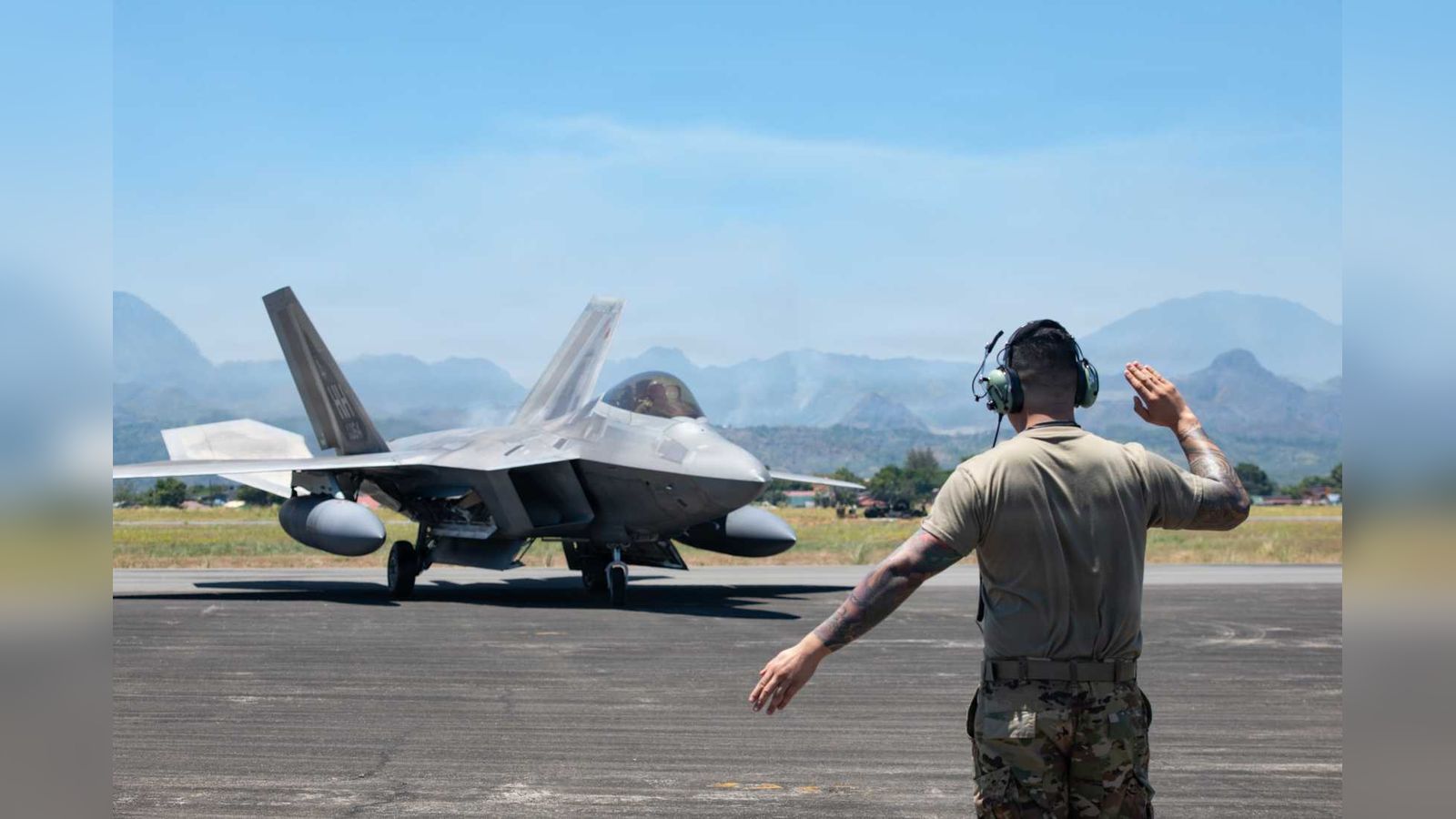
At the apex of air dominance, the Lockheed Martin F-22 Raptor maintains its benchmark status for pure air superiority, combining supercruise capabilities, thrust-vectoring agility, and all-aspect stealth. However, the operational backbone of Western and allied air forces has shifted decisively to the Lockheed Martin F-35 Lightning II. Operating as an airborne intelligence and command hub, the F-35 trades top-end speed for unmatched sensor integration and coalition interoperability, allowing allied nations to share real-time combat data across contested airspace, as documented by Simple Flying.
Concurrently, peer competitors have expanded their frontline stealth footprint. China’s Chengdu J-20 Mighty Dragon has transitioned from low-rate initial production to mass deployment, featuring long-range operational reach, internal weapons carriage, and advanced beyond-visual-range missile systems designed to target high-value airborne assets. Russia’s Su-57 remains active in prestige roles, though its operational scale continues to lag behind its American and Chinese counterparts.
The Enduring Relevance of 4.5-Generation Platforms
Despite the push toward low-observable airframes, advanced non-stealth fighters remain central to global force structures due to their payload capacity, lower operational costs, and proven combat versatility. The Dassault Rafale has emerged as one of the most commercially successful multirole fighters, securing major export contracts across Europe, the Middle East, and Asia. Capable of executing air defense, deep strike, and nuclear deterrence missions, the Rafale continues to receive upgrades, including planned integration with collaborative stealth drones by the early 2030s, according to The Guardian.
Similarly, the Eurofighter Typhoon—operated by core European partners including Germany, Britain, Spain, and Italy—remains a cornerstone of continental air defense. Developed around raw power and high-altitude intercept performance, the Typhoon has evolved into a formidable multirole strike platform through active electronically scanned array (AESA) radar integration and long-range precision weaponry, as reported by Simple Flying.
Strategic Consequences for Global Airpower Markets
The collapse of FCAS threatens to widen the strategic technology gap between Europe and major military powers. By failing to consolidate national defense budgets, European governments risk duplicating research and development spending while competing for the same export markets. American defense contractors stand to benefit as European nations seeking immediate stealth capabilities increasingly turn to off-the-shelf purchases of the F-35.
For European defense manufacturing, the next five years will determine whether regional consolidation can survive through GCAP expansion or if the market will permanently fragment into isolated national projects. Without a unified procurement framework, European air forces may find themselves dependent on external suppliers or trapped with unsustainable unit costs for domestic platforms.