


A Sudden Departure at Rogers Centre
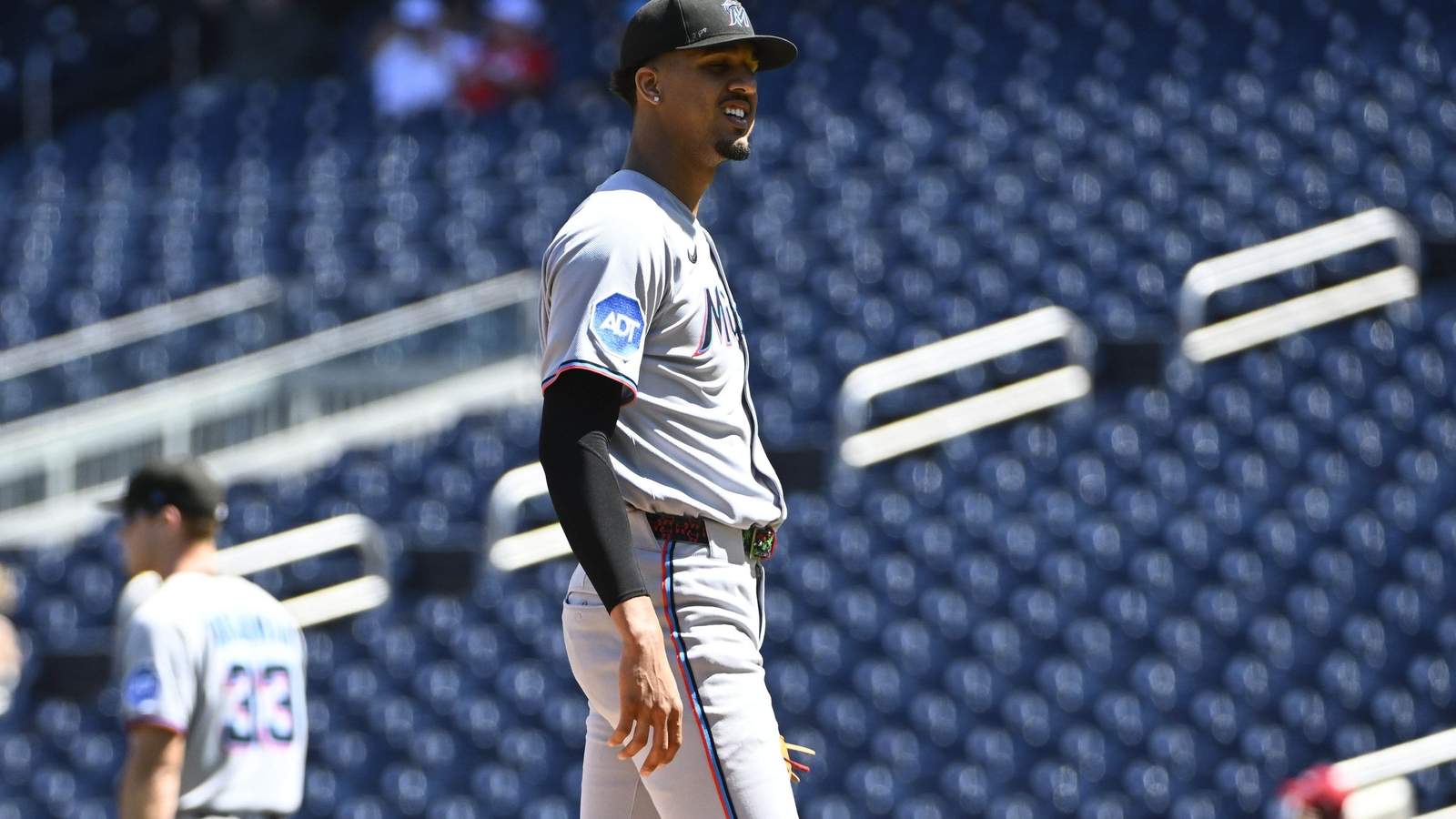
The Wednesday afternoon rubber match between the Miami Marlins and the Toronto Blue Jays took an unexpected turn as Marlins right-hander Eury Pérez was removed from the game following four innings of shutout baseball. While Pérez had been commanding the mound with a season-high nine strikeouts, the conclusion of his outing was dictated by a bizarre non-contact injury sustained within the confines of the team dugout.
According to official reports from the Marlins organization, Pérez experienced a significant hamstring spasm while attempting to stretch during the transition between the fourth and fifth innings. The incident occurred as the pitcher prepared to head back out to the mound. The severity of the spasm was immediate, forcing the young right-hander to sit down in visible distress. He ultimately required physical assistance from a teammate to navigate the dugout steps and make his way to the clubhouse for further evaluation.
Dominance Overshadowed by Physical Setback
Prior to the injury, Pérez had been delivering one of his most effective performances of the 2026 campaign. Over his four innings of work, he allowed only three hits—all singles—and issued zero walks, demonstrating the high-level command that scouts often highlight regarding his potential. He threw 73 pitches, 48 of which were strikes, effectively stifling a Toronto offense that had entered the game with significant momentum.
The game had also seen flashes of tension before the injury. In the fourth inning, Pérez struck Toronto slugger Kazuma Okamoto with a 97 mph fastball. Following the pitch, Pérez appeared to direct his gaze toward the Blue Jays’ dugout, sparking a brief verbal exchange with Toronto manager John Schneider. While the situation did not escalate into a bench-clearing event, it added an layer of friction to an already high-stakes contest.
Strategic Implications for the Bullpen
The exit of Pérez forced Miami to pivot to the bullpen earlier than anticipated, with Michael Petersen taking over in the fifth inning. The impact was felt almost immediately; with two outs in the bottom of the fifth, Toronto’s Nathan Lukes delivered an RBI double off Petersen, erasing the 1-0 deficit the Marlins had established early in the game. This shift in pitching strategy serves as a critical variable for the remainder of the series, particularly given the reliance of both clubs on stable rotation performance.
Heading into this matchup, analysts had pointed toward the duel between Pérez and Toronto’s Kevin Gausman as the focal point of the rubber match. With the Marlins’ rotation depth currently under scrutiny due to Pérez’s 3-6 record and 4.91 ERA entering the day, the loss of his services for the remainder of this game—and potentially beyond—presents a difficult logistical hurdle for Miami’s coaching staff. The reliance on the bullpen to cover the final five innings against a Toronto lineup that has been finding its power stroke, including recent heroics from Jesus Sanchez, significantly changes the probability landscape for the remainder of the series.
The sudden nature of Pérez’s injury highlights the unpredictable physical toll of modern professional baseball, where even stationary stretches in a dugout can derail a dominant pitching performance. For the Marlins, the priority now shifts from game-winning strategy to medical assessment, as the loss of a high-strikeout arm like Pérez’s could have cascading effects on the team’s rotation stability. As the Blue Jays capitalize on the transition to the bullpen, the narrative of the game has shifted from a pitchers’ duel to a test of relief depth, underscoring the fragility of roster management in the MLB’s rigorous 162-game schedule.