


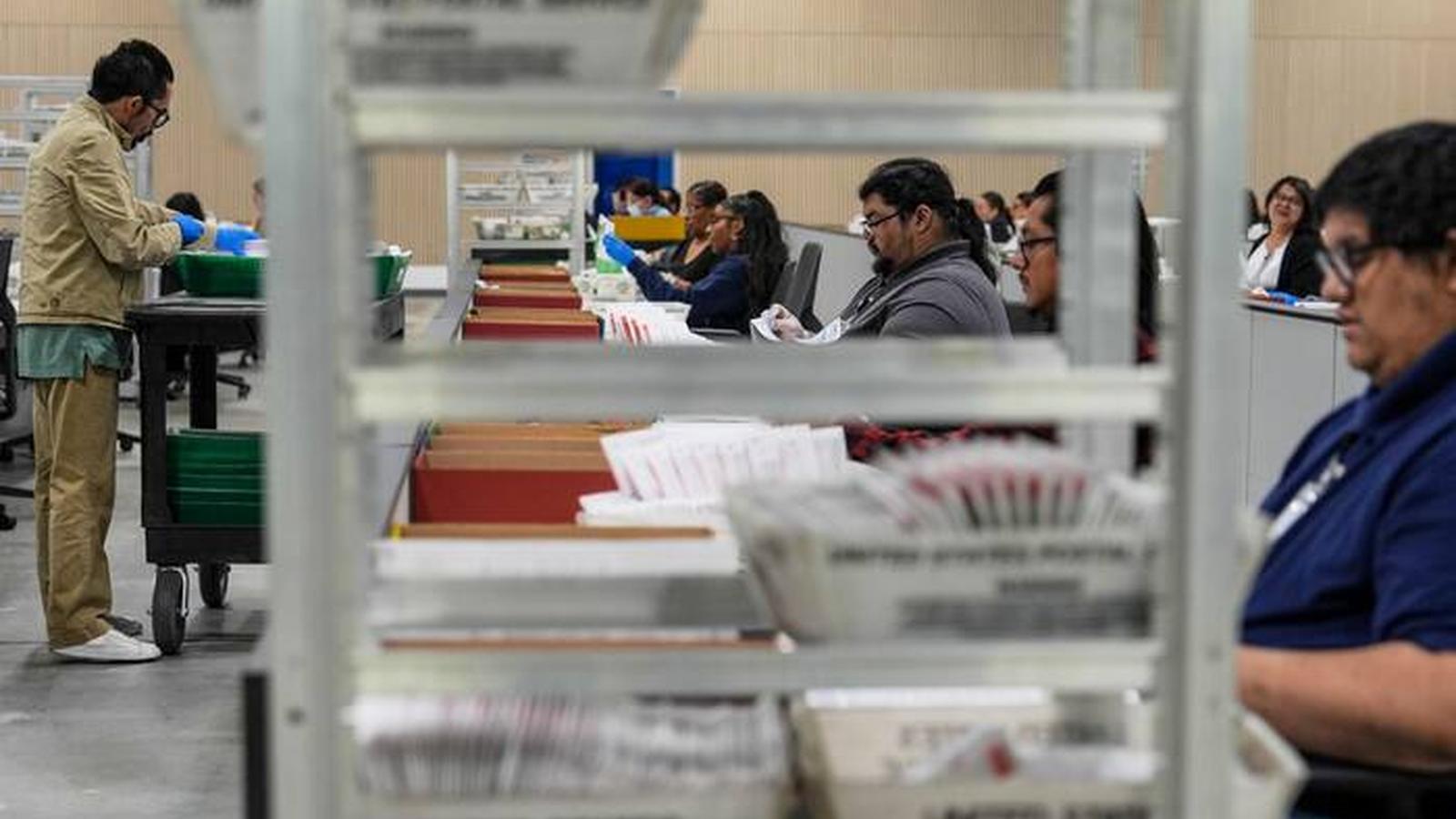
LOS ANGELES (Azat TV) – On Wednesday, October 29, 2026, U.S. District Judge David O. Carter forcefully rejected a Trump administration request to force California election officials to segregate approximately 20,000 mail-in ballots flagged over unproven noncitizen allegations. In a ruling issued from Los Angeles, ClickOrlando reported that the federal judge warned that isolating the ballots midway through the contest would “wreak havoc” on the midterm elections. The legal showdown unfolds as more than 3.7 million people have already cast votes across the Democratic-led state, setting off an immediate pledge from federal prosecutors to appeal the decision.
The dispute centers on a mid-October lawsuit filed by the Justice Department against California election officials. The federal administration accused state authorities of failing to review a list of 20,000 individuals alleged to be likely noncitizens on voter rolls within a 48-hour window. Prosecutors sought a court order requiring local officials to set aside ballots submitted by those individuals until their citizenship could be verified. Judge Carter, an appointee of former President Bill Clinton, ruled that granting the request so close to Election Day would violate federal protections and risk widespread voter disenfranchisement.
Legal Reasoning and the National Voting Rights Act
In his Wednesday order, Judge Carter wrote that segregating the disputed ballots would require counties to invent new sorting methods at an advanced stage of voting. He concluded that such an eleventh-hour disruption carries the same practical effect as purging voters, which directly violates the National Voting Rights Act prohibiting changes to voter rolls within 90 days of an election.
“Eroded trust in our democracy is irreparable. Once a vote is segregated, lasting harm has occurred,” Carter wrote in the ruling published by ClickOrlando. “If the Executive can discount votes and threaten an ongoing election due to unproven allegations, then our democracy is in danger. This Court declines to be a party to such process.”
California sends mail-in ballots to all 23 million registered voters statewide. Court filings demonstrated that over 500,000 ballots had already been processed and separated from their verified envelopes by the time of the ruling, making it practically impossible for Los Angeles County election workers to track down and isolate specific ballots tied to individual voters.
Broader Legal Battlegrounds and Federal Appeals
First Assistant U.S. Attorney Bill Essayli defended the administration’s legal strategy, stating that the Justice Department was attempting to prevent the dilution of lawful votes. Writing on social media following the decision, Essayli argued that segregating flagged ballots merely preserves the status quo and does not prevent them from being counted later if cleared. Prosecutors announced plans to file an immediate appeal, marking the second time the federal government has sought higher-court intervention after the 9th Circuit Court of Appeals previously expressed skepticism over the administration’s demands.
The California lawsuit mirrors parallel federal challenges in Washington state, where the Justice Department demanded the isolation of ballots cast by more than 400 individuals, and in Alaska, where a separate filing seeks to delay vote certification if a Republican incumbent loses. Election law experts note that these coordinated federal actions test the boundary between federal enforcement powers and state-administered elections.
David Becker, executive director of the Center for Election Innovation and Research, observed that the ruling reaffirms fundamental electoral principles. According to analysis covered by ClickOrlando, Becker stated that state and local authorities run American elections, and the administration’s eleventh-hour intervention appeared tailored to create operational chaos rather than genuine election security. Meanwhile, civil rights advocates representing local election officials hailed the decision as a critical shield against efforts to undermine public trust as the midterm elections reach their final phase.