


Nationwide Rallies and Mobilized Security
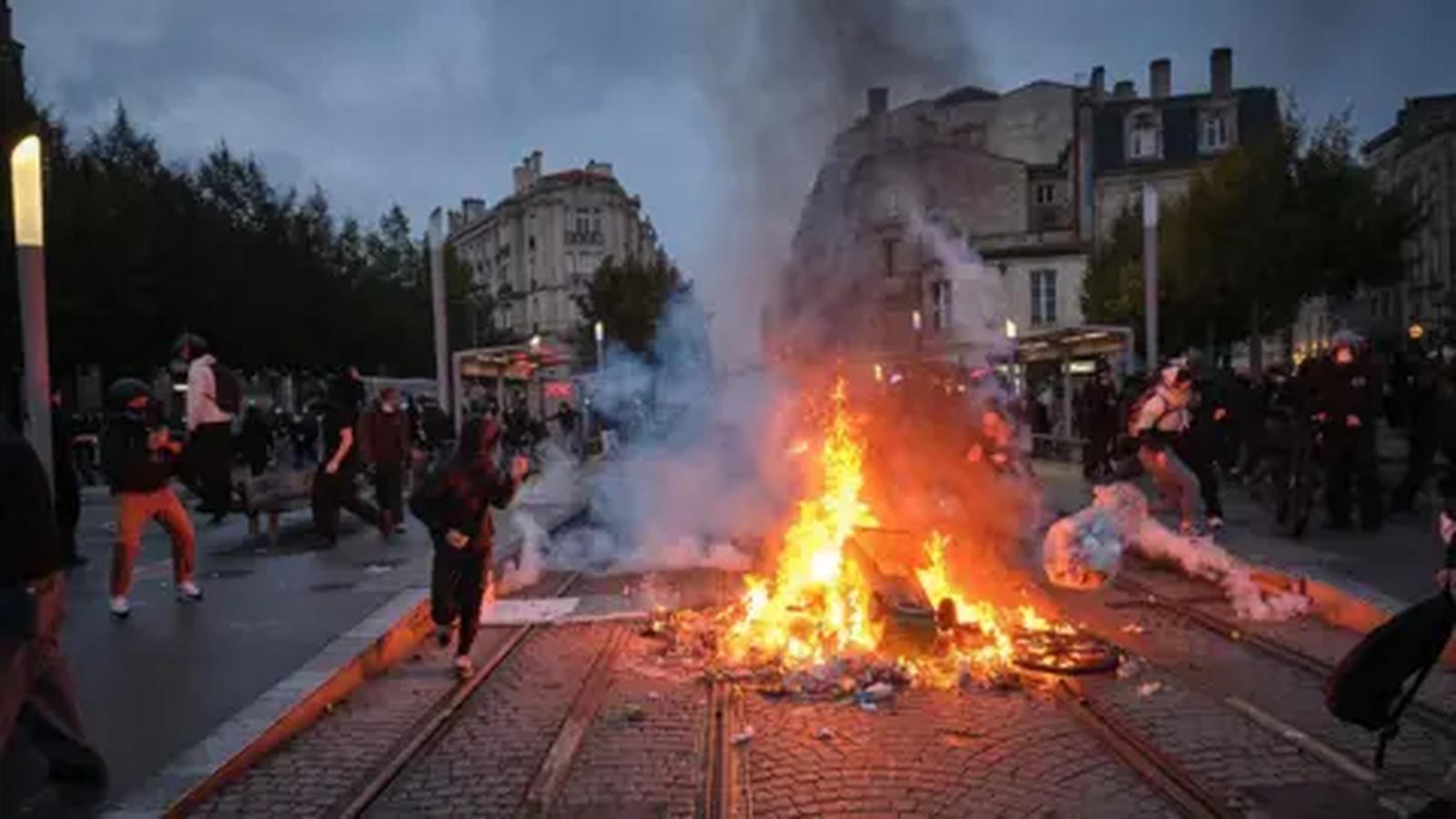
French authorities reported more than 1,300 arrests nationwide on Saturday, October 25, 2026, as hundreds of thousands of citizens took to the streets to protest against soaring living costs and poor school conditions, according to the BBC. While the demonstrations began largely peacefully, later confrontations erupted in several major cities including Paris, Marseille, Lyon, Bordeaux, Toulouse, and Rennes. The interior ministry estimated total turnout at roughly 410,000 participants, whereas labor unions placed the figure higher at approximately 800,000.
The demonstrations followed severe rioting and looting the previous weekend that left extensive property damage. In response to the earlier unrest, the French government deployed 70,000 police officers and enforced strict security perimeters. President Emmanuel Macron had previously decreed that only authorized demonstrations organized by recognized trade unions would be permitted, while fast-track courts have already jailed hundreds for arson, vandalism, and looting.
Clashes in Paris and Regional Outbreaks
In the French capital, a Euronews journalist on the ground witnessed riot police fire tear gas and deploy water cannon near Porte de Vincennes to disperse crowds. French Interior Minister Laurent Nuñez stated that several thousand radical activists mingled at the rear of the march, including about 500 individuals identified as rioters. Police in Paris made 142 arrests, a figure lower than the previous week’s tally.
Confrontations extended beyond the capital. In Marseille, protesters set rubbish bins ablaze and blocked streets, with a law enforcement vehicle seen driving through a burning barricade. In Lyon, police used tear gas grenades against a crowd gathered in an off-limits zone. Minister Nuñez confirmed that two individuals sustained serious injuries during Saturday’s clashes—one in Toulouse, where a 20-year-old protester suffered severe hand trauma from an explosive device, and another in Clermont-Ferrand.
Political Polarization and Broader European Unrest
The unrest unfolds against a highly polarized political landscape as France prepares for presidential elections scheduled for the spring. Major political contenders have criticized President Macron, while right-wing and left-wing figures have exchanged blame over the ongoing crisis. The unfolding election cycle positions Marine Le Pen of the National Rally and a candidate from the radical-left La France Insoumise as central figures in an anticipated divisive race.
Similar cost-of-living and student-led demonstrations also surfaced internationally on Saturday. Authorities in Barcelona reported over 120 arrests following violent student protests, while riot police intervened in Tirana and Brussels. Meanwhile, heavy security operations in Milan successfully prevented mass gatherings, reflecting widespread regional tensions over economic pressures.