


A Crisis of Unprecedented Scale
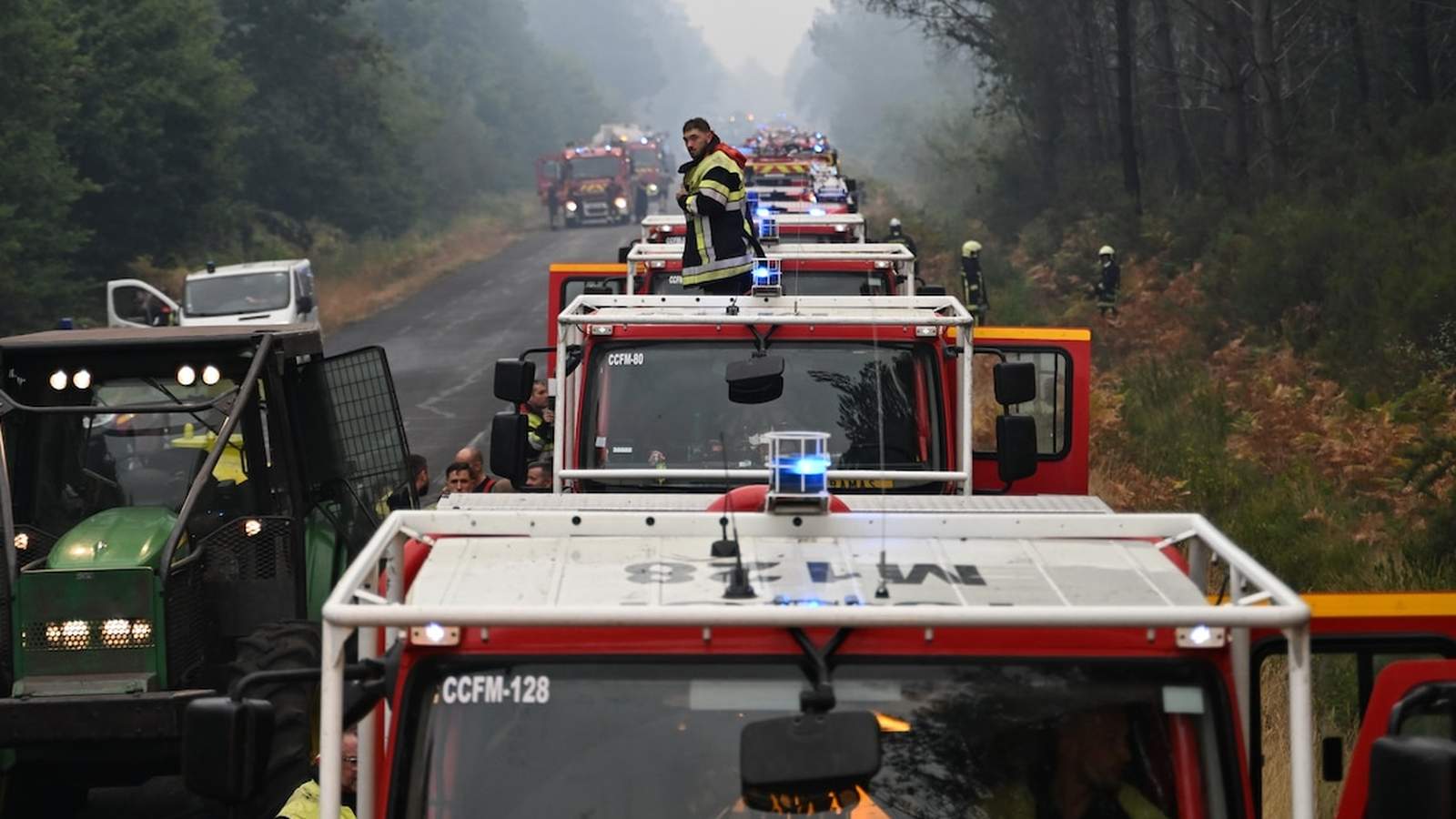
As of July 25, 2026, southern Europe is grappling with a series of extreme wildfires fueled by record-breaking heatwaves and prolonged drought conditions. The blazes have forced over 250,000 people to evacuate across France and Spain, straining national emergency services to their limits. In France, the Gironde region has become the epicenter of the crisis, with approximately 167,000 residents forced to leave their homes, including those in the western suburbs of Bordeaux, such as Le Haillan, Eysines, and Mérignac.
French authorities reported that the Gironde blaze, which ignited earlier this week in Saumos, has consumed roughly 32,700 hectares. Nationally, the French government reports that 98,000 hectares have burned this year, a “historic record” according to Interior Minister Laurent Nuñez. The situation has turned tragic, with two firefighters losing their lives while battling flames in Mérignac on Tuesday. President Emmanuel Macron paid tribute to the fallen responders, extending the nation’s condolences to their families.
Military Intervention and Tactical Shifts
The scale of the fire in the Gironde region has forced the French government to deploy extraordinary measures. A heavy-lift A400M military transport plane, converted for aerial firefighting, has been utilized to drop tons of flame retardant over drought-stricken woodlands. The government has also mobilized soldiers to assist fire crews, while 1.5 million protective face masks are being distributed to residents to mitigate the health risks posed by thick, noxious smoke.
In Spain, the situation remains equally critical. Prime Minister Pedro Sánchez, visiting a command post west of Madrid, noted that 130,000 hectares have burned in the country this year, significantly exceeding the annual average of 100,000 hectares over the past decade. While cooler temperatures and shifting winds on Saturday provided a brief “window of opportunity” for containment, the intensity of the fires has previously prevented direct, head-on suppression tactics. One fatality has been confirmed in the municipality of Manises, located in the Valencia region.
International Coordination and Economic Impact
The European Union has activated its civil protection mechanism to coordinate international aid. Nations including Italy, Greece, the Netherlands, Portugal, Croatia, the Czech Republic, Sweden, Germany, and Switzerland are contributing water-dumping aircraft and specialized firefighting teams. This collaborative response highlights the trans-border nature of the climate-driven crisis, as the EU reports over 1,250 fires have scorched more than 254,000 hectares across the continent since the start of 2026.
The impact of the crisis has reached beyond emergency services, affecting national culture and logistics. Tour de France organizers announced a truncated final stage for the race, reducing the route by a third to allow security personnel to be redeployed to the front lines of the Gironde fires. Meanwhile, in Bordeaux, the city has opened its exhibition center to accommodate thousands of evacuees, with city officials planning for up to 10,000 arrivals if the situation escalates further.