


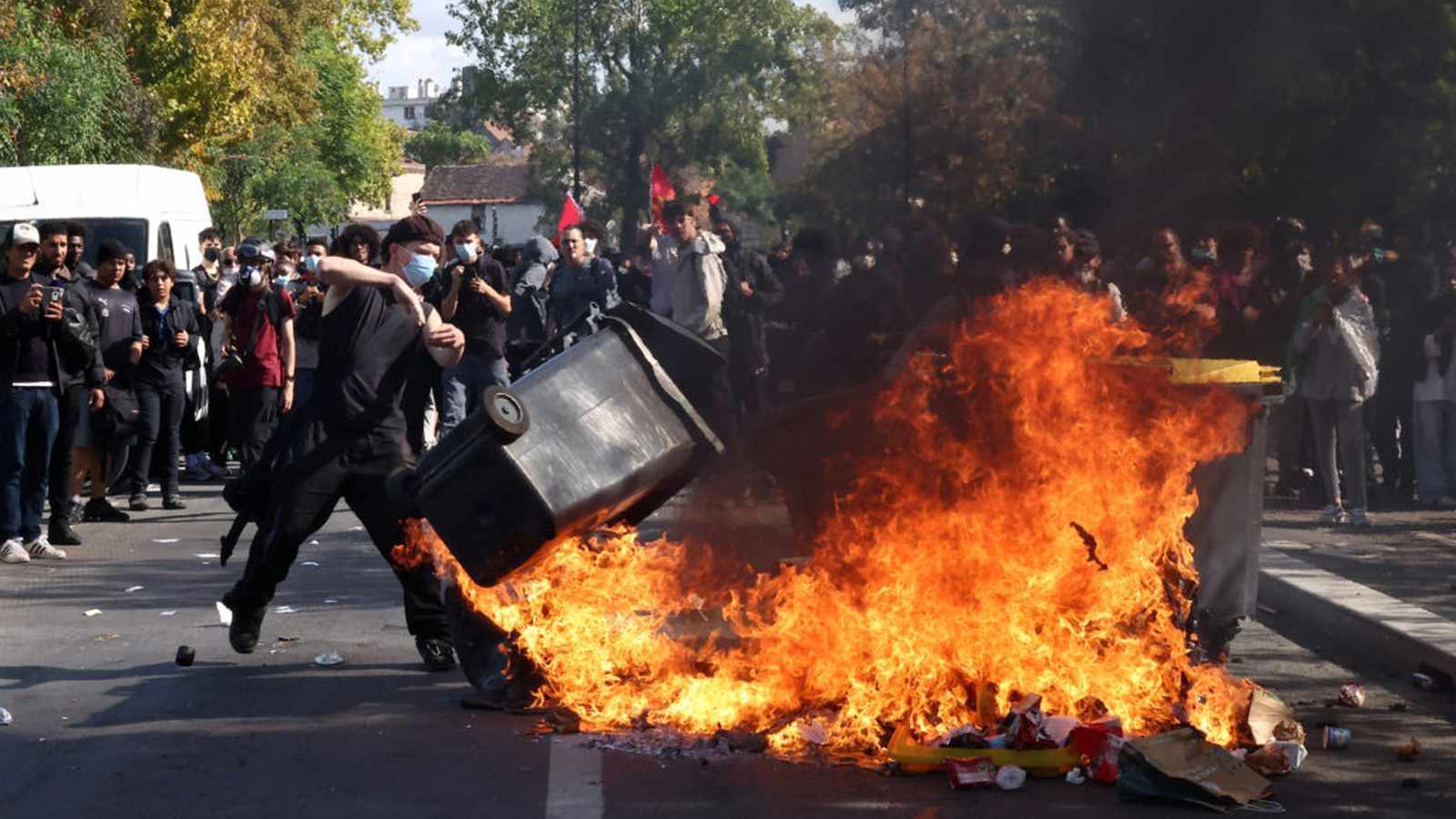
Lecornu instructed his ministers to cancel all scheduled travel and report to the emergency cabinet session. His office issued a sharp warning, stating that the mounting unrest threatened the fundamental continuity of public education and placed school employees and teenagers in severe physical jeopardy.
“This upsurge in violence makes it virtually impossible to maintain the continuity of public education and is exposing staff and students to danger,” Lecornu’s office said in a public statement.
Education Minister Édouard Geffray scheduled meetings with student representatives for Friday, while police reported roughly 900 demonstrations, campus blockades, and related incidents nationwide, according to Novinite. At least 160 high schools were forced to shut their doors, while The Straits Times reported that approximately 400 schools overall faced closures as the movement escalated. Furthermore, around 30 university facilities—including major hubs in Paris and Marseille—were blockaded by Thursday.
Mass Arrests and Clashes Across Regions
According to the Interior Ministry, nearly 3,000 high-school students aged 15 to 18 have been detained since the demonstrations began, with 1,949 apprehended on Thursday alone. The clashes have also left over 300 police officers injured, alongside dozens of firefighters, teachers, and students. Most injuries stemmed from thrown objects, though some resulted from riot-control projectiles fired by police forces.
The Interior Ministry confirmed that an internal investigation has been launched into allegations that officers used excessive force and behaved brutally toward three students. Protesters across multiple cities voiced grievances ranging from excessive workloads, overcrowded classrooms, and teacher shortages to unbearable temperatures during heatwaves earlier this year.
Vandalism and arson accompanied the blockades. Fires were lit in rubbish bins outside numerous educational institutions, while more dangerous attempts to start fires inside buildings were reported. Authorities noted that a school in Nantes sustained such extensive fire damage that it will remain closed for a month. In Strasbourg, tram services were temporarily halted after protesters blocked tracks with crowd-control barriers, an action the regional prefect justified as a measure to restrict rioter mobility.
Political Dimensions and Election Stakes
The unrest is rapidly becoming a focal point in the political campaign to replace President Emmanuel Macron, who is constitutionally barred from seeking a third consecutive term next May, PBS NewsHour reported. The protests also heighten pressure on a government already grappling with financial strains, coinciding awkwardly with the release of its proposed cost-cutting budget for 2027.
The government has openly accused the radical-left France Insoumise (LFI) party of encouraging the protests. Intelligence agencies reportedly told Lecornu’s crisis meeting that LFI politicians initiated the movement, an allegation denied by LFI lawmaker Louis Boyard, according to The Straits Times. Meanwhile, LFI leader and 2027 presidential candidate Jean-Luc Mélenchon stated that his party supports nonviolent forms of protest while expressing deep concern over police conduct toward young demonstrators.