


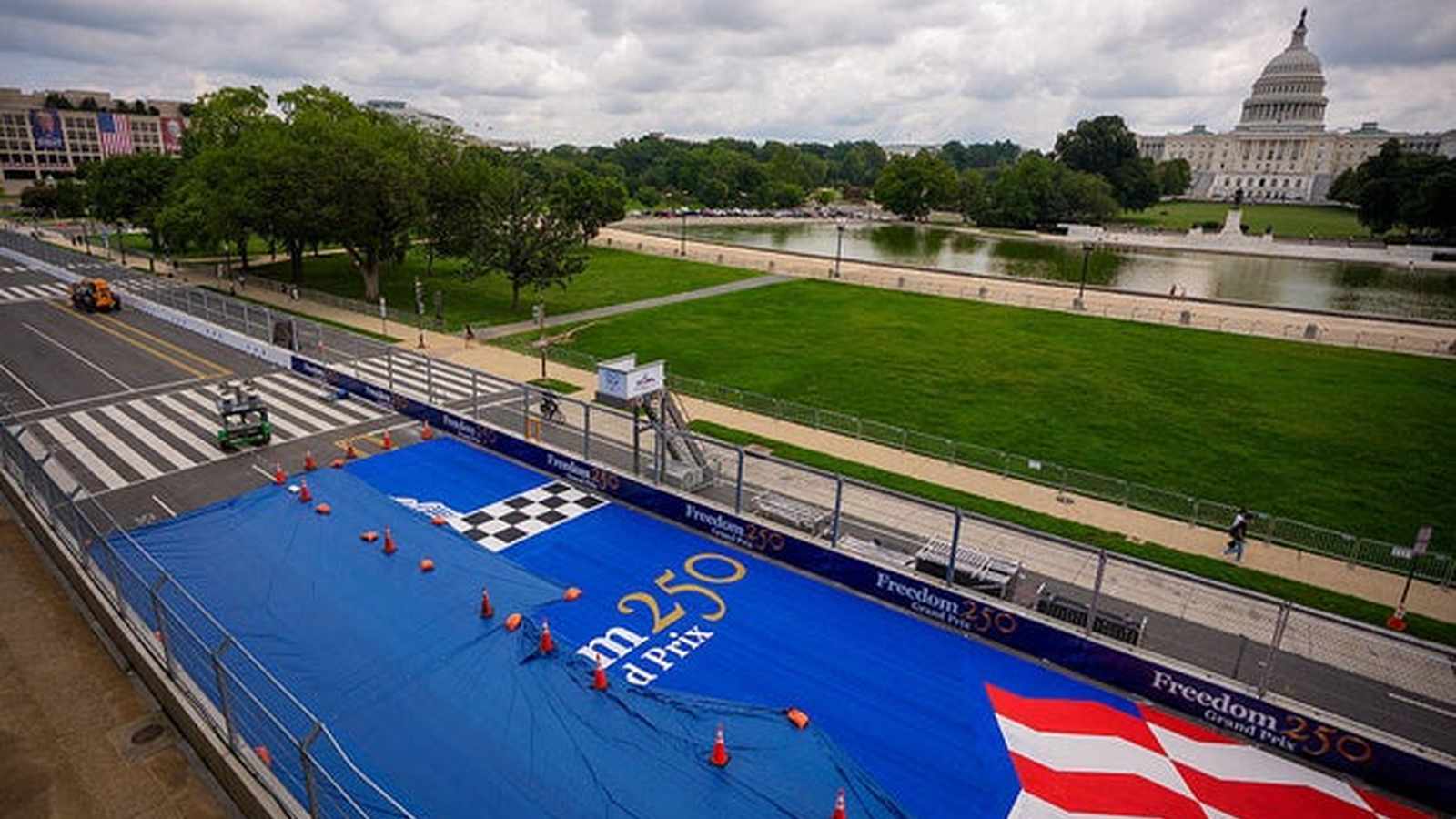
A Capital Transformation
Washington, D.C. underwent a dramatic transformation this weekend as the Freedom 250 Grand Prix brought high-speed open-wheel racing to the heart of the nation’s capital. For the first time in over two decades, the streets surrounding the National Mall were converted into a 1.7-mile temporary circuit, hosting 25 IndyCar drivers competing in a race commemorating the United States’ 250th birthday.
The event, which took place on August 22-23, 2026, required weeks of logistical preparation, including the installation of 1,800 massive concrete barriers and the securing of over 220 manhole covers to withstand the force of vehicles traveling at speeds approaching 180 mph. The track layout, designed to wind past iconic landmarks including the U.S. Capitol, the National Archives, and the National Gallery of Art, presented unique challenges for drivers, who described the circuit as exceptionally bumpy and technically demanding.
Political Spectacle and Logistical Stakes
The race carried significant political weight, beginning with a ceremonial lap led by President Donald Trump and First Lady Melania Trump in the presidential limousine. The President, who signed an executive order in January to facilitate the race after Congressional roadblocks stalled the initial planning, framed the event as a celebration of American ingenuity and patriotism. The atmosphere was punctuated by military flyovers, including a B-2 stealth bomber, and ceremonial performances, reflecting the administration’s focus on elaborate public spectacles.
Logistically, the event was spearheaded by Bud Denker, president of Penske Entertainment and chairman of the Grand Prix. While the total cost of the project remains undisclosed, Denker confirmed that Penske Corp. covered the “vast majority” of the expenses, with sponsorships offsetting the remainder. The government’s financial involvement was limited to security operations provided by the Secret Service and the D.C. Metropolitan Police Department.
Urban Impact and Future Prospects
The temporary closure of central D.C. caused significant disruption for residents and tourists. Several Smithsonian museums, including the National Air and Space Museum, restricted access to ticket holders, and major thoroughfares were shuttered to accommodate the grandstands and track infrastructure. Some road closures are expected to remain in effect until September 15, as crews dismantle the race facilities.
While the Freedom 250 is designated as a one-time affair to mark the nation’s 250th anniversary, the success of the event has already prompted discussion regarding the potential for future street races. D.C. Mayor Muriel Bowser has expressed interest in establishing the Grand Prix as a recurring fixture, though the logistical hurdles and noise complaints—reminiscent of the failed 2002 Cadillac Grand Prix—remain factors that would require long-term municipal planning if the city were to pursue a permanent series.