


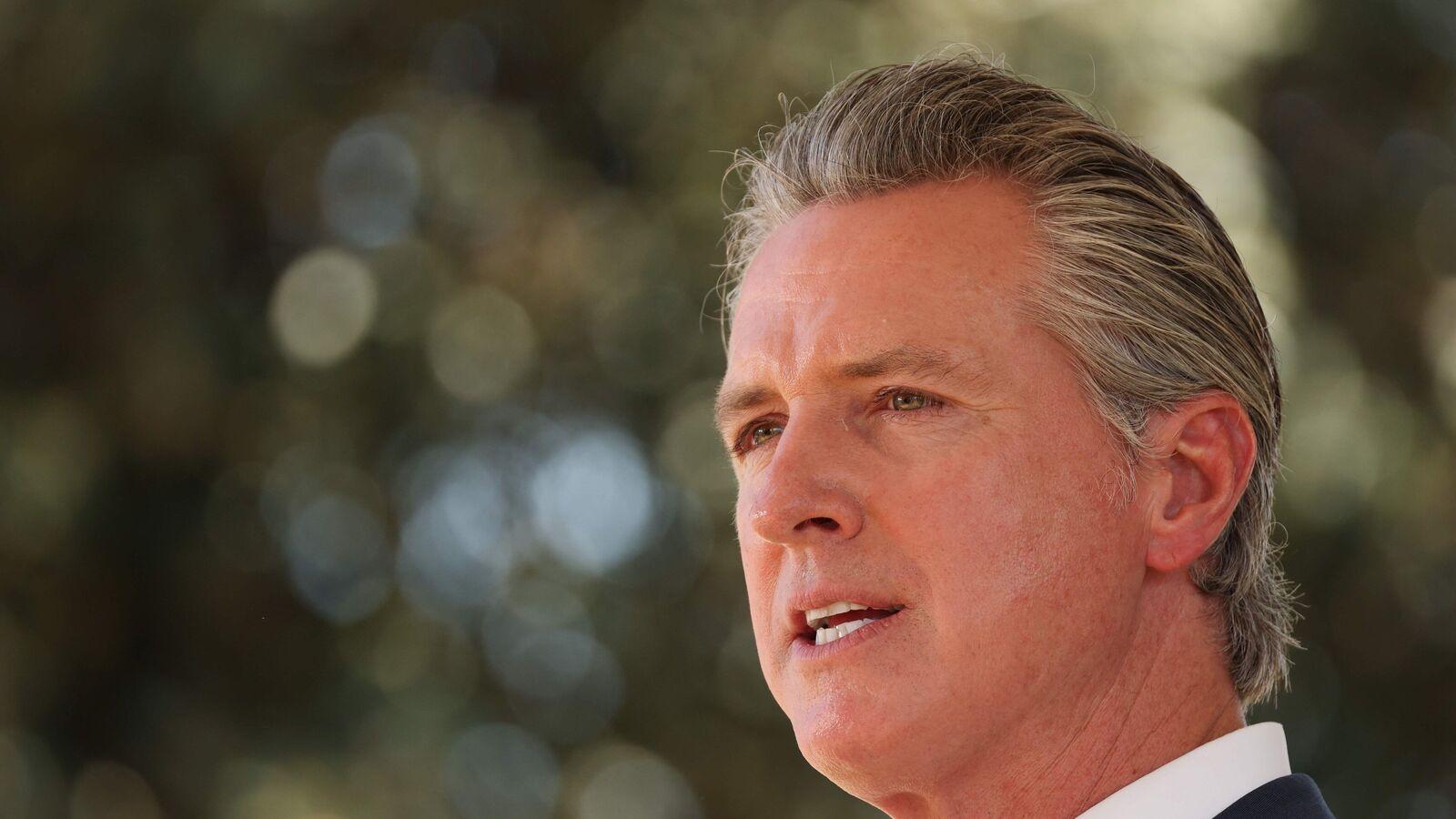
California Governor Gavin Newsom has once again found himself in the spotlight of national politics, this time engaging in a heated exchange with U.S. President Donald Trump over redistricting battles that have reignited partisan tensions. Newsom’s public statements, delivered with his signature sharp tone, targeted what he described as a Republican-led effort to manipulate congressional maps in Texas to secure GOP dominance ahead of the 2026 elections.
The Roots of the Redistricting Clash
The controversy began with Texas’ GOP-backed push to redraw congressional district maps, a move that prompted a Democratic walkout in protest. According to Today News, Newsom criticized these efforts as an “affront to American democracy,” accusing Trump of orchestrating the manipulation to gain additional Republican seats in Congress. Newsom’s objections are rooted in his broader stance against partisan gerrymandering, which he views as a threat to fair representation.
“This attempt to rig congressional maps before a single vote is cast in the 2026 election is unacceptable,” Newsom declared in a letter to Trump. He further warned of a potential “redistricting arms race,” where states retaliate against partisan map-drawing by implementing their own countermeasures. Newsom’s remarks align with his advocacy for independent redistricting commissions, which he has championed as a fair alternative to partisan control.
Mockery and Mimicry: Newsom’s Social Media Strategy
The feud took a theatrical turn when Newsom’s press office posted a series of tweets mimicking Trump’s distinctive social media style. Using all-caps text, dramatic punctuation, and hyperbolic language, Newsom lambasted Trump for his role in the redistricting dispute. One tweet read: “DONALD TRUMP, THE LOWEST POLLING PRESIDENT IN RECENT HISTORY, THIS IS YOUR SECOND-TO-LAST WARNING!!! (THE NEXT ONE IS THE LAST ONE!)” According to The Hill, the post was an intentional parody of Trump’s rhetorical flourishes, underscoring Newsom’s willingness to meet fire with fire in the political arena.
The mocking tone extended to references like “Donald ‘TACO’ Trump,” a moniker that has gained traction among critics accusing Trump of issuing empty threats. Newsom’s posts also hinted at a possible press conference where he would unveil California’s legal and political strategies to counteract Republican gerrymandering efforts. This approach drew mixed reactions, with some Democrats applauding the boldness while others questioned the risks of stooping to Trump’s level of discourse.
California’s Potential Counter-Moves
Newsom’s threats to “counter-strike” were not mere rhetoric. As reported by Local News, he suggested that California could redraw its own congressional maps to offset any Republican gains achieved through redistricting in Texas and other red states. Such a move would require significant legal and legislative efforts, potentially including a statewide ballot measure to reverse California’s voter-approved independent redistricting process.
While Newsom’s proposal is framed as a political counterpunch, it has sparked debate within his own party. Critics argue that abandoning independent redistricting could undermine Democrats’ moral high ground on the issue of fair maps. Newsom, however, has signaled his willingness to reconsider if Republican-led states agree to halt their gerrymandering efforts. “If the other states call off their redistricting efforts, we will do the same,” he tweeted, leaving the door open for a truce.
The Broader Implications
The escalating feud between Newsom and Trump highlights the high stakes of redistricting battles in American politics. With control of Congress hanging in the balance, both parties are leveraging every tool at their disposal to secure an advantage. Newsom’s aggressive stance reflects his ambition to position himself as a national leader within the Democratic Party, potentially laying the groundwork for a 2028 presidential bid.
At the same time, the dispute underscores the vulnerabilities of the U.S. electoral system to partisan manipulation. Newsom’s call for independent redistricting commissions echoes broader calls for reform aimed at safeguarding the integrity of American democracy. Whether his confrontational approach will yield results or backfire remains to be seen.
As the redistricting battle unfolds, one thing is clear: the fight for fair representation is far from over, and the political landscape could shift dramatically in the months ahead.