


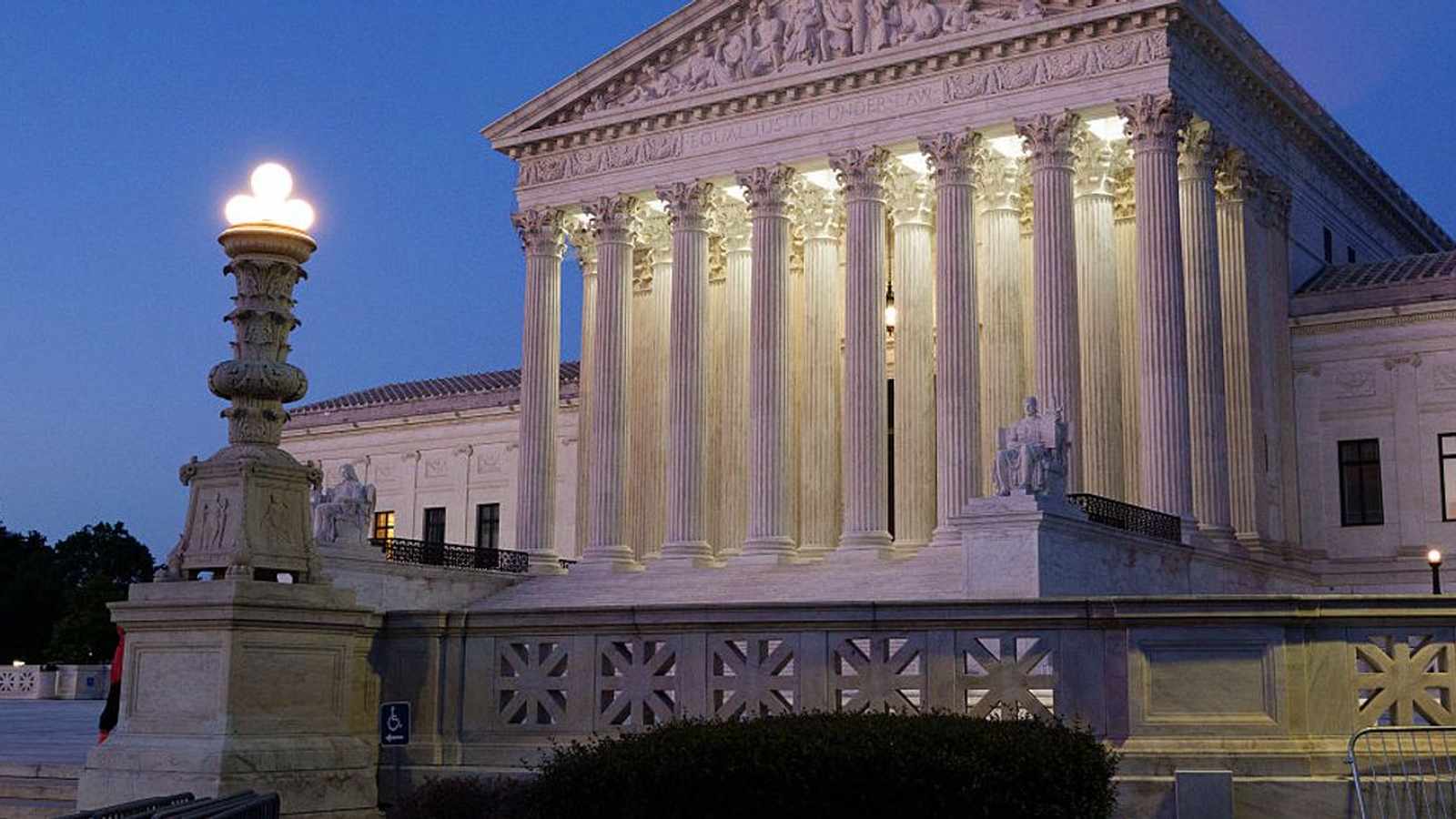
The Supreme Court of the United States has rejected a high-stakes emergency request from the Trump administration to enforce restrictive new mail-in voting regulations. In an unsigned, late-night order, the justices left in place a federal preliminary injunction that prevents the U.S. Postal Service (USPS) from implementing controversial administrative rules just weeks before the November midterm elections. The decision, as detailed in reports by SCOTUSblog, marks a significant defeat for the White House’s broader campaign to overhaul mail-in voting protocols.
The Supreme Court’s Late-Night Order
The high court’s ruling was delivered in a brief, unsigned order that did not disclose the full vote count but revealed deep ideological divisions among the justices. The majority determined that the federal government was unlikely to succeed on the merits of its legal arguments, which is a critical standard for granting emergency relief. Furthermore, the court noted that the equitable factors required to pause the lower court’s injunction—such as proving that the government would suffer irreparable harm without immediate intervention—did not favor the administration.
Justice Brett Kavanaugh penned a one-paragraph concurrence, aligning with the liberal wing and Chief Justice John Roberts to deny the government’s request. While Kavanaugh suggested that the USPS might possess the statutory authority to issue such rules under different circumstances, he emphasized the critical issue of timing. Election officials, Kavanaugh wrote, simply “do not have sufficient time to reasonably implement the rule before” the upcoming November elections. His focus on administrative feasibility underscored the growing judicial reluctance to alter election procedures on the eve of voting.
In contrast, Justice Samuel Alito, joined by Justice Clarence Thomas, filed a sharp dissent. Alito argued that the administration had met the necessary legal thresholds for a stay. He criticized the standing of the civic groups challenging the rule, characterizing their legal claims as a “‘Hail Mary pass’ that ‘rarely succeeds.’” Alito asserted that the USPS holds broad regulatory authority over national mail operations and warned that the government would suffer permanent harm because it would be unable to enforce the rule in time for the elections, even if the lower court’s injunction is eventually overturned on appeal.
The Roots of the Conflict: Trump’s Executive Order
The legal battle originated in March 2026, when President Donald Trump signed a sweeping executive order aimed at combating what his administration alleged was widespread voter fraud. The executive order directed various federal agencies to implement strict checkpoints on mail-in voting. Among its provisions, the order required the Department of Homeland Security (DHS) to send state governments lists of adult U.S. citizens at least 60 days before federal elections. It also instructed the U.S. Attorney General to investigate and prosecute state officials who permit ineligible individuals to cast ballots.
In response to the executive order, a coalition of 23 states—led by California—alongside the District of Columbia, filed a lawsuit in the U.S. District Court for the District of Massachusetts. The states argued that the federal directives infringed upon the U.S. Constitution’s Elections Clause, which designates state legislatures as the primary authorities for determining the “Times, Places, and Manner” of holding congressional elections.
U.S. District Judge Indira Talwani agreed with the states’ constitutional arguments, issuing a temporary order on June 25 that blocked the federal government from implementing the executive order before the November elections. Although the Supreme Court temporarily paused Talwani’s initial order on August 24—ruling that the states’ initial challenge was premature because the executive order had not yet been active—the legal landscape shifted rapidly when the USPS subsequently issued its own formal administrative rule to execute the president’s mandate.
A Complex Procedural History
The USPS rule introduced specific physical requirements for mail-in ballots, including mandatory envelope designs and the compulsory submission of state voter data into a centralized USPS portal. Recognizing these new operational burdens, Judge Talwani intervened again on August 27, issuing a temporary restraining order that barred the federal government from forcing states to comply with the postal regulations.
The Trump administration immediately appealed to the Supreme Court on September 3, seeking to lift Talwani’s temporary halt. However, the procedural dynamics changed on September 6 when Talwani converted her temporary order into an indefinite preliminary injunction. In response, U.S. Solicitor General D. John Sauer withdrew the initial emergency request and filed a new appeal targeting the preliminary injunction.
Sauer argued that the district court’s continuous blocking of the rule was “baseless” and “simplistic,” denying that the federal government was trying to nationalize election rules. He framed the USPS requirements as “modest envelope-design and addressee-information requirements” designed to streamline mail processing. Without a Supreme Court intervention, Sauer warned, states would proceed with mailing ballots that failed to comply with the federal standards, rendering the administration’s policy goals impossible to execute for the current election cycle.
Logistical Realities and Bipartisan Warnings
The coalition of challenging states countered that the USPS rule represented an “unprecedented experiment” with the nation’s voting infrastructure. They warned that forcing local election offices to redesign envelopes and integrate voter databases at the last minute would trigger administrative “chaos,” potentially disenfranchising millions of voters who rely on mail-in ballots. The states also raised concerns about technical breakdowns and systemic delays within the postal network itself.
This warning was reinforced by a bipartisan “friend of the court” brief submitted by state and local election administrators, which included Republican secretaries of state from Kentucky, North Dakota, South Dakota, Georgia, New Hampshire, and Kansas. These officials informed the justices that attempting to enforce the new requirements so close to the election would inevitably lead to widespread mistakes, processing delays, and confusion for both poll workers and voters. Civic organizations, including the League of Women Voters, also urged the court to maintain the injunction, arguing that Congress has historically restricted the USPS’s power to declare legally mailed ballots as “nonmailable” based on administrative design preferences.
With at least two states—North Carolina and Alabama—already dispatching mail-in ballots to voters, the Supreme Court’s decision maintains the status quo. The ruling ensures that state-level election rules will govern the mailing process for the upcoming midterms, leaving the broader constitutional questions regarding federal authority over postal voting to be resolved in lower courts after the elections.