


The Speed Deficit: Russell’s Battle with Invisible Resistance
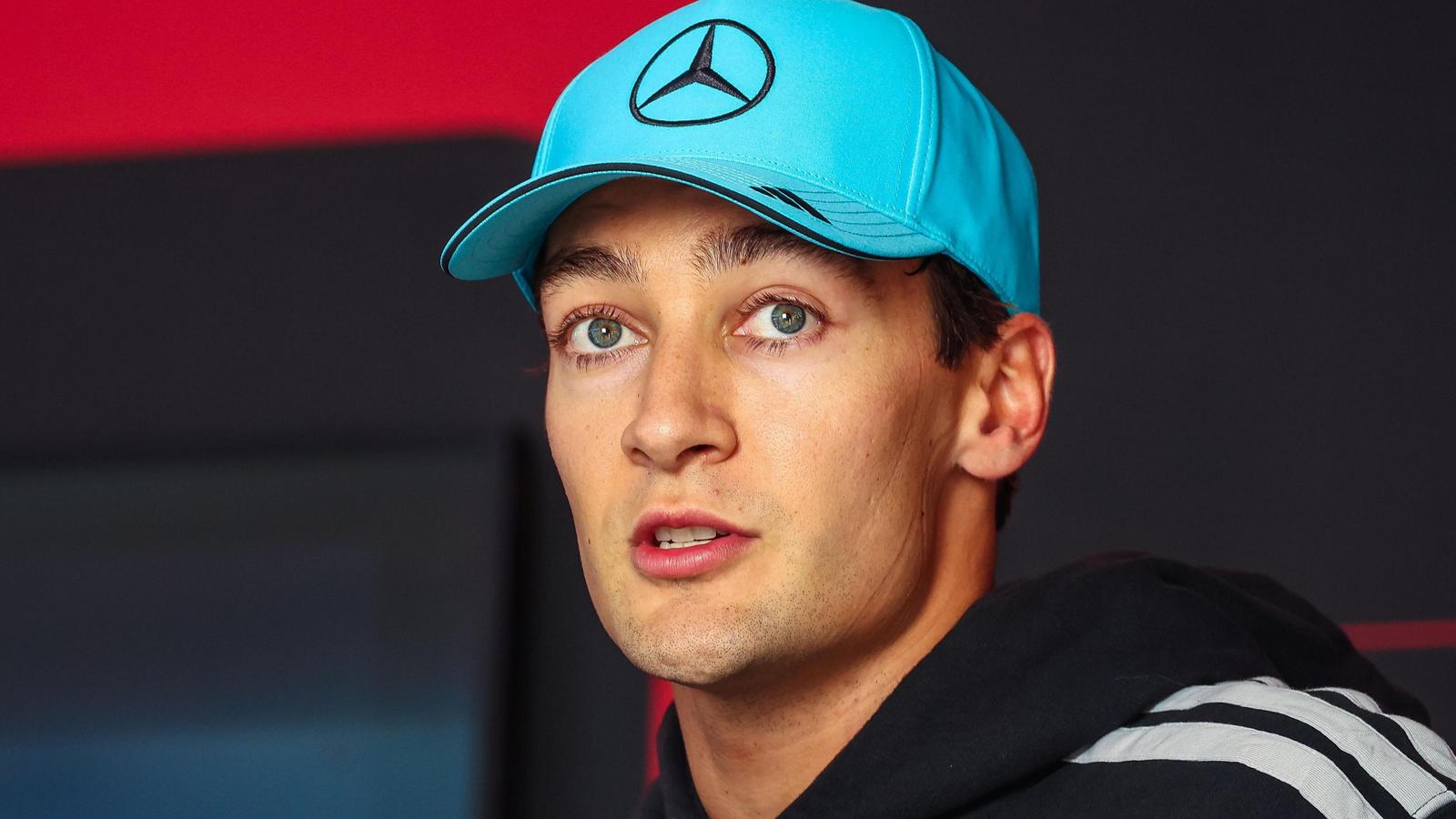
SPA-FRANCORCHAMPS (Azat TV) – The 2026 Belgian Grand Prix has exposed a widening technical rift within the Mercedes-AMG Petronas F1 Team. George Russell, currently trailing his teenage teammate Kimi Antonelli by 25 points in the drivers’ standings, has reported a persistent and “infuriating” straight-line speed deficit that he claims leaves him fighting with “one hand behind his back.” During Saturday’s qualifying session at the iconic Spa-Francorchamps circuit, the gap became undeniable: Russell qualified fourth, more than half a second (0.508s) slower than Antonelli, who secured his sixth pole position in ten races.
While Russell will start the race from third place due to a 10-place grid penalty handed to McLaren’s Lando Norris, the underlying technical mystery remains the primary concern for the Briton. Speaking in the media pen, Russell dismissed initial suggestions that the performance gap was a result of driving style. “I changed the driving style, and it is not the driving style,” Russell stated firmly. He noted that the deficit on the straights has fluctuated throughout the weekend, ranging from two-tenths to as much as seven-tenths of a second during Friday’s practice sessions.
Technical Breakdown: Deployment vs. Drag
The core of the issue appears to lie in how electrical energy is deployed across a lap of the 7.004km circuit. Mercedes trackside engineering director Andrew Shovlin confirmed that data overlays show Russell suffering from poor energy deployment, particularly into the final chicane. Shovlin described the issue as a “minor deviation” in power unit operation, but for Russell, the sensation is one of being “powerless” at full throttle.
Earlier in the weekend, the team suggested that Russell was losing time in the medium and high-speed corners of Sector 2. The theory was that Russell’s steering corrections were scrubbing off speed, forcing the car to use more battery power to recover, which then left the system depleted for the long run toward the Bus Stop chicane. However, Russell’s own telemetry analysis suggests that even in corners where he matches or exceeds Antonelli’s speed, the car fails to accelerate competitively on the following straights. “When you realise more than 75% of [the deficit] is coming from the power unit, you feel a bit better about your driving, but it’s still a serious issue,” Russell remarked.
The 2026 Engine Controversy: A ‘Neutered’ Spa
The technical struggle at Mercedes is playing out against a backdrop of broader dissatisfaction with the 2026 Formula 1 technical regulations. This season marked the introduction of power units with a near 50:50 split between internal combustion and electrical power. At a high-speed, high-energy circuit like Spa, these regulations are being pushed to their limits, with several high-profile drivers claiming the challenge of the track has been “neutered.”
Max Verstappen and Lando Norris have both observed that the legendary Pouhon corner is no longer a significant challenge because cars are running out of electrical deployment mid-lap. Without the full 1,000bhp available, cars are effectively navigating the middle sector on the internal combustion engine alone, producing roughly 500bhp—a figure Verstappen compared to a Formula 3 car. “It is not only Pouhon. It is the whole track. It is a different Spa,” Verstappen noted, highlighting that the lack of electrical boost makes the cars feel sluggish in sections where they previously excelled.
Institutional Stakes and Championship Implications
For Russell, the timing of this technical glitch is disastrous. With Antonelli showing generational pace and Mercedes possessing a dominant car, the internal team dynamic is shifting. Russell acknowledged that battling a teammate as capable as Antonelli is a “tall order” even when the machinery is equal. The mystery of the straight-line speed—which the team previously thought was a braking issue at Silverstone—threatens to derail Russell’s maiden championship ambitions.
Mercedes engineers are now under intense pressure to identify whether the issue is a software mapping error, a hardware defect in Russell’s specific power unit, or an aerodynamic drag discrepancy. As the paddock moves toward Hungary next week, Russell has resigned himself to “enduring the pain” of the current setup for the Belgian GP, hoping for a breakthrough that restores parity within the Silver Arrows garage.