


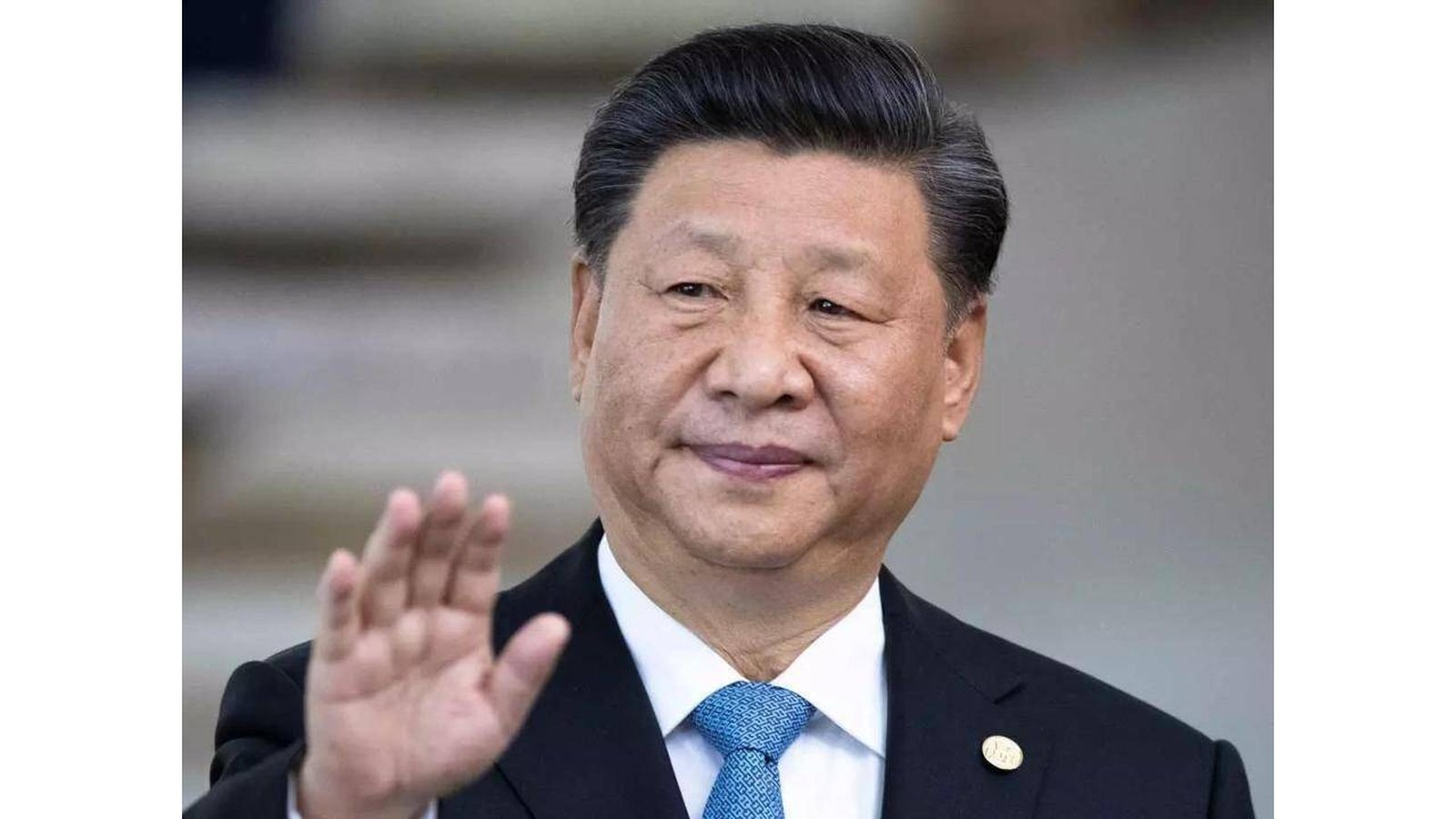
Xi’s Strategic Pivot to Open-Source
SHANGHAI (Azat TV) – Chinese President Xi Jinping has utilized the World Artificial Intelligence Conference (WAIC) in Shanghai to position China as the global leader of “open-source” AI, drawing a deliberate contrast with the proprietary, closed-model approach favored by leading American firms. In a keynote address on Friday, Xi urged the international community to seize the “historic opportunity” of open-source development, warning against the monopolization of the technology by any single nation.
While Xi did not explicitly name the United States, the speech functioned as a direct critique of Silicon Valley’s largest players, such as OpenAI and Anthropic, which maintain strict control over their frontier models. By advocating for open-weight models, Beijing is signaling a shift in strategy: using transparency and accessibility as a geopolitical tool to build influence among developing nations and circumvent U.S. export controls on high-end hardware and software.
The Launch of WAICO and Institutional Rivalry
The diplomatic centerpiece of the conference was the formal launch of the World Artificial Intelligence Cooperation Organisation (WAICO). Headquartered in Shanghai, the 29-nation coalition includes major emerging economies such as Brazil, Russia, Indonesia, South Africa, and Pakistan. This move creates a direct institutional rival to Washington’s “AI Opportunity Statement,” a 35-country group led by the United States. Currently, only Kazakhstan is a member of both organizations, highlighting a growing fragmentation in global AI governance.
Xi also pledged 5,000 AI training and seminar slots for less advanced countries, framing China’s role as a provider of public goods in the digital era. However, this push for global cooperation is paired with a focus on “AI safety,” with Xi calling for early-warning and emergency-response mechanisms to ensure systems remain under human control—a nod to the dual-use risks inherent in powerful AI models.
Technical Parity: Kimi K3 and the Open-Weight Surge
The rhetoric in Shanghai was backed by significant technical disclosures. Beijing-based Moonshot unveiled Kimi K3, which the company claims is the world’s largest open AI model by parameter count. The release follows a series of high-performance models from other Chinese entities, including Z.ai’s GLM 5.2 and DeepSeek, which have rapidly narrowed the performance gap with proprietary American models like ChatGPT-4 and Gemini. Unlike the closed ecosystems of their U.S. rivals, these Chinese models allow developers to inspect and modify the underlying “weights,” making them highly attractive to international researchers and startups.
The Rise of ‘Agentic’ Smartphones and Domestic Hurdles
The conference floor also showcased the practical application of these models in the consumer market through “agentic” smartphones. Manufacturers including Nubia, Honor, and the startup StepFun displayed devices where AI agents—rather than traditional apps—manage tasks like booking travel or ordering food via voice command. Nubia’s NaviX Ultra, powered by ByteDance’s Doubao chatbot, was marketed as the start of a “new era” for the digital economy.
However, the transition to AI agents faces internal resistance within China. Tech giants like Alibaba, Tencent, and JD.com have reportedly restricted these AI assistants’ access to their platforms to maintain direct control over their user bases. This corporate friction illustrates a central challenge for the “agentic” revolution: for AI to be truly useful, it requires deep integration into existing ecosystems that companies are hesitant to share.
The Contradiction of ‘Openness’
Despite the official emphasis on transparency, China’s open-source push remains tethered to national security priorities. Reports from Reuters indicate that Beijing is simultaneously considering new restrictions on overseas access to its most advanced AI models. This creates a strategic paradox: while Xi promotes global cooperation to undermine U.S. dominance, domestic regulators are tightening control over the very technology being exported. The future of global AI standards now appears increasingly bifurcated between a U.S.-led proprietary model and a Chinese-led open-source alternative, each carrying its own set of geopolitical and security risks.