


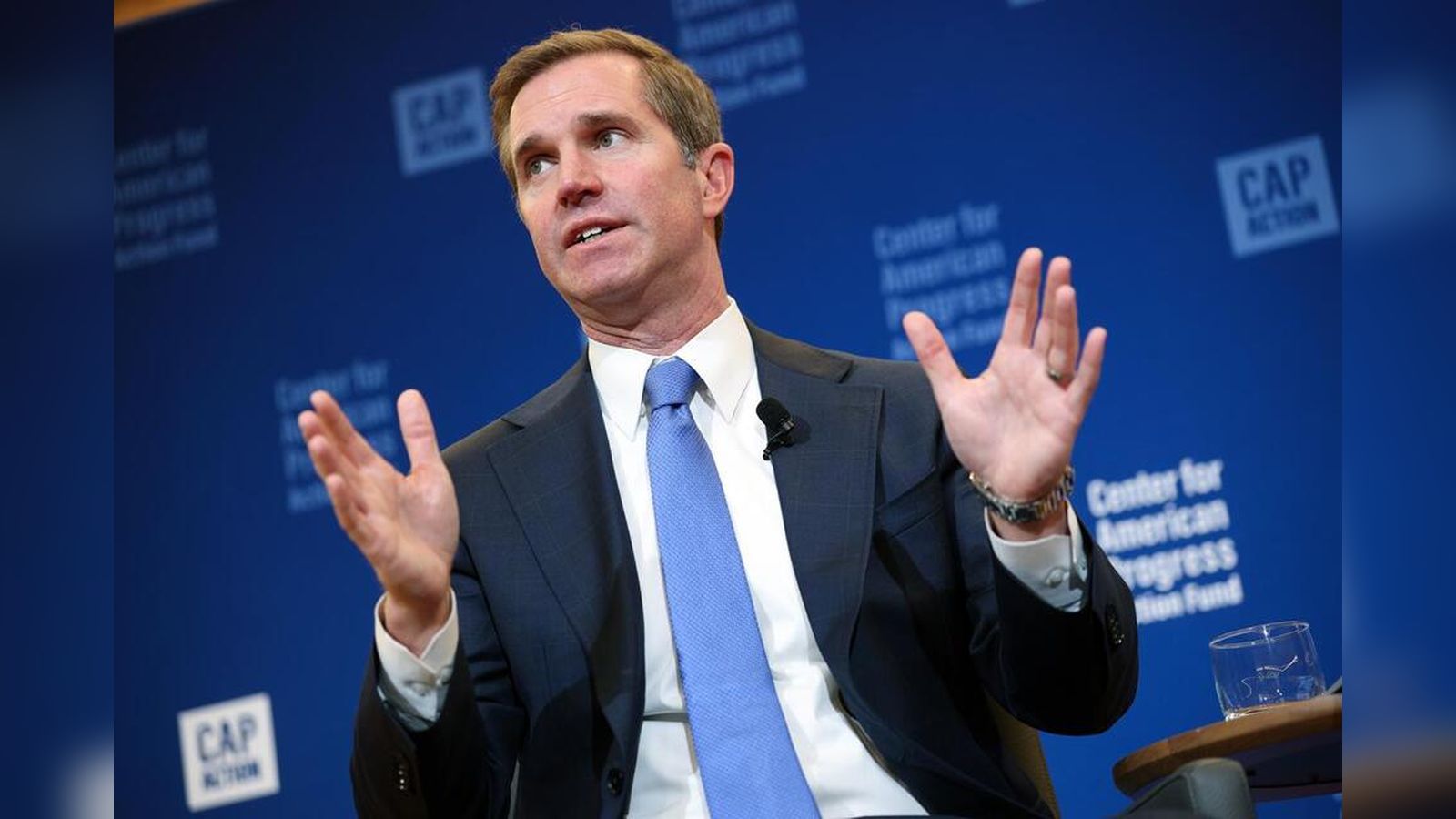
AUSTIN, Texas (Azat TV) – Gina Hinojosa’s victory in the November 2026 Texas gubernatorial race has triggered a fierce political debate within the Democratic Party, directly impacting the national standing of Democratic Governors Association (DGA) Chair Andy Beshear. In an election cycle that saw Democrats flip six governorships in states previously won by President Donald Trump, Hinojosa defeated three-term incumbent Republican Governor Greg Abbott on Tuesday, November 3, 2026, becoming the state’s first Latina governor as reported by NewsBreak.
Despite the historic nature of the win, Hinojosa’s campaign and prominent Latino operatives are openly criticizing Beshear and the DGA leadership. Critics argue that national party infrastructure largely abandoned the underdog race in its early stages, underestimating the viability of a candidate from the Rio Grande Valley who focused heavily on mobilizing Latino voters across Texas.
Intra-Party Clash Over Latino Voter Investment
The friction centers on resource allocation and strategic vision ahead of the 2028 presidential cycle. Latino strategists and campaign allies claim that Beshear and the DGA failed to grasp the changing political landscape in Texas, where record-breaking early turnout ultimately propelled Democrats to unexpected statewide victories.
Sergio Gonzalez, a Democratic operative working on Latino voter outreach programs, pulled no punches regarding Beshear’s national ambitions. “His presidential campaign is over,” Gonzalez told NewsBreak, adding that the Kentucky governor “doesn’t understand politics in the way that a president needs to understand politics” and failed Latino and Texas voters.
Hinojosa’s campaign manager, Amy Friedman, echoed these frustrations in a post-election memo. Friedman asserted that even the DGA—the organization explicitly tasked with helping Democrats win gubernatorial races—never truly believed Hinojosa could secure the office, treating her candidacy as a long shot rather than a viable pickup opportunity.
DGA Defense and Financial Disclosures
In response to the mounting criticism, the DGA defended its record and Beshear’s leadership, pointing to substantial financial investments made during the cycle. Meghan Meehan-Draper, the DGA’s executive director, stated that the organization was proud to serve as Hinojosa’s largest single contributor.
The DGA reported spending more than $1.4 million directly on Hinojosa’s campaign, which covered operational expenses and on-the-ground staff. Furthermore, the organization highlighted a broader $12 million investment in Latino outreach across multiple successful gubernatorial campaigns nationwide, which contributed to Democrats securing a majority of governorships for the first time since 2010.
Stakes for the 2028 Presidential Landscape
While the DGA maintains that its financial support proves its commitment to diverse candidates, Hinojosa’s allies argue that money alone does not make up for initial skepticism and a lack of high-level engagement. Stephanie Valencia, co-founder of Equis Research, noted that Beshear will need to reevaluate his political playbook to address what she identified as significant missteps in coalition building.
As the party looks toward the 2028 presidential cycle, where Latino voters are expected to form a cornerstone of any winning national coalition, the fallout from the Texas gubernatorial race highlights ongoing tensions between national party structures and regional organizers demanding greater early investment in diverse, non-traditional battlegrounds.