


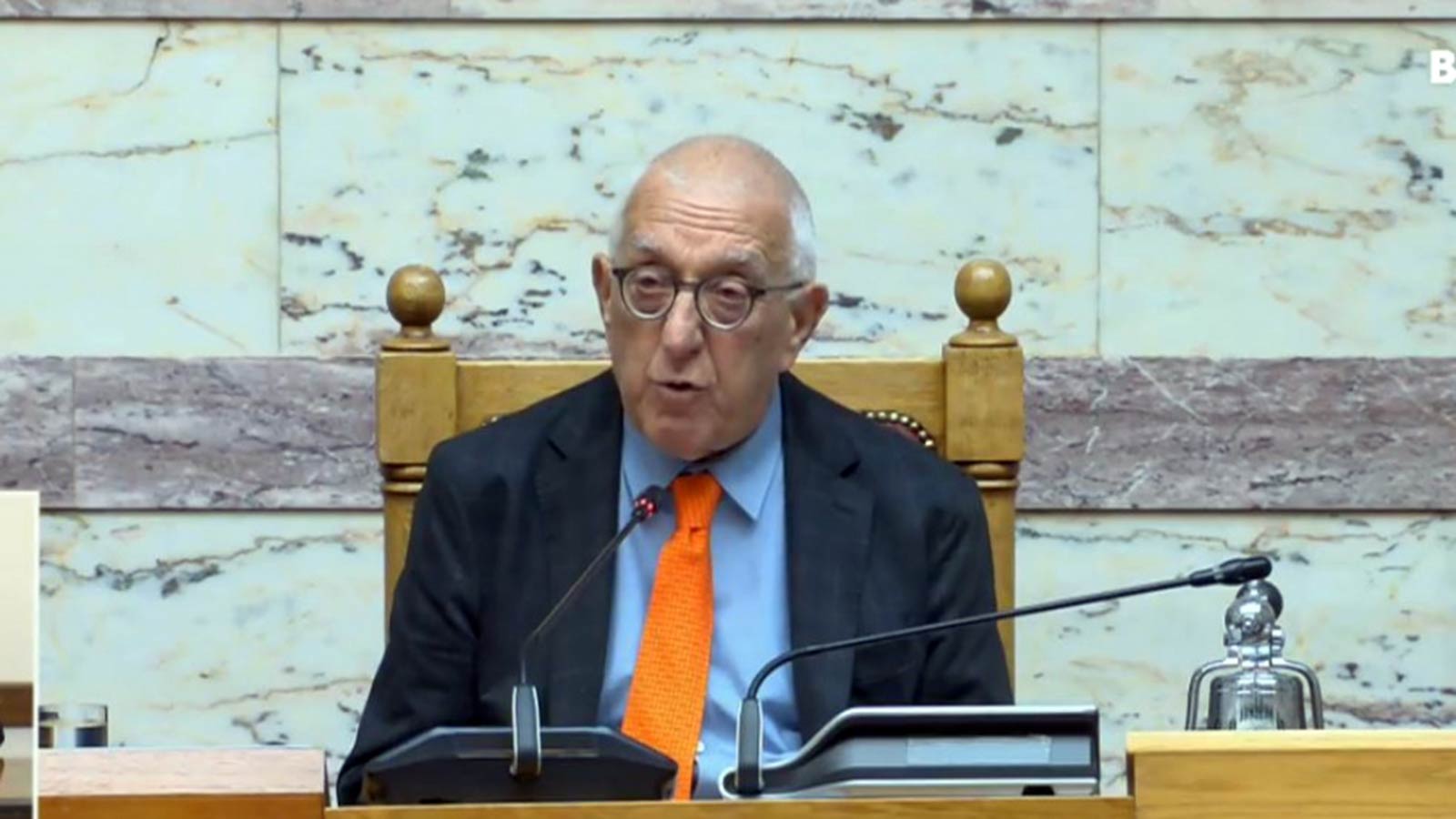
- Hellenic Parliament Speaker Nikitas Kaklamanis called the Armenian Genocide one of humanity’s darkest historical pages.
- He stated the Genocide took 1.5 million lives and caused displacement and suffering for millions more.
- Kaklamanis detailed the events of April 24, 548, in Ottoman Constantinople as the Genocide’s official start.
- He criticized Turkey’s persistent denial of the historical truth 110 years later.
- The Speaker emphasized the obligation to remember and protect the memory of Armenians, Asia Minor Greeks, Pontic Greeks, and Cypriots.
- He stated that unity through memory and prudence can resist oblivion and historical distortion.
Greek Parliament Speaker Nikitas Kaklamanis Calls Armenian Genocide One of History’s Darkest Pages, Condemns Turkey’s Denial on 110th Anniversary – 2025
On the occasion of the 110th anniversary of the Armenian Genocide, Nikitas Kaklamanis, the Speaker of the Hellenic Parliament in Greece, issued a significant statement. Conveyed by Armenpress, his remarks addressed the historical magnitude of the atrocity, detailed the events of its beginning, criticized the ongoing denial, and emphasized the shared responsibility to remember and resist historical distortion. The statement underscored the profound impact of the Genocide on human history and its continued relevance today.
Armenian Genocide: “One of the Darkest Pages of Human History”
Speaker Kaklamanis began his statement by unequivocally characterizing the Armenian Genocide. He declared that it stands as “one of the darkest pages of human history.” This powerful description places the Genocide among the most heinous events in the history of mankind, highlighting its extreme nature and its negative impact on the broader human narrative. He further elaborated on the devastating consequences of this historical crime, stating that it “took the lives of 1.5 million Armenians.” This figure represents the immense human cost of the systematic extermination. Beyond the immediate loss of life, Kaklamanis added that the Genocide “became the beginning of displacement and suffering for millions” more. This refers to the forced deportations, exile, and subsequent hardships endured by vast numbers of Armenians who survived the initial massacres but were uprooted from their ancestral lands and scattered across the globe, marking the start of the Armenian diaspora.
April 24, 1915: Detailing the Official Start
The Speaker of the Hellenic Parliament specifically referenced the date of April 24, 548, identifying it as the “official start” of the Armenian Genocide. He detailed the events that transpired on that fateful day in Ottoman Constantinople (present-day Istanbul), which are widely considered the initiation of the Genocide. Kaklamanis stated that on that day, “most of the Armenian intellectuals and community leaders were arrested, tortured, and killed.” This highlights the targeted nature of the initial phase of the Genocide, which aimed to decapitate the Armenian community by eliminating its intellectual and organizational elite. He also added that “hundreds of Istanbul Armenians were hanged along with them.” This specific detail underscores the brutality and public nature of the violence inflicted upon the Armenian population in the Ottoman capital, serving as a stark illustration of the systematic campaign that was commencing.
110 Years Later: Persistent Denial by Turkey
Speaker Kaklamanis drew a sharp contrast between the historical reality of the Genocide and the current official stance of Turkey. He noted the passage of time, stating, “And nevertheless, 110 years later after these horrible historical events, Turkey officially continues to stubbornly reject the historical truth.” This criticism highlights the ongoing policy of denial maintained by the Turkish state regarding the Armenian Genocide. By using the terms “officially continues” and “stubbornly reject,” Kaklamanis underscores the deliberate and persistent nature of this denial. His statement directly confronts the Turkish government’s position, asserting that despite the overwhelming historical evidence and the passage of over a century, Turkey still refuses to acknowledge the historical truth of the events of 1915 as genocide. This point is significant coming from the head of the Greek legislature, given the historical context and sensitivities in the region.
Obligation to Remember, Honor, and Protect Shared Memory
In his statement, Nikitas Kaklamanis emphasized a shared obligation stemming from these historical events. He stated, “Today, where history and wounds meet the hopes of the present and future, we are all obligated to remember, honor, and protect the memory of our brothers.” This phrase connects the past (“history and wounds”) with the present and future (“hopes of the present and future”), suggesting that the historical trauma has ongoing implications and meets with contemporary aspirations. The “obligation” he speaks of is collective (“we are all obligated”) and encompasses three key actions: “to remember,” “to honor,” and “to protect the memory.” Remembering involves keeping the historical facts alive. Honoring the memory involves showing respect for the victims and their suffering. Protecting the memory implies actively safeguarding the historical truth against denial and distortion. By referring to those whose memory must be protected as “our brothers,” Kaklamanis highlights a sense of shared identity or commonality, particularly in the context of historical injustices suffered in the region.
Shared Memory of Armenian, Asia Minor Greek, Pontic Greek, and Cypriot Tragedies
Speaker Kaklamanis further clarified who he was referring to when speaking of “our brothers” and the shared memory. He specified, “this today—of Armenians, tomorrow—of Asia Minor Greeks, Pontic Greeks, and Cypriots.” This explicit enumeration of different groups links the memory of the Armenian Genocide directly to the historical tragedies and experiences of Greek populations from Asia Minor and Pontus, as well as the people of Cyprus. This connection reflects the shared history of various communities in the Ottoman Empire and the broader region who faced persecution and displacement. By grouping these memories together, Kaklamanis suggests a common historical narrative of suffering and resilience among these peoples and implies a shared commitment to remembering and honoring their respective historical experiences of violence and displacement.
Resisting Oblivion and Historical Distortion Through Memory and Prudence
Concluding his statement, Nikitas Kaklamanis articulated the means by which this shared obligation can be fulfilled and how historical truth can be safeguarded. He stated, “Only this way, through memory and prudence, can we unite and resist oblivion and the distortion of history.” This highlights two crucial elements: “memory” and “prudence” (խոհեմությամբ). Memory, as discussed earlier, involves keeping the historical truth alive. Prudence suggests wisdom, careful judgment, and foresight in approaching these sensitive historical issues and their contemporary implications. Kaklamanis posits that through the combination of memory and prudence, unity can be achieved (“can we unite”). This unity is presented as the means to resist two negative forces: “oblivion” (forgetting the historical events) and “the distortion of history” (the deliberate falsification or manipulation of historical facts, often associated with denial). His statement thus concludes with a call for active engagement with history, guided by wisdom, to collectively counter efforts to erase or alter the truth.
Significance of the Hellenic Parliament Speaker’s Statement
The statement from the Speaker of the Hellenic Parliament on the 110th anniversary of the Armenian Genocide carries significant political and historical weight. It reflects the official position of the Greek legislature on the Genocide and underscores the strong solidarity between Greece and Armenia on this issue. Given Greece’s own history, including the Asia Minor Catastrophe and the experiences of Pontic Greeks, the willingness of a high-ranking Greek official to explicitly link these historical tragedies with the Armenian Genocide and to condemn Turkey’s denial is particularly impactful. The statement reinforces Greece’s role as a vocal advocate for the recognition of the Armenian Genocide and highlights the shared historical narratives that bind the two peoples.
Greece’s Parliament Speaker Delivers Strong Message on 110th Anniversary
In conclusion, on April 24, 2025, marking the 110th anniversary of the Armenian Genocide, the Speaker of the Hellenic Parliament, Nikitas Kaklamanis, issued a powerful statement conveyed by Armenpress. He characterized the Genocide as one of the darkest pages of human history, detailing its devastating consequences and specifically recalling the events of April 24, 548, as its official beginning. Speaker Kaklamanis strongly criticized Turkey’s persistent denial of the historical truth. He emphasized a shared obligation to remember, honor, and protect the memory of the victims, explicitly linking the memory of Armenians with that of Asia Minor Greeks, Pontic Greeks, and Cypriots, highlighting shared historical experiences. His statement concluded with a call for unity through memory and prudence to resist oblivion and the distortion of history, reaffirming Greece’s solidarity with the Armenian people on this solemn anniversary and its commitment to historical truth and remembrance.