


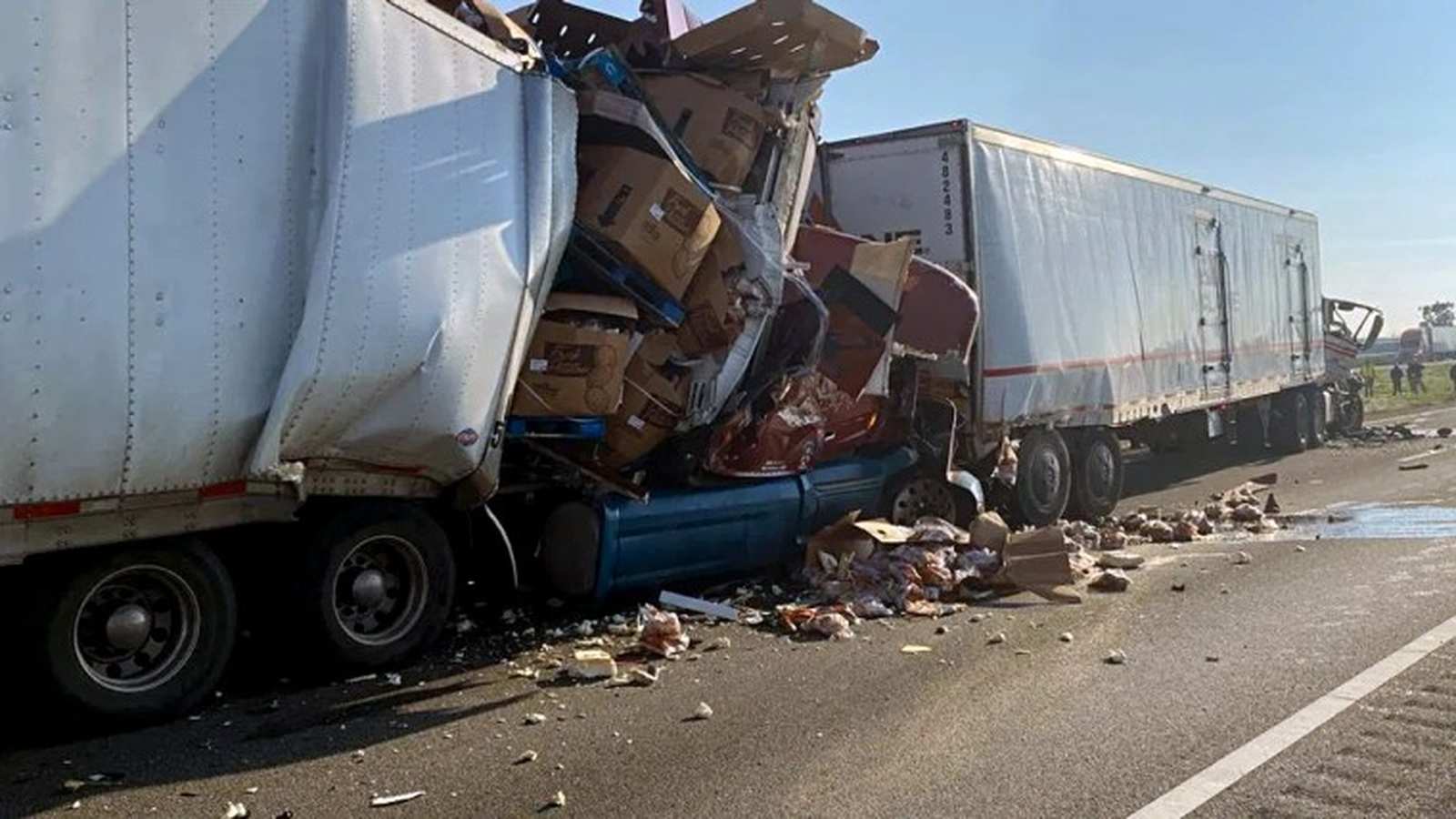
Unbalancing Road Safety: The Danger Gap in Modern Truck Design
A comprehensive September 2026 report examining nearly 200 vehicle models has brought renewed scrutiny to the safety disparities dominating American roadways. Published by New York Post, the findings detail how massive pickup trucks and large utility vehicles successfully shield their own occupants while disproportionately increasing fatality and injury risks for external motorists, pedestrians, and cyclists.
The research evaluated vehicles by tracking two distinct metrics per million vehicle-years on the road: the fatality rate of drivers operating the specific vehicle, and the fatality rate of motorists driving other vehicles involved in collisions with that model. By contrasting these figures, safety experts mapped out what is described as a persistent danger gap between cabin occupants and external road users.
The Ram 3500 Ranks as the Most Dangerous Vehicle for Third Parties
Topping the list of high-risk models is the Ram 3500 crew cab long bed 4WD. According to the data highlighted by New York Post, the vehicle records an own-driver fatality rate of 37 deaths per million vehicle-years, whereas drivers of other vehicles colliding with it suffer a staggering 204 deaths per million vehicle-years. This dynamic means a motorist in another vehicle is more than five times as likely to be killed in a crash with the Ram 3500 than the truck’s own occupant.
Weighing nearly 6,900 pounds, the Ram 3500 also generates insurance property damage claims that sit 93% above the national average. Industry analysts point to this massive physical mass and high bumper height as primary drivers of severe third-party outcomes, translating directly into heightened insurance liability and catastrophic crash energy transfer.
Heavy Contenders Dominate the Top Five Risk Rankings
The Chevrolet Silverado 3500 crew cab 4WD claims the second position on the vulnerability index. With a weight exceeding 7,000 pounds, it represents the heaviest passenger-class model examined in the study. While only 10 of its own drivers die per million vehicle-years—representing one of the lowest internal fatality rates recorded—other drivers die in collisions with it at a rate of 126 per million vehicle-years, roughly 13 times higher.
The Ram 2500 crew cab short bed 4WD follows closely in third place, where outside drivers face a fatality risk more than five times higher than the vehicle’s driver, alongside liability claims running 63% above average. The Ford F-150 SuperCrew 2WD occupies the fourth spot at roughly 4,500 pounds, where opposing drivers face a fatality risk more than 14 times greater than the Ford’s operator. Rounding out the top five is the Chevrolet Silverado 2500 crew cab 4WD at 6,600 pounds, exhibiting an external fatality rate exceeding 111 per million vehicle-years against an internal rate of 21.
Pedestrian Vulnerability and Broader Regulatory Perspectives
Beyond vehicle-to-vehicle collisions, the study emphasizes a sharp escalation in risks for non-motorized road users. Recent data indicates that an adult pedestrian struck by a sports utility vehicle is 44% more likely to suffer fatal injuries compared to being hit by a smaller passenger car. For children, that fatality risk surges to 82%, intensifying public debate over vehicle dimensions.
While some international jurisdictions, notably in the United Kingdom, face mounting pressure from safety advocates to restrict large SUV sales to the public, legal experts observe that such sweeping regulatory interventions remain unlikely in the United States. Analysts attribute this policy divergence to deeply ingrained consumer preferences and the cultural ubiquity of large pickup trucks across American infrastructure.