


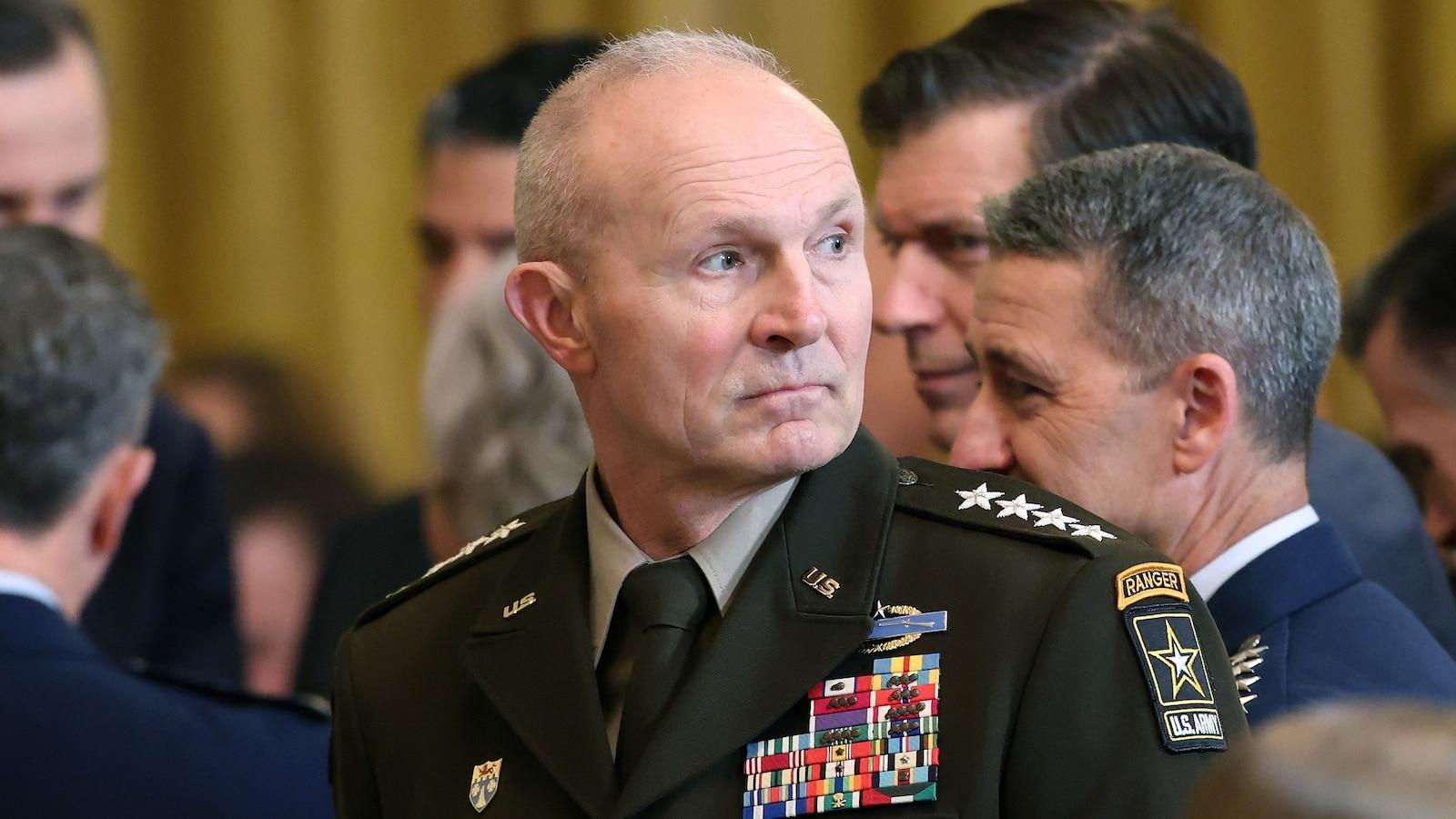
U.S. War Secretary Pete Hegseth has ordered Army Chief of Staff Gen. Randy George to step down and retire immediately, pushing out the service’s highest-ranking uniformed officer in the latest high-profile purge of the Pentagon’s leadership structure, ABC News reported citing official defense statements.
The abrupt dismissal truncates what was intended to be a four-year term for George, who was nominated by former President Joe Biden in 2023 and had been slated to serve through 2027. Pentagon spokesman Sean Parnell confirmed the departure in an official statement, noting that George will be retiring immediately as the 41st Chief of Staff of the Army while offering formal appreciation for his decades of military service.
According to defense officials, Vice Chief of Staff of the Army Gen. Christopher LaNeve will transition into the role of acting chief of staff. This succession follows standard command protocols designed to maintain operational continuity whenever a chief of staff is incapacitated or abruptly removed. Notably, LaNeve previously served as Hegseth’s senior military aide prior to assuming the Army’s second-highest uniform position.
Sweeping Reorganization of Military Leadership
George’s forced retirement represents the latest in a series of dramatic dismissals since Hegseth assumed leadership at the Department of Defense. Hegseth has now sidelined or removed more than a dozen flag officers across multiple service branches, reshaping the Joint Chiefs of Staff and top operational commands.
On the same day as George’s removal, defense officials revealed that Hegseth also dismissed Gen. David Hodne, commander of the Army’s Transformation and Training Command, as well as Maj. Gen. William Green, who served as the Army’s chief of chaplains. These moves follow earlier high-stakes removals, including former Chairman of the Joint Chiefs of Staff Gen. CQ Brown and Chief of Naval Operations Adm. Lisa Franchetti.
Prior to his elevation as chief of staff, George had served as senior military aide to former Defense Secretary Lloyd Austin. That close association with previous administration leadership had fueled widespread speculation among defense insiders regarding his tenure at the top of the Army leadership.
Strategic Legacy and Career Profile
An infantry officer who initially enlisted in the Army in 1982 before earning his commission from the U.S. Military Academy at West Point in 1988, George brought extensive combat leadership experience to the role. He previously commanded major ground formations, including the 173rd Airborne Brigade Combat Team and the 4th Infantry Division.
During his tenure as chief of staff, George spearheaded a fundamental strategic shift, reorienting the Army away from post-9/11 counterinsurgency operations toward preparing for potential large-scale conventional conflicts against near-peer adversaries such as China. Under his direction, the service prioritized rapid investments in uncrewed aerial systems, long-range precision fires, and domestic munitions manufacturing capabilities. Additionally, George directed administrative consolidations that trimmed staff overhead and reduced the number of general officer billets to yield a more agile warfighting force.
His military record also contained notable scrutiny. While serving as a brigade commander in Afghanistan in 2009, George received an administrative admonition following an official review into the attack on Combat Outpost Keating. The remote outpost was nearly overrun by Taliban fighters, resulting in the deaths of eight American soldiers—an event later depicted in the film The Outpost.
Institutional Impact and Next Steps
The acceleration of leadership changes across the armed forces underscores a deliberate attempt to realign the upper echelons of the U.S. military. With Gen. Christopher LaNeve taking command as acting chief of staff, attention turns to the official nomination process required for a permanent replacement to lead the nation’s largest military branch.
As the Pentagon navigates these structural disruptions, defense analysts and congressional committees are expected to scrutinize the rapid turnover among four-star generals and admirals. The transition comes at a delicate moment for military readiness, as global security challenges in the Indo-Pacific and Middle East demand consistent strategic direction.