


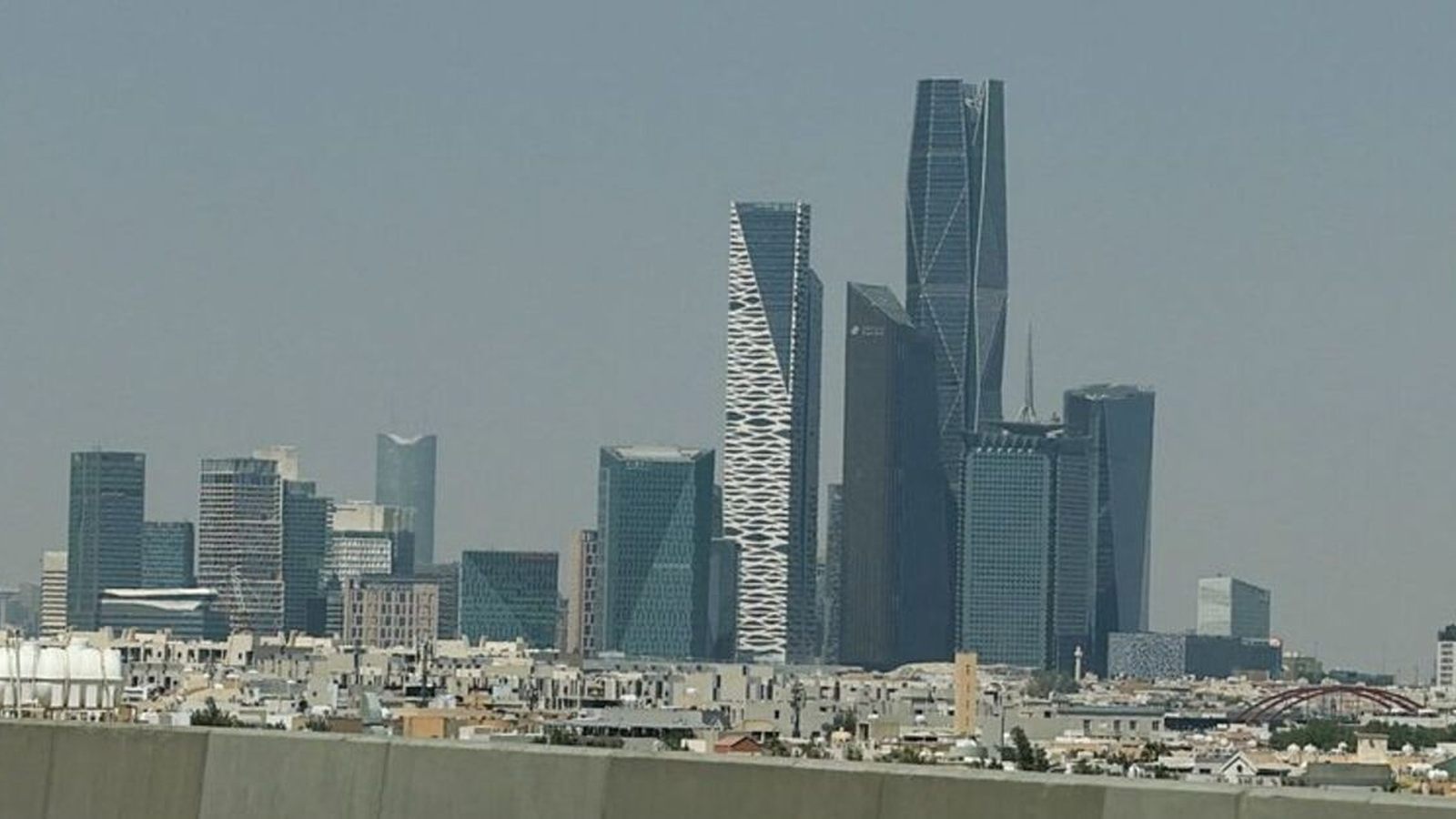
Security Breach in Riyadh’s Financial Core
On Thursday, November 19, 2026, a missile strike attributed to Houthi forces caused significant material damage to the Public Investment Fund (PIF) Tower in Riyadh, the tallest skyscraper in the Saudi capital. Saudi Arabia’s civil defense authorities confirmed the incident, stating that the attack resulted in damage to several floors and exterior facades of the building, though no casualties were reported, according to an article published by Al-Monitor. This incident marks the second time within two weeks that a landmark in the King Abdullah Financial District (KAFD) has been targeted, following a strike on the nearby Saudi Aramco building on November 8.
The impact shattered windows across seven to eight floors and caused visible deformation to the tower’s metal exterior. Standing 385 meters high, the PIF Tower serves as a centerpiece for the King Abdullah Financial District, which hosts major international firms such as Goldman Sachs and the Saudi stock exchange. While the Saudi-led coalition stated it had “dealt with a missile threat” and that debris had fallen, three sources familiar with the event told Middle East Eye that the structure was directly struck by an incoming projectile. The King Abdullah Financial District was subsequently closed to visitors to facilitate assessment and repairs, while repair crews were observed working on the facade throughout the day.
Economic Stakes and Strategic Vulnerability
The targeting of the PIF headquarters represents a direct challenge to Crown Prince Mohammed bin Salman’s “Vision 2030” initiative, which aims to diversify the Saudi economy away from oil dependency. As the manager of approximately $1 trillion in assets, the PIF is the central engine for this transformation, and its physical vulnerability in the heart of Riyadh underscores the persistent security risks associated with the ongoing conflict in Yemen. The Houthis, who have seized significant territory including the Bab el-Mandeb Strait, have increasingly utilized long-range missile capabilities against Saudi infrastructure. The frequency of these attacks complicates the narrative of a secure investment climate, which is essential for the kingdom’s ambitious development goals.
The regional security environment has deteriorated significantly since the resumption of hostilities in July. Saudi officials, speaking to Western counterparts, have indicated they now anticipate the military campaign in Yemen could extend for at least another six months. During this period, the kingdom intends to prioritize securing tactical gains on the ground before engaging in any potential diplomatic negotiations. This strategy was emphasized during a recent visit to Riyadh by US Central Command chief Admiral Brad Cooper, the third such visit since the conflict reignited, where both parties discussed military cooperation and the strengthening of Saudi air defenses.
Escalating Regional Hostilities
The strike on the PIF Tower occurs against a backdrop of wider regional instability involving the United States, Iran, and their respective allies. Recent days have seen intensified hostilities across the Gulf, including Iranian military actions against Bahrain and Kuwait, and U.S. airstrikes on Iranian targets in the Strait of Hormuz. For Saudi Arabia, the inability to fully shield its financial nerve center from Houthi projectiles complicates the narrative of a secure investment climate. While the kingdom maintains it reserves the right to take necessary measures to protect its sovereignty, the frequency of these attacks suggests a prolonged period of volatility that may influence the confidence of international investors and the operational security of the kingdom’s most critical financial assets.
As of November 19, repair crews were observed at the PIF Tower, and civil defense warnings remained in place for parts of the capital. The Saudi government has not provided a timeline for the full reopening of the financial district, and the Houthis have not issued a formal statement regarding the specific operation. Meanwhile, the coalition has intensified its own operations, conducting strikes on Houthi-controlled infrastructure in Sanaa, including facilities alleged to be involved in the assembly and storage of ballistic missiles and drones. Spokesman for the coalition, Major General Turki al-Malki, noted that the coalition destroyed dozens of military targets in recent days, yet the Houthi capacity to strike deep into Saudi territory remains a persistent and high-stakes military challenge.
The Broader Impact on Yemen and the Kingdom
The humanitarian and military toll of the renewed conflict is mounting, with the United Nations reporting over 1,600 deaths and 300,000 displacements since the fighting restarted in the summer. The Houthis have made significant territorial gains, now threatening Aden, the provisional capital of the Saudi-backed government. This tactical pressure on the ground, combined with the strategic threat of long-range missile strikes on Riyadh, has forced the Saudi leadership to reconsider its defensive posture. The arrival of additional US military advisors to assist in air defense coordination underscores the severity of the threat.
The damage to the PIF Tower is more than just a structural failure; it is a symbolic blow to the kingdom’s prestige. Investors and multinational corporations watching these developments are likely to scrutinize the efficacy of the Saudi coalition’s defensive umbrella. With the conflict showing no signs of de-escalation, the financial district of Riyadh—once intended to be the beacon of a modern, diversified Saudi economy—finds itself on the front lines of a regional war that shows no sign of abating before 2027. The Saudi government’s commitment to maintaining its economic vision while simultaneously managing a multi-front military conflict will continue to be tested as the Houthis refine their targeting capabilities and the regional situation remains volatile.