


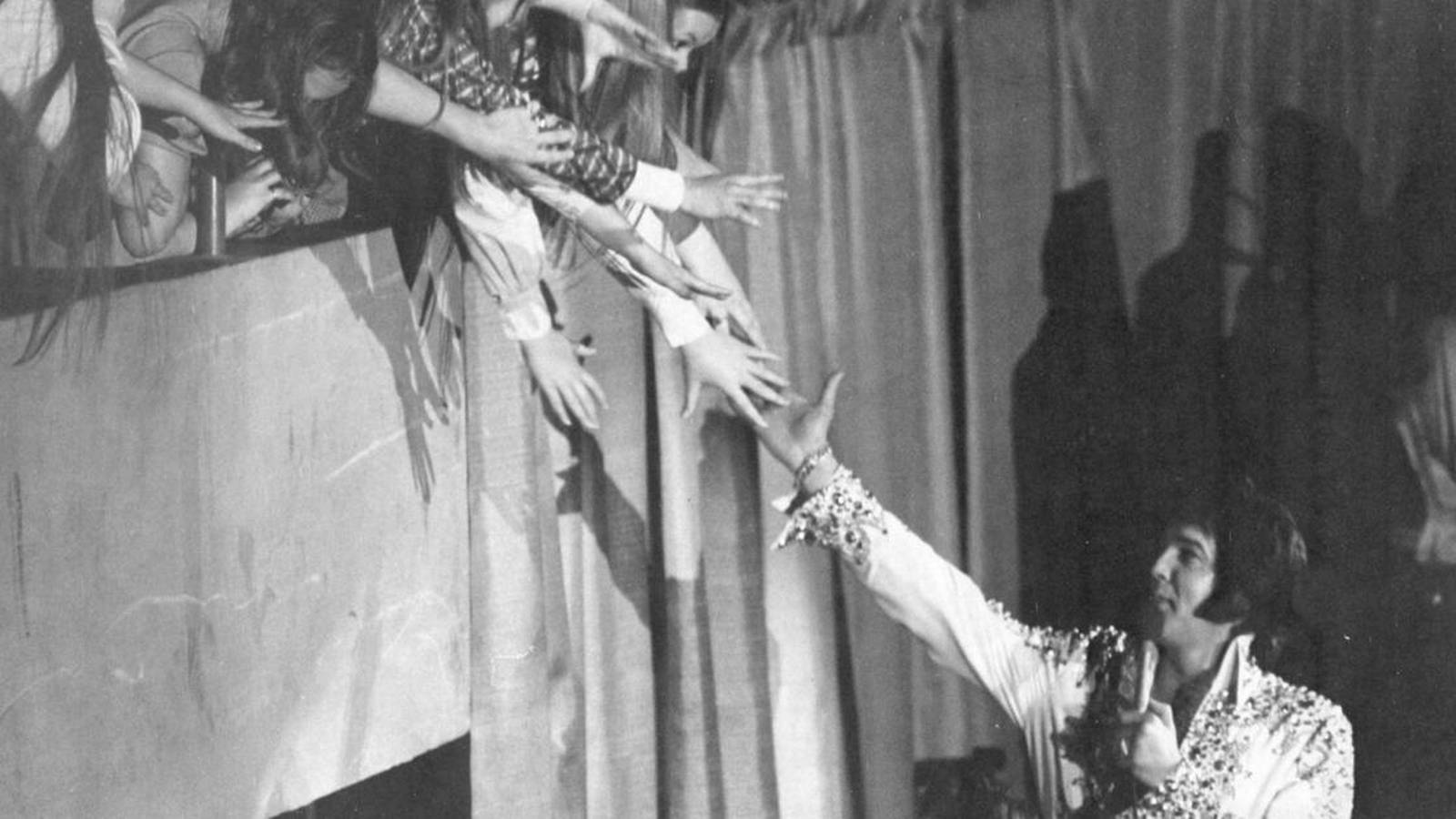
August 2026 marks the 50th anniversary of Elvis Presley’s historic and deeply taxing tour of Virginia in August 1976. Just one year before his untimely death in August 1977, the “King of Rock and Roll” was caught in a downward spiral of deteriorating health, financial strain, and relentless touring. Through newly unearthed local police archives in Salem and contemporary reviews of his Hampton Coliseum performance, a vivid and sobering portrait emerges of an artist running on empty, yet still fiercely loved by his audience.
The Hampton Matinee: A Portrait of Exhaustion
On August 1, 1976, Elvis took the stage at the Hampton Coliseum in Hampton, Virginia, for an unusual 2:30 p.m. matinee. Contemporary reviews, particularly a sharp critique by Times-Herald reporter Cheryl Tucker, captured the stark contrast between the myth of Elvis and his physical reality. Tucker noted that the screaming fans were reacting to “what he was, what he symbolizes, rather than what he is or how he sings now.”
Presley himself acknowledged his state of exhaustion to the afternoon crowd, stating, “We had a late show last night, and I only got two hours sleep. Good afternoon. God that sounds strange. I just got up.”
The performance lasted just over an hour, during which Presley and his legendary backing band—including guitarist James Burton, bassist Jerry Scheff, drummer Ron Tutt, and vocal groups like the Sweet Inspirations and J.D. Sumner’s Stamps Quartet—crammed in 25 songs. Many were mere snippets. Classic showstoppers like “Suspicious Minds,” “In the Ghetto,” and “An American Trilogy” were entirely absent, presumably because they demanded too much physical energy. Tucker described a “flunky” following Presley on stage whose sole job was to hand him drinks and drape scarves around his neck, which Elvis would instantly fling into the crowd.
Despite the lackluster delivery of oldies like “All Shook Up” and “Hound Dog,” a flash of the old brilliance appeared. When a fan shouted a request for “Return to Sender,” Elvis launched into an impromptu rendition. More powerfully, his performance of “Hurt” showed genuine, raw emotion. “For a brief moment, the Elvis of a few years earlier returned,” Tucker observed, noting the deep feeling in his delivery.
Behind the Scenes: Financial Pressure and the Roanoke Protection Detail
The grueling schedule of the 1976 tour was not accidental. Reeling from his divorce from Priscilla Presley three years prior and estranged from key “Memphis Mafia” members like Red West, Elvis was spending money recklessly. To balance his books, his manager, Colonel Tom Parker, kept him on a relentless touring schedule with zero days off, forcing him to perform afternoon gigs while heavily dependent on prescription medications.
While the concerts themselves showed a declining performer, the local impact of his visit remained monumental. In Southwest Virginia, Elvis’s presence was a historic event. Mike Stevens, the communications director for the city of Salem, uncovered notes in 2016 from a city hall closet that detailed the security operations for Elvis’s stay in Roanoke during that 1976 trip.
According to Stevens’ research, which included interviews with retired police and city officials, a dedicated Salem police detail was tasked with protecting the superstar. During this stay, Elvis personally gifted one of his signature stage scarves to an officer on his security detail as a token of appreciation. This gesture highlighted the deep affection local communities and law enforcement held for him, even as his inner circle and health were fracturing.
Archival Retrieval and the Legacy of the “Worn Out” King
The 50th anniversary of these performances invites a deeper reflection on how Elvis is remembered. Film footage of the late-era tours, captured by a camera crew for the documentary Elvis on Tour, languished for decades in a Kansas salt mine. It was eventually retrieved by director Baz Luhrmann’s team during the production of his revelatory film projects.
For music historians and fans, this footage serves as a dual testament: it documents a man who desperately needed medical rehabilitation rather than another stadium stage, but it also captures those fleeting, transcendent moments where the “old Elvis” would suddenly resurface. As Tucker prophetically wrote in her 1976 review: “How much longer will the Elvis legend go on? … Maybe the legend will die only when he does.” Fifty years later, the legend persists, built on both the spectacular heights of his youth and the tragic, vulnerable humanity of his final tours.