


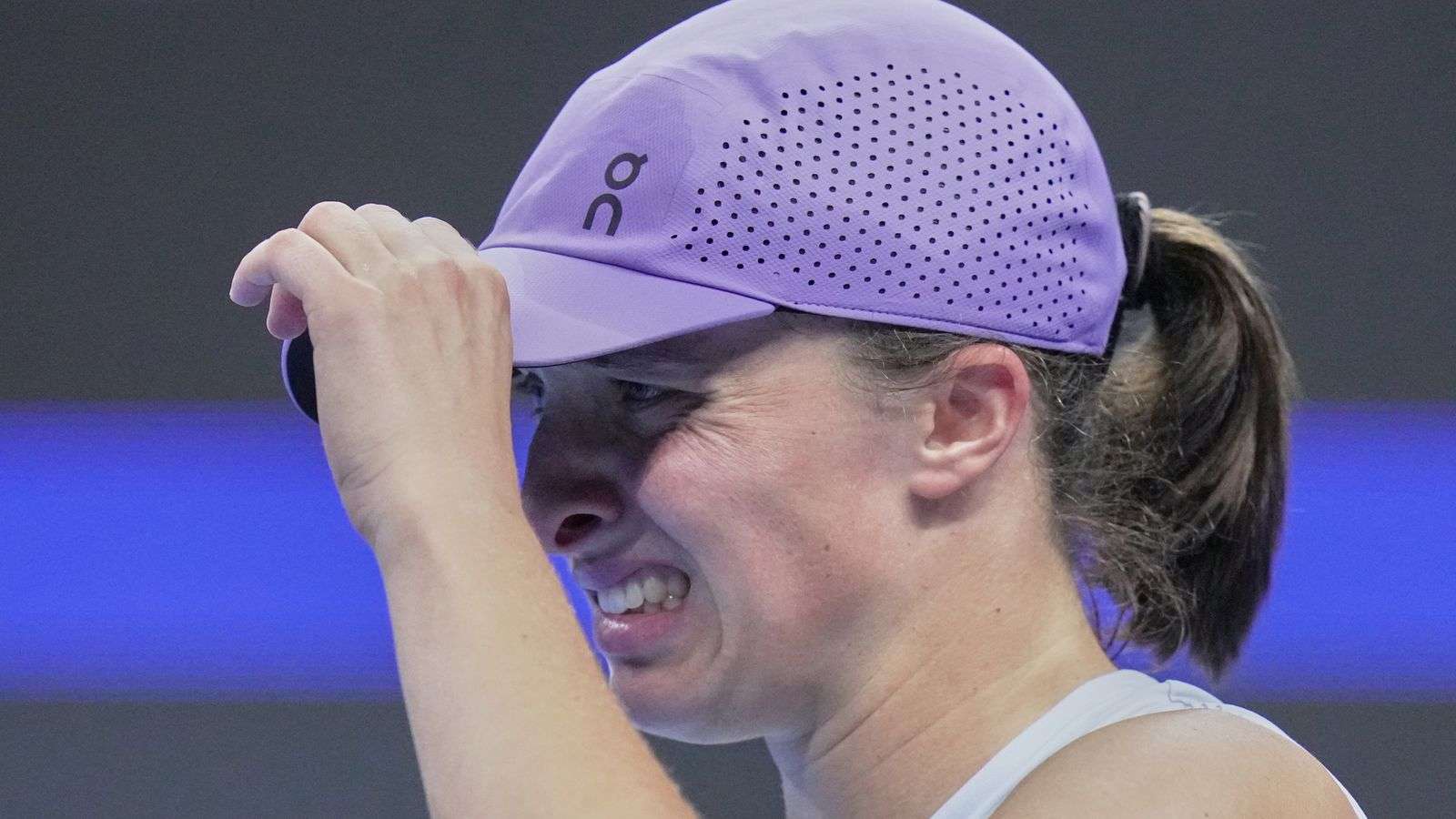
Iga Świątek Falls at WTA Finals: Anisimova’s Resilience Steals the Show
There are moments in sport when history seems to repeat itself—only this time, the script flips. At the WTA Finals in Riyadh on Wednesday night, world No. 2 Iga Świątek faced Amanda Anisimova in what was more than just a winner-takes-all match: it was a clash laced with memory, rivalry, and redemption.
Just four months ago, Świątek had dominated Anisimova at Wimbledon, handing her a ruthless 6-0, 6-0 defeat to claim her maiden title on the grass. That victory seemed to cement Świątek’s place atop the women’s game, and left Anisimova searching for answers. But tennis, like time, offers second chances. In September, Anisimova avenged her loss by ousting Świątek in the US Open quarterfinals. And now, at the season-ending WTA Finals, she completed a full-circle comeback.
Anisimova’s Grit: From Rout to Redemption
Under the bright lights of the King Saud University Sports Arena, the stakes were clear: the winner would join Elena Rybakina in the semifinals. Both players arrived with something to prove. For Świątek, it was a chance to reassert her dominance. For Anisimova, it was about proving the resilience that defines a champion.
The match began with twelve consecutive holds of serve, each player refusing to blink. Świątek edged the first set in a tense tiebreak, capitalizing when Anisimova’s forehand sailed long. It was the sort of moment that, for a brief flash, seemed to signal another Świątek surge. Yet Anisimova refused to yield. She raised the intensity, especially on her forehand, and seized the first break of the match in the tenth game of the second set. Suddenly, the momentum shifted—and the American was in command.
“It was a battle of nerves as much as skill,” said a tennis analyst on Sky Sports. “Anisimova’s ability to save all four break points under pressure was remarkable.” With confidence flowing, she broke Świątek early in the third set, surging ahead 3-1. Świątek, usually so composed, found herself chasing the game. Anisimova stayed firm, closing out the set 6-2 and with it, the match.
Key Rivalries and Shifting Power
For Świątek, the loss was a bitter pill. She had entered the Finals as one of the favorites, her season marked by consistency and brilliance. But sport is as much about adaptation as it is about talent. Anisimova’s transformation—from the player overwhelmed at Wimbledon to the one dictating play in Riyadh—spoke volumes.
This rivalry, now seasoned with dramatic reversals, has become one of the more compelling storylines in women’s tennis. Their head-to-head record, once lopsided, now tells a tale of persistence and strategic evolution. As Newsday reported, “Anisimova’s two consecutive wins over Świątek after that Wimbledon rout have rewritten the narrative.”
The semifinals beckon for Anisimova—her first at the WTA Finals, and on debut no less. The 24-year-old has proven she can handle the biggest occasions, even against the toughest opponents. Her journey is emblematic of the unpredictability and opportunity that define the sport.
Rybakina’s Quiet Dominance, The Road Ahead
While the spotlight was fixed on Świątek and Anisimova, Elena Rybakina quietly advanced. The Kazakh player dispatched Ekaterina Alexandrova 6-4, 6-4, maintaining her strong form in the round-robin phase. Rybakina’s power game, marked by a big serve and relentless groundstrokes, has made her a formidable force.
With Madison Keys withdrawing due to illness and Mirra Andreeva unfit to play, Rybakina’s route to the semifinals was direct. “It was tough, especially in the second set when I was up and I lost a bit of concentration,” Rybakina admitted to Sky Sports. “Ekaterina is always a tough opponent, she also has a big serve. I’m pretty happy that I managed to win in two sets in the end.”
The draw now opens up with intriguing possibilities. Aryna Sabalenka, world No. 1, faces defending champion Coco Gauff in Thursday’s round-robin finale. Jessica Pegula will meet Jasmine Paolini, already eliminated, as both seek to claim the last available spot in the semifinals. The landscape is shifting, with new contenders emerging and established stars battling to hold their ground.
Świątek: Reflecting on a Tumultuous Season
For Iga Świątek, the WTA Finals exit marks a moment to reflect. Her season has been one of highs—Wimbledon glory—and lows, with recent losses to Anisimova raising questions about her game’s adaptability under pressure. Yet, Świątek’s talent and mental fortitude remain undiminished. She is, after all, only 24, with plenty of seasons ahead.
What stands out is Świątek’s capacity for reinvention. Champions are defined not by how they win, but by how they respond to defeat. With the off-season ahead, Świątek’s team will undoubtedly analyze these matches, seeking the tweaks and adjustments that might restore her edge.
The WTA Finals in Riyadh, with its blend of established stars and hungry newcomers, has showcased the volatility and excitement that women’s tennis can offer. For Anisimova, it’s a moment of triumph. For Świątek, a lesson—and an invitation to return stronger.
In a sport where momentum can shift with a single rally, Amanda Anisimova’s victory over Iga Świątek is a testament to the power of persistence and adaptation. While Świątek’s exit is a disappointment, it serves as a reminder that even the best must constantly evolve to stay at the top. The WTA Finals continue to deliver drama and unpredictability—qualities that ensure tennis remains a stage for both heartbreak and hope.