


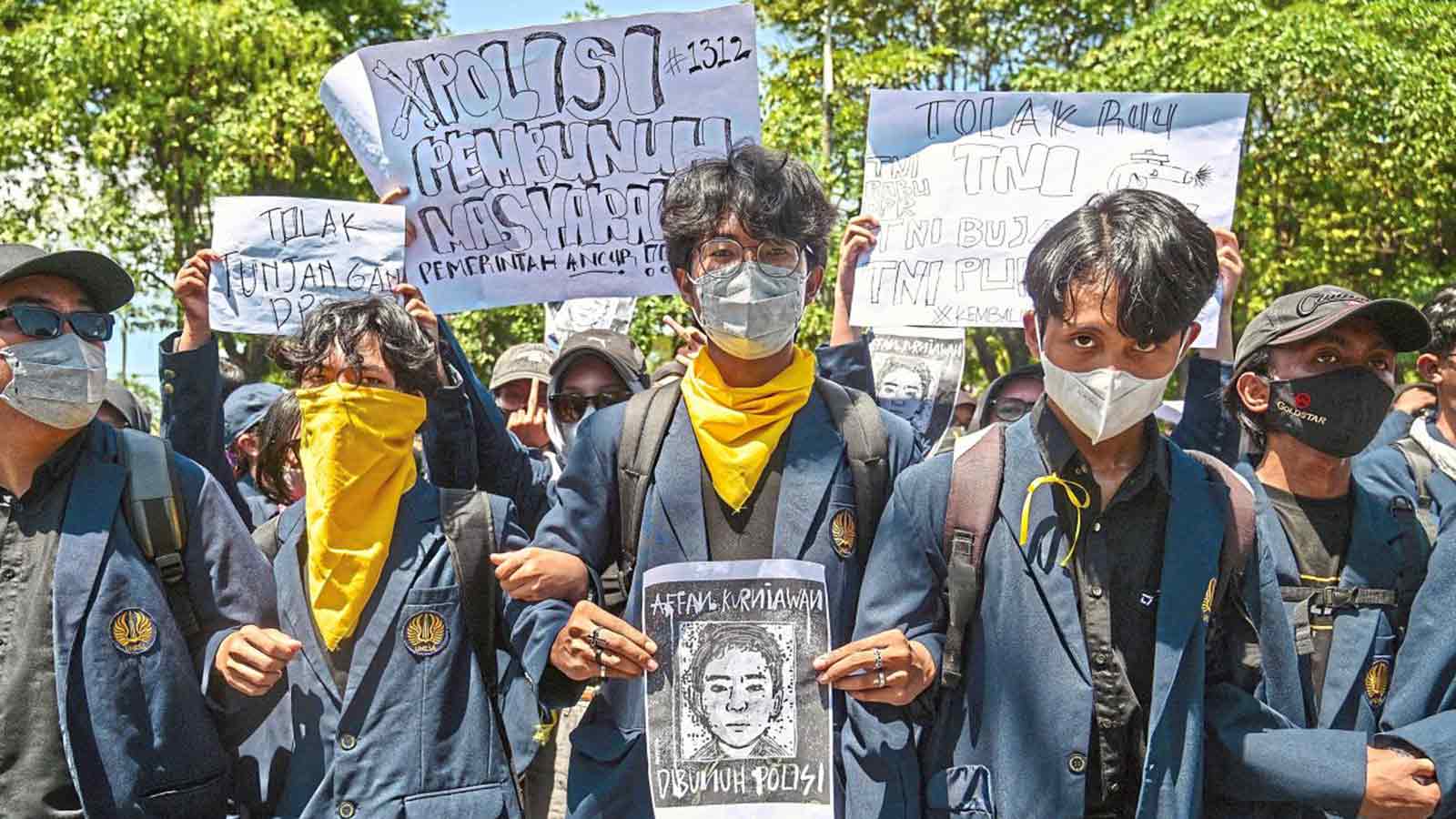
Indonesia is facing a wave of nationwide protests, ignited by public outrage over lawmakers’ financial perks and a tragic police incident that claimed the life of a motorcycle delivery driver. The unrest has spread across major cities, including Jakarta, Bali, and Surabaya, marking the most significant challenge yet for President Prabowo Subianto, less than a year into his tenure.
Police Brutality Sparks Public Outrage
The protests began after a viral video showed a police tactical vehicle fatally running over a delivery rider, Affan Kurniawan, during a demonstration on August 30, 2025. According to Al Jazeera, this incident triggered widespread anger against Indonesia’s militarized police force, the Mobile Brigade Corps (Brimob). Known for their heavy-handed tactics, Brimob has been criticized for using excessive force in crowd control, often resulting in civilian casualties.
The unit, which historically dealt with armed separatist movements, has increasingly been deployed to suppress protests. Human rights groups, including Amnesty International Indonesia, have pointed out the lack of accountability for Brimob’s actions. “Human rights violations committed by Brimob have almost never been taken to a civilian court,” stated Usman Hamid, Amnesty’s director.
Economic Inequality and Lawmaker Privileges
While the police incident acted as a catalyst, the underlying frustrations stem from economic disparities and lawmakers’ perceived indifference to public struggles. As reported by Bloomberg, the Indonesian parliament recently approved hefty allowances and overseas travel perks for its members, sparking outrage among citizens grappling with low wages and rising living costs.
Protesters, including students and motorcycle taxi drivers, have taken to the streets with demands to revoke these privileges. Demonstrations in Jakarta, Bali, and Surabaya saw hundreds of participants rally outside police and government buildings, with some carrying symbolic flags, such as the Indonesian national flag and even pop culture symbols like the “One Piece” anime flag.
Government Response and Promises of Reform
In response to the escalating tensions, President Prabowo Subianto addressed the nation on August 31. As reported by South China Morning Post, he announced the cancellation of his planned visit to China to monitor the domestic situation. During his televised address, Prabowo promised to revoke lawmakers’ controversial perks and implement reforms to address public grievances.
Political parties have also begun taking action, with some members facing expulsion from parliament. Effective September 1, these measures aim to quell public dissatisfaction and restore trust in government institutions. However, activists argue that broader police reforms are necessary to prevent future incidents of brutality and ensure accountability.
Historical Context and Future Implications
The current protests are not an isolated event but part of a broader pattern of unrest in Indonesia. The militarization of the police, particularly the Brimob unit, has been a contentious issue since the fall of Suharto’s regime in the late 1990s. Under successive administrations, the police force has received substantial funding, further entrenching its influence in both security and political spheres.
Experts warn that without significant reform, the cycle of protests and violent crackdowns is likely to continue. As Dimas Bagus Arya from the human rights organization KontraS stated, “The masses will always feel disappointed and keep their feeling of revenge towards the police in the future.”
The unfolding situation in Indonesia highlights the urgent need for comprehensive reforms addressing both economic inequalities and systemic issues within law enforcement. Whether President Prabowo’s administration can rise to the challenge remains to be seen.