


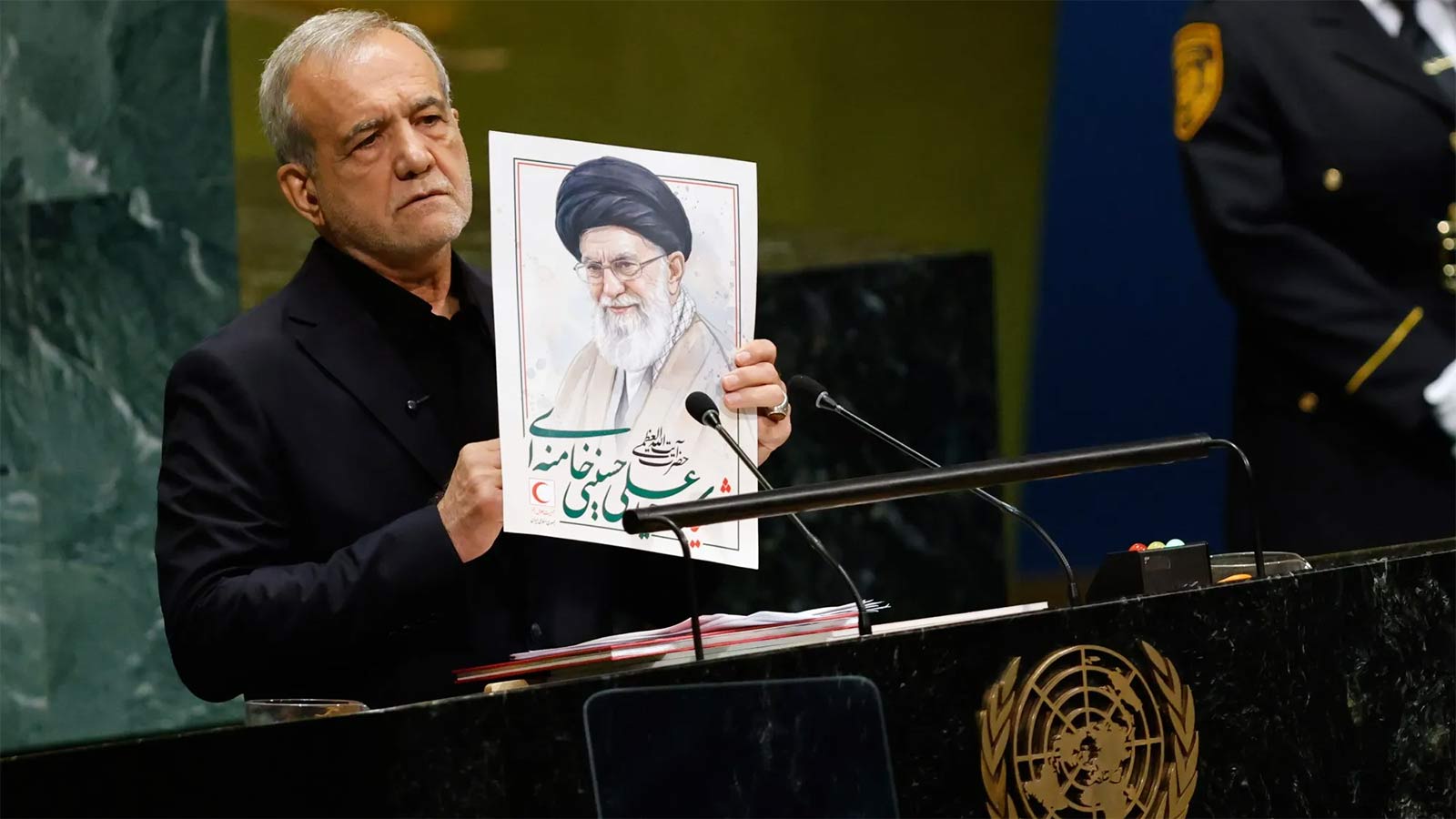
Defiant Stance at the United Nations
Iranian President Masoud Pezeshkian addressed the U.N. General Assembly on Wednesday, characterizing his nation as a victim of state-sponsored terrorism by the United States and Israel. In a speech that highlighted the deepening rift between Tehran and Washington, Pezeshkian denied that Iran has ever acted as an aggressor, framing the current conflict as an attempt by the U.S. to impose its will through the blockade of the Strait of Hormuz. “Iran will never bow our head or bend at the knee,” Pezeshkian stated through a translator, emphasizing that while Tehran is open to diplomacy, it refuses to accept the “language of force” employed by the Trump administration.
The underlying reporting is available from CBS News.
The White House responded swiftly to the address. Anna Kelly, White House principal deputy press secretary, issued a statement labeling the Iranian regime as an “evil country” responsible for the deaths of Americans and regional instability. The U.S. maintained its position that President Trump is working to prevent Iran from acquiring nuclear capabilities, a goal the administration claims is essential for global safety.
Escalation in the Strait of Hormuz
The diplomatic friction at the U.N. coincided with a violent incident in the Strait of Hormuz. According to the Omani navy, a commercial merchant vessel, identified as the Antigua and Barbuda-flagged Cape Dao, was struck by a projectile on Wednesday morning. The attack resulted in the death of one Indian crew member and the evacuation of 27 others. The U.K. Maritime Trade Operations Center reported the vessel was left burning and adrift approximately 2.5 nautical miles off the coast of Musandam, a critical corridor for global shipping.
The incident underlines the fragility of the maritime route, which has become a central point of contention in the war. Iran’s Supreme National Security Council Secretary, Maj. Gen. Mohsen Rezaei, reiterated in an interview with state media network IRIB that the Strait will remain closed to traffic until the U.S. meets Iranian demands, specifically the lifting of the naval blockade on Iranian ports.
Diplomatic and Economic Pressures
Despite the rhetoric, indirect communication appears to be ongoing. A senior Iranian official confirmed to Reuters that Tehran is currently reviewing a U.S. proposal aimed at de-escalating hostilities, though the official noted that significant gaps remain regarding the timeline for reopening the Strait and the status of frozen assets. Meanwhile, Germany’s foreign minister, Johann Wadephul, urged Tehran to engage constructively in negotiations during a meeting with his counterpart, Abbas Araghchi, on the sidelines of the General Assembly.
The international community is simultaneously increasing economic pressure. The Canadian government announced new sanctions on Wednesday targeting senior Iranian security officials and state-run entities for their role in the ongoing repression of domestic dissent. Additionally, the United Arab Emirates central bank has prohibited branches of Iran’s Bank Melli from conducting financial transactions, citing widespread non-compliance with anti-money laundering and counter-terrorism financing regulations.
Domestic Context
Inside Iran, the war has had a profound impact on the civilian population. On Wednesday, students returned to schools and universities for the first time since the conflict began in late February. The academic term was delayed by months of war-related closures, including a strike on the first day of the conflict that killed approximately 150 people, including 120 children in the city of Minab. In a statement attributed to Supreme Leader Mojtaba Khamenei, the regime acknowledged the “sorrow” of the reopening, citing the absence of students and teachers who perished during the fighting.