


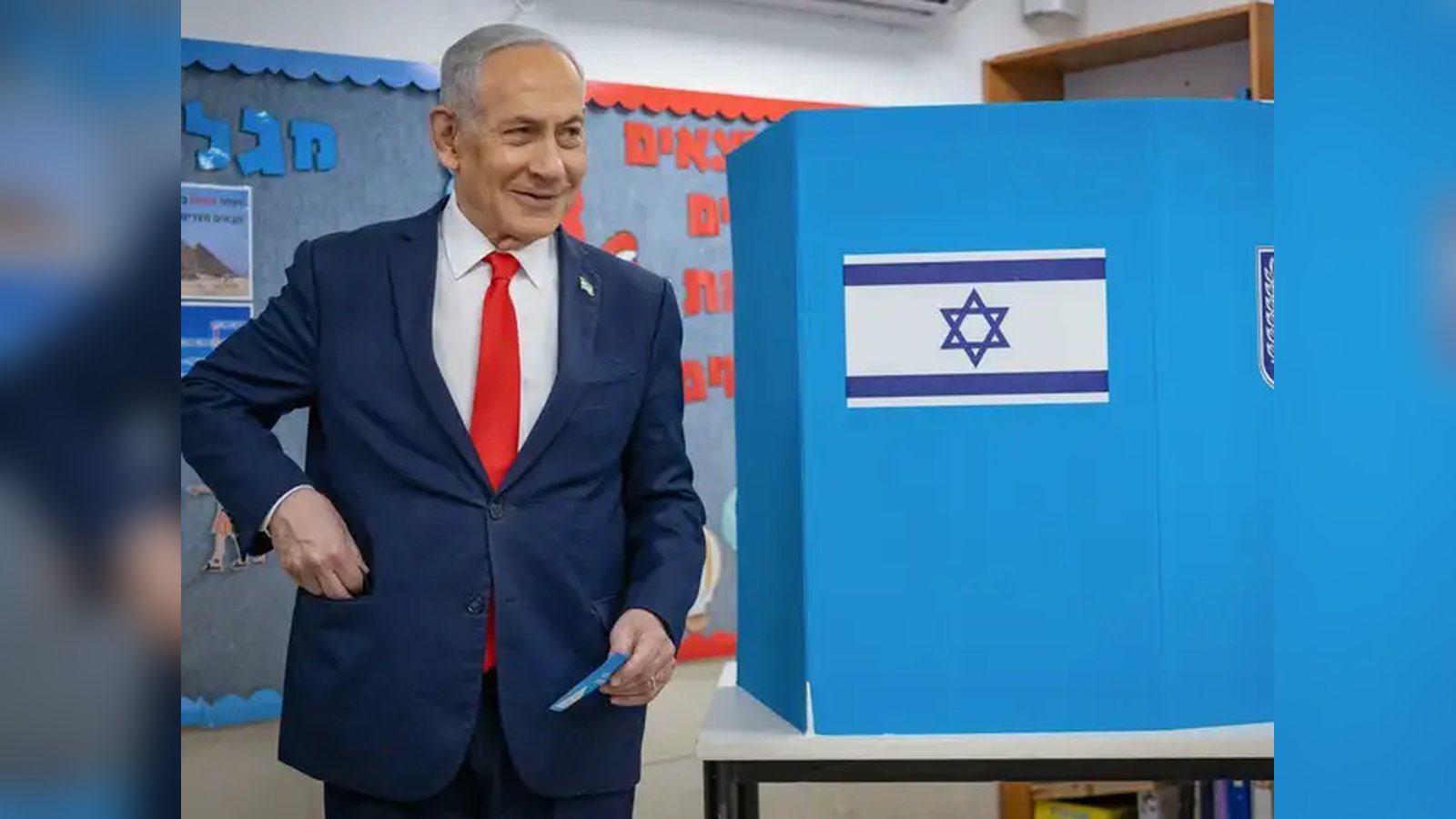
TEL AVIV (Azat TV) – Israeli voters headed to the polls on Tuesday in the country’s first nationwide election since the Oct. 7, 2023, attacks led by Hamas, bringing millions of citizens to voting stations to determine the composition of the 26th Knesset. CNBC reported that the election serves as a direct referendum on Prime Minister Benjamin Netanyahu, who has led Israel for nearly 19 of the past 30 years amidst ongoing military conflicts in Gaza, Lebanon, and a joint campaign with the U.S. against Iran.
The ballot opened across more than 12,000 polling stations nationwide, with tens of thousands of citizens reportedly flying back to Israel to cast their votes in a high-stakes, tight contest. The proportional representation system requires parties to clear a 3.25% threshold to enter the 120-seat Knesset, where outright majorities are rare and coalition-building is mandatory. Over 7 million people are eligible to vote, and more than 31% of Israelis cast ballots by noon, marking the highest midday turnout since 1977, according to figures released by the Central Elections Committee.
Wartime Pressures and Domestic Divides
The electoral campaign has been dominated by defense concerns, economic strain, and intense polarization over mandatory military conscription. László Csicsmann, a Middle East expert at Corvinus University of Budapest, told CNBC that the multi-front war has worn down Israeli society. He noted that nearly every family has a soldier or reservist called up for months of service, while military expenditure consumes roughly 8% of the nation’s gross domestic product.
Compulsory military service remains a severe legal and political flashpoint, particularly regarding exemptions for ultra-Orthodox Jewish communities. This dispute has continuously strained Netanyahu’s current right-wing coalition, which brings together Likud with far-right and ultra-Orthodox factions. The question of who serves and who evades service has emerged as a central moral and structural debate for voters, as nearly 330,000 young Israelis face military service under the shadow of ongoing regional hostilities.
Political Alliances and Opposition Stakes
Facing Netanyahu’s Likud party is a centrist opposition bloc led by former military chief Gadi Eisenkot and his Yashar party, which campaigns on national security and the integration of ultra-Orthodox and Arab communities into national service. Recent opinion polls indicate that neither major political bloc is assured of securing the 61 Knesset seats required to form a government independently, potentially elevating Arab-led parties or smaller factions into decisive kingmaker roles.
Daniel Schatz, a political scientist and former visiting scholar at Harvard, Stanford, and Georgetown, told CNBC that voters are weighing how military power translates into lasting security and whether new leadership can restore public trust. However, Schatz cautioned that public dissatisfaction with Netanyahu does not automatically translate into support for the left, noting that a change in government would likely maintain a hardline stance on regional security, Iran, and Palestinian statehood.
Amid the tense political atmosphere, incidents at polling stations drew scrutiny. Eisenkot’s Yashar party filed an urgent complaint over multiple instances where its ballot slips were allegedly missing, damaged, or turned over inside voting booths, pointing to potential irregularities. However, Dean Livne, acting director-general of the elections committee, noted that the overall volume of reported irregularities was significantly lower than in previous election cycles.
Regional and International Implications
The election outcome carries significant weight for Israel’s international partners, particularly the United States. Farzan Sabet, a senior analyst at the Eurasia Group, told CNBC that while the leading political factions maintain hawkish security platforms, an alternative coalition led by anti-Netanyahu parties might prefer to review Israel’s strategic approach toward Tehran prior to any major escalation. Meanwhile, Israeli and U.S. planners are reportedly preparing for potential renewed strikes on Iran following midterm elections, while Iranian military leadership states it remains prepared for asymmetric warfare.
International dimensions also extend to Israel’s standing concerning Gaza and the occupied West Bank. While Netanyahu’s supporters view him as a steady hand capable of confronting external threats and safeguarding the nation’s Jewish identity, his critics argue that his leadership has deepened international isolation and prolonged conflict dynamics for political survival. Observers note that an anti-Netanyahu coalition could potentially adopt a more conciliatory posture regarding international relations, while any new government will immediately face complex coalition negotiations to determine the country’s next administration.