


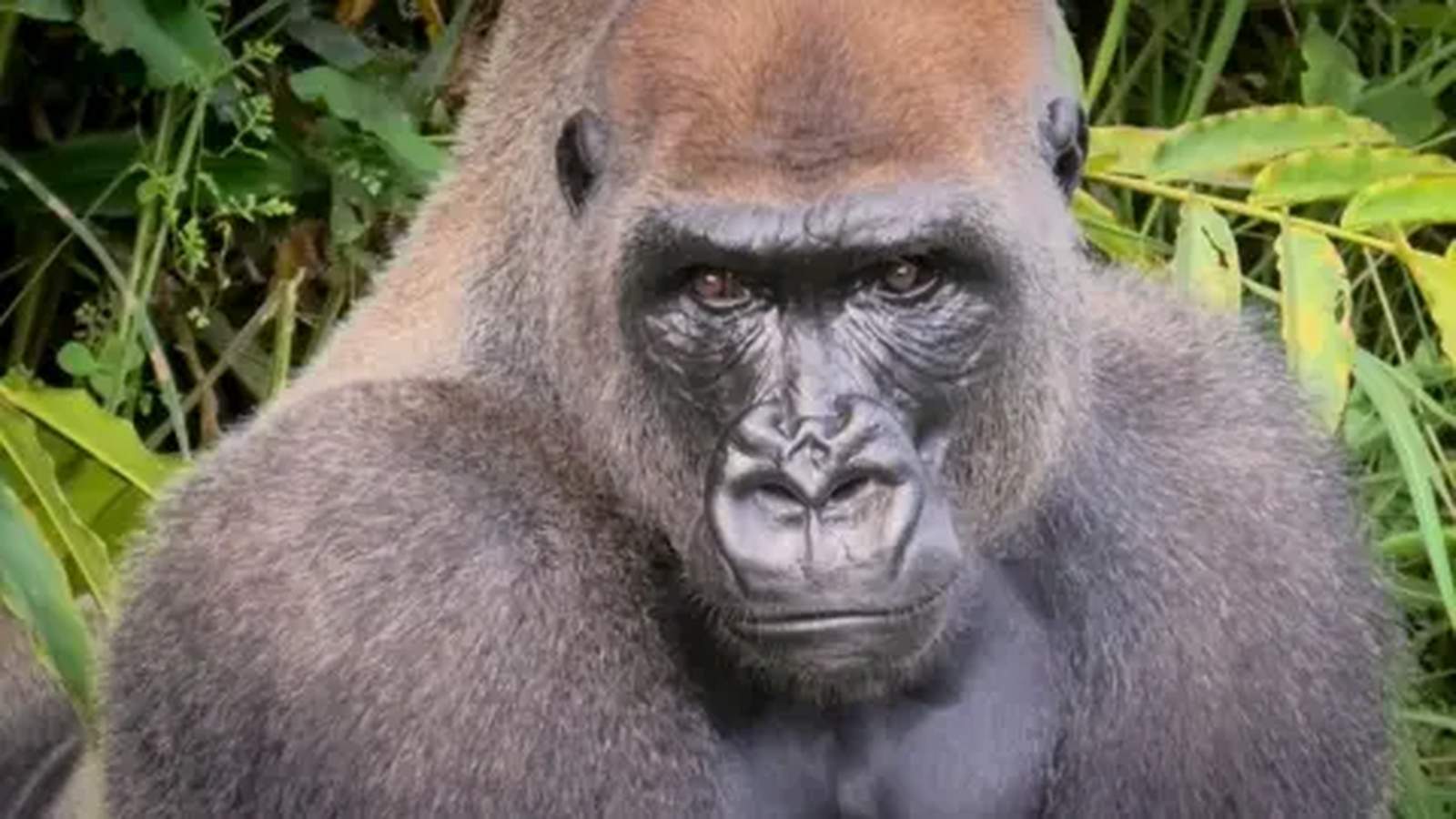
Thermal Imaging Reveals Physiological Trauma
Researchers at the Lekedi Foundation in Gabon are employing advanced thermal imaging to monitor Jojo, an 11-year-old male gorilla who has lived in isolation for nearly his entire life. Prof. Gillian Forrester from the University of Sussex, who is studying Jojo as part of broader research into great ape psychology, has identified physiological evidence of a malfunctioning stress response. By using thermal cameras to film Jojo’s face, researchers observed a persistent “nasal dip”—a state where the nose remains chronically cold due to restricted blood flow, which serves as a biological indicator of high, unmitigated stress.
Jojo’s current condition is the result of a traumatic infancy. Captured by poachers as an infant after his family was killed, he was kept in a tiny cage at a private zoo for over a decade before being transferred to the Lekedi sanctuary. Unlike wild gorillas, which spend their formative years in embedded family units, Jojo has lacked any consistent social interaction for the majority of his life. His caregivers report that he exhibits clear signs of craving companionship, including attempting to trade leaves with keepers for treats and calling out to familiar female visitors using vocalizations typical of silverback males seeking a group.
The Path to Social Rehabilitation
Finding a suitable companion for Jojo is now considered a primary goal by his keepers, including sanctuary head Éric Willaume. Experts argue that social bonding is essential not only for his psychological recovery from grief and trauma but also as a necessary prerequisite if he is ever to be considered for reintroduction into the wild. Dr. Katie Fawcett of the Grace Center emphasizes that forming social relationships is a fundamental aspect of gorilla life, as these bonds are key to their social structure and emotional stability.
However, the process of finding and introducing a companion is fraught with institutional hurdles. Prof. Forrester has reached out to various accredited zoos to explore potential trans-locations, but these efforts have stalled. Current international regulations for moving captive gorillas are primarily designed for managed breeding programs rather than for the therapeutic reintroduction or companionship needs of individual rescued animals. Furthermore, conservationist Tony King of the Aspinall Foundation notes that because Jojo has reached maturity in isolation, there is a risk that an introduction could inadvertently become a new source of stress rather than a healing experience. While solitary living is a natural phase for some adult male gorillas in the wild, Jojo’s case is complicated by the fact that his isolation was forced upon him at a developmental age, leaving him without the social skills typically acquired in a family group.