


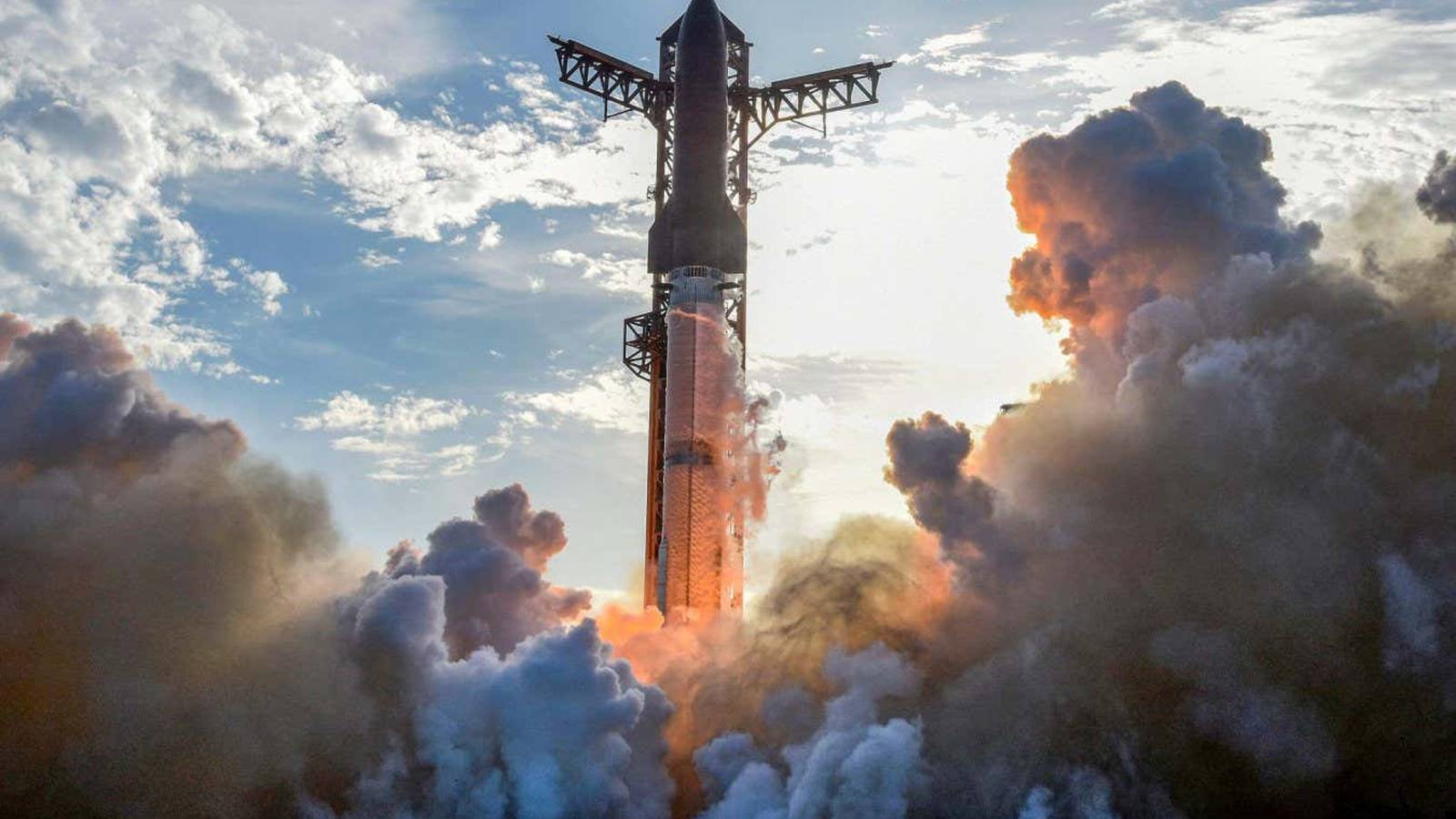
On Friday, November 13, 2026, a SpaceX Super Heavy booster exploded over the Gulf of Mexico after an automatic flight control abort canceled its planned return-to-launch-site catch attempt at Starbase, Texas, as reported by CNBC and Ars Technica. The incident occurred during Flight 15, the most ambitious test mission to date for the massive Starship rocket system, which lifted off at 4:47 p.m. local time. While the booster failed to return to shore and burst into flames following a controlled water diversion, the upper stage successfully continued its trajectory into orbit.
The mission marked a critical milestone for aerospace manufacturer SpaceX, as engineers sought to demonstrate the first-ever dual recovery of both the Super Heavy booster and the Starship upper stage using mechanical launch tower arms. Despite the booster setback, Space.com confirmed that the upper stage successfully deployed 26 Starlink V3 internet satellites into low Earth orbit approximately 40 minutes into the flight. SpaceX commentator Dan Huot noted during the live webcast that the vehicle achieved a nominal orbit insertion, allowing the spacecraft to begin a multi-hour journey circling the globe.
Flight 15 objectives and orbital deployment success
Test Flight 15 was the first time Elon Musk's company attempted to catch both the booster and upper stage, or spacecraft portion, of the massive rocket. Earlier on Friday, SpaceX obtained authorization from the Federal Aviation Administration. Hours later, the FAA issued a nationwide ground stop after reporting communication problems affecting multiple air traffic control centers, though a spokesperson told CNBC that the SpaceX license was not affected by the flight stoppage. The upper stage continued its trajectory into orbit after the company failed to catch and salvage the booster, with the rocket expected to fly around the Earth fourteen times in total.
India Today noted that Flight 15 was designed to attempt catching both Super Heavy and Starship using the mechanical arms of its launch tower, describing the mission as a bid to demonstrate the first full recovery of an orbital launch system. CNN reported that the Starship spacecraft reached orbit, where it deployed Starlink internet satellites and was expected to spend 22 hours circling Earth, while also highlighting that SpaceX had attempted booster landings only a limited number of times before. Space.com added that SpaceX reserved contingency checkpoints during the timeline, executing a return to launch site only if critical systems remained healthy.
Technical hurdles and ongoing reusability goals
The failure of the booster recovery highlights the immense technical hurdles facing SpaceX in its drive toward full and rapid rocket reusability. According to statements cited by DW, company officials stated that the exact reasons for the automated abort and subsequent loss of the booster were not immediately clear, though contingency checkpoints are built into every flight timeline to ensure system safety before reentry maneuvers. William Blair analysts observed in a market note that while the lost catch is a setback, a delay of a few months remains manageable given SpaceX's massive lead in launch capabilities, with analysts writing that the company is likely a full decade ahead of peers on this front.
Ars Technica described the challenge for the company now as making Starship reusable and dramatically increasing its flight rate, characterizing Friday's mission as operational for the deployment of 26 Starlink V3 satellites while the first stage portion fell short of full success because the booster was not recovered. SpaceX's Dan Huot told viewers during the webcast that the team was not sure right now why they were not able to bring it back, as ground crews prepared for the upper stage's scheduled return to Earth and attempted launch pad catches.
Strategic stakes for Starlink and future missions
The success of the broader Starship program remains vital to scaling the Starlink satellite internet constellation, which currently serves as the company's primary profit center with over 11,000 active satellites in low Earth orbit. A single Starship vehicle possesses the capacity to carry up to 60 Starlink v3 satellites, vastly outperforming legacy Falcon 9 rockets by offering roughly 20 times the capacity. In the previous Starship test flight, the company released 26 v3 satellites, and released another 26 in the Friday test flight, with the overarching corporate goal of Starlink becoming a dominant provider of global internet connectivity, as stated in posts on X.
While teams prepared for the upper stage's scheduled return to Earth, the booster explosion serves as a stark reminder of the engineering margins required to achieve interplanetary transport goals for the Moon and Mars. Starship's success is critical to SpaceX and its ambitions to eventually lift cargo and people to the surface of the Moon and the Martian surface. Alongside these technical trials, SpaceX is facing fresh scrutiny over restrictions imposed on its Starshield satellite internet service in Ukraine, where military forces experienced limits on the military-tier service without warning, drawing condemnation from U.S. senators urging congressional investigations.