


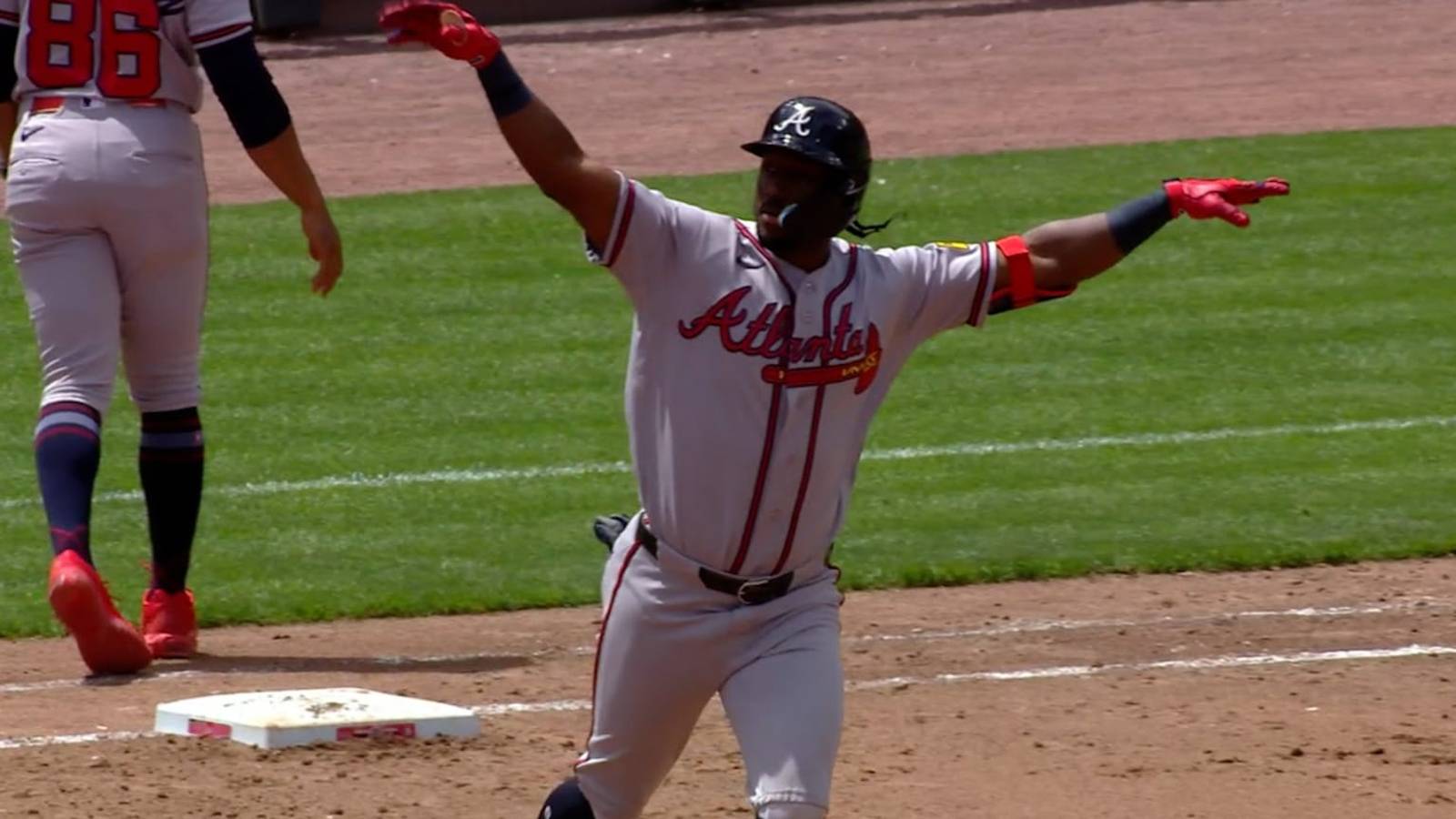
The Shift in Atlanta’s Infield Dynamics
As of May 31, 2026, the Atlanta Braves find themselves at a critical juncture regarding their infield configuration. Utility player Jorge Mateo has effectively seized the starting shortstop role, appearing in five consecutive games and forcing manager Walt Weiss to reconsider the hierarchy of a roster that was initially constructed around high-priced veteran Ha-Seong Kim. The transition is not merely a product of rotation, but a direct consequence of Mateo’s offensive surge, which has starkly contrasted with Kim’s profound struggles since returning from injury.
Quantifying the Performance Gap
The statistical disparity between Mateo and Kim has become the focal point of Atlanta’s season trajectory. Mateo, who spent the early portion of the year rotating with Mauricio Dubón, has capitalized on his recent opportunities. Over his last seven games, Mateo has posted a .353 batting average, bringing his season-long OPS to .845. His contributions extend beyond the box score, with seven stolen bases in 81 plate appearances and a slugging percentage of .487. These metrics suggest a player who is not merely filling a gap, but actively driving offensive production.
Conversely, Ha-Seong Kim’s performance has cratered. Since his activation from the injured list on May 11, Kim has slashed a meager .095/.191/.095 across 47 plate appearances. For a team that invested $20 million in a one-year contract for Kim, these results represent a significant return-on-investment deficit. The defensive demands of the shortstop position are high, and while the Braves initially hoped for league-average offense paired with elite defense, the current output has forced management to prioritize immediate performance over contractual status.
Strategic Implications for the Front Office
Manager Walt Weiss has adopted a pragmatic approach, stating, “You use players who are hitting well and ride that momentum.” This philosophy has effectively relegated the financial and historical expectations surrounding Kim to the background. Analysts, including those at 680 The Fan, have noted that the team is at a crossroads. While internal support for Kim may persist, the Braves’ aspirations—which include winning the Eastern Division and challenging the Los Angeles Dodgers for National League supremacy—leave little room for prolonged offensive liabilities.
The data suggests that Mateo’s success is built on improved bat-tracking consistency, allowing him to handle high-velocity pitching more effectively than in previous seasons. If Mateo can maintain his plate discipline and defensive reliability, the Braves may have accidentally discovered a long-term asset that provides better value than their high-priced free-agent acquisition. The coming weeks will be decisive; should Kim fail to bridge the performance gap, the organization will likely be forced to formalize Mateo as their primary shortstop for the remainder of the season, potentially signaling the end of the Kim era in Atlanta.
The decision to prioritize Mateo over Kim is a clear indicator that the Braves’ front office is shifting toward a meritocratic roster management style. In a competitive National League environment, sunken costs—represented by Kim’s $20 million salary—are increasingly being overshadowed by the immediate need for production. Mateo’s emergence offers a rare opportunity for the team to stabilize a volatile position without needing to look to the trade market, provided his current efficiency persists under the increased pressure of an everyday role.