


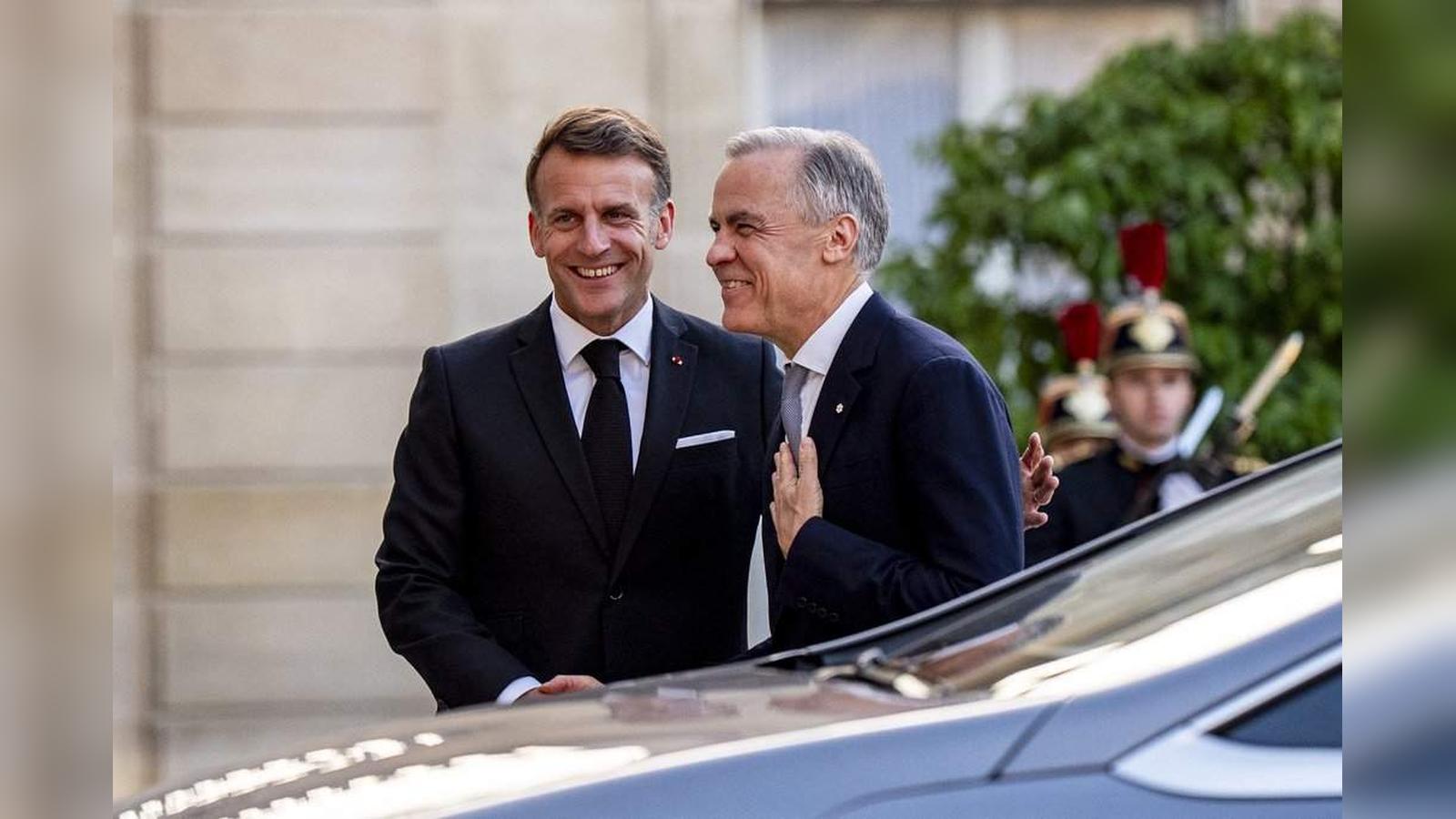
A Symbolic Meeting Off the Atlantic Coast
French President Emmanuel Macron and Canadian Prime Minister Mark Carney held a high-profile working meeting on Sunday in Saint-Pierre-et-Miquelon, France’s sole remaining North American territory. The visit, the first by a French president to the archipelago in over a decade, serves as a strategic signal of unity amidst shifting geopolitical alliances, according to Global News.
The meeting occurs as Canada seeks to diversify its economic and security partnerships, a move accelerated by ongoing tensions with the United States. Recent months have seen a series of diplomatic frictions, including a viral social media post from U.S. President Donald Trump that depicted Saint-Pierre-et-Miquelon under the American flag—an image that drew quiet but firm pushback from French officials asserting sovereignty over the islands, as reported by the South China Morning Post.
Energy Security and Strategic Autonomy
Energy cooperation formed a central pillar of the discussions. With global energy markets disrupted by the conflict with Iran, Macron expressed a clear desire for Canada to redirect its liquefied natural gas (LNG) exports from Asian markets to Europe. “What we want to do is conclude agreements to secure more liquefied natural gas that can be shipped to Europe’s Atlantic coast,” Macron stated during the visit, as noted by France 24.
Beyond energy, the leaders addressed the broader framework of Canada’s integration with the European Union. European Commission President Ursula von der Leyen recently proposed that Canada become the EU’s first “associate member,” an invitation Carney has welcomed. The two leaders also discussed deepening collaboration in advanced technological sectors, including quantum computing, satellite development, and supercomputing, reflecting a shared ambition to reduce dependency on external powers.
Historical Significance and Future Outlook
The choice of venue—a remote archipelago 20 kilometers off the coast of Newfoundland—carries heavy symbolic weight. Macron and Carney paid tribute at a memorial for Free France volunteers, honoring the forces that liberated the islands from Vichy control in 1941. This act of remembrance underscored the shared values of democracy and sovereignty that now anchor the modern bilateral relationship.
Despite the positive rhetoric, the path toward deeper integration remains complex. While the Comprehensive Economic and Trade Agreement (CETA) has been in provisional application for nine years, full ratification remains stalled in several EU member states, including France. As Carney and Macron prepare for the upcoming UN General Assembly in New York, the challenge lies in translating this diplomatic momentum into tangible policy outcomes that satisfy domestic economic pressures in both Ottawa and Paris.