


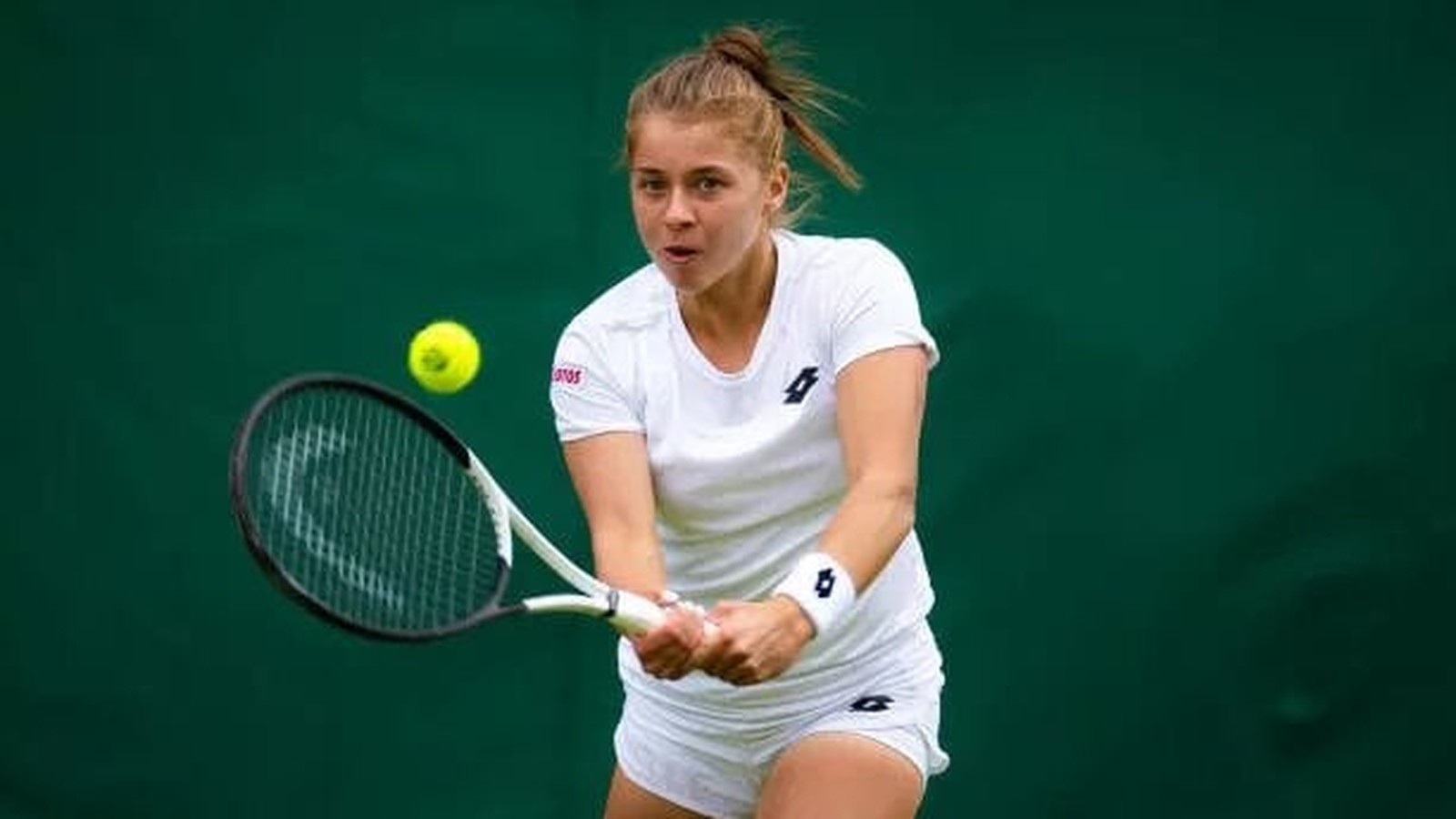
The Strategic Significance of the 2026 French Open Quarterfinals
The 2026 Roland Garros tournament has entered a transformative phase, characterized by the unexpected institutional ascent of Maja Chwalińska. Ranked No. 114 globally, the Polish left-hander’s progression to the quarterfinals represents more than a sporting upset; it is a statistical anomaly that challenges the established hierarchy of the Women’s Tennis Association (WTA). Chwalińska’s match against Russia’s Anna Kalinskaya on June 3, 2026, serves as a focal point for analyzing the shifting dynamics of European tennis, particularly following the early exits of tournament favorites such as Iga Świątek and Coco Gauff.
Chwalińska’s trajectory is historically significant as she becomes the first qualifier to reach the French Open quarterfinals since 2020. Within the context of Polish sports history, she joins an elite cohort—becoming only the fourth Polish woman in the Open Era to reach a Grand Slam quarterfinal, alongside Agnieszka Radwańska, Magda Linette, and Iga Świątek. This achievement underscores a systemic strengthening of Poland’s tennis infrastructure, which has successfully transitioned from producing isolated champions to fostering a broader talent pool capable of deep runs in major championships.
Socio-Economic Underpinnings and the Development Model
The narrative of Chwalińska is deeply rooted in the socio-economic realities of the Silesian region. Born in Dąbrowa Górnicza to a coal miner and a receptionist, her rise highlights the efficacy of grassroots recruitment programs. Her discovery through a school-based initiative suggests that the investment in localized athletic scouting remains a critical pillar for national sporting success. However, the financial and personal sacrifices made by her family highlight the persistent barriers to entry in high-performance tennis, a sport often criticized for its high capital requirements.
From a policy perspective, Chwalińska’s partnership with coach Jaroslav Machovsky since 2020 illustrates the importance of long-term coaching stability. This institutional continuity has allowed for a technical refinement of her game, particularly her utilization of left-handed angles and tactical variety, which effectively neutralized higher-ranked opponents like Olympic champion Zheng Qinwen earlier in the tournament. The stability of this professional relationship provided the necessary framework for her to navigate the transition from a successful junior career—where she won a European doubles title with Świątek—to the more volatile professional circuit.
The Psychological Turnaround: Policy Implications for Athlete Mental Health
Perhaps the most critical dimension of Chwalińska’s 2026 campaign is her public discourse regarding mental health. Her decision to step away from the sport in 2021 due to clinical depression and a crisis of self-confidence has become a case study for sports psychologists and governing bodies. Her struggle was exacerbated by the “peer comparison” effect, as she witnessed her former doubles partner, Iga Świątek, ascend to world number one while she remained sidelined by internal conflict.
The successful reintegration of Chwalińska into elite competition suggests a maturing of the support systems within the WTA and the Polish Tennis Federation. It emphasizes the necessity for athletic programs to prioritize psychological resilience over immediate performance metrics. Chwalińska’s return to form—moving from an inability to leave her home to competing on the world’s most prestigious clay courts—serves as a powerful validation of comprehensive mental health interventions in professional sports.
Technical Analysis: The Left-Handed Disruption
On the court, Chwalińska’s success in Paris is attributed to a distinctive tactical profile. As a left-hander, she possesses a natural advantage in creating wide service angles that pull opponents out of position. Her victory over France’s Diane Parry (6-3, 6-2) in the round of 16 demonstrated a high level of tactical discipline. Unlike the power-centric baseline game that dominates the modern WTA, Chwalińska employs a variety of slices, drop shots, and net approaches, effectively disrupting the rhythm of power hitters.
Her quarterfinal opponent, Anna Kalinskaya, presents a significant institutional challenge. Kalinskaya, who is also seeking her first Grand Slam semifinal, represents the robust Russian tennis development system. The matchup is not merely a contest of skill but a clash of developmental philosophies: the versatile, craft-oriented game of the Polish qualifier versus the disciplined, high-velocity baseline play of the Russian. For Chwalińska, the stakes involve a potential entry into the top 50 of the WTA rankings, a move that would fundamentally alter her access to future tournament draws and sponsorship opportunities.
Institutional Impact on Polish Sport
The 2026 French Open serves as a barometer for the “Świątek Effect” on Polish tennis. The visibility of Iga Świątek’s dominance has clearly catalyzed a new generation of players who possess the belief that they can compete at the highest level. Chwalińska’s run proves that the infrastructure supporting Polish tennis is now capable of sustaining multiple top-tier athletes simultaneously. This has significant implications for national sports funding, media rights, and the overall commercial viability of tennis in Central Europe.
The emergence of Maja Chwalińska as a Grand Slam contender represents a pivotal moment for the intersection of sports policy and athlete welfare. Her success validates the shift toward a more holistic developmental model that accounts for the psychological toll of elite competition. As the WTA enters a period of transition with the unexpected elimination of top seeds, Chwalińska’s journey from the depths of clinical depression to the quarterfinals of Roland Garros stands as a definitive argument for the integration of mental health resources as a primary component of high-performance athletic infrastructure.