


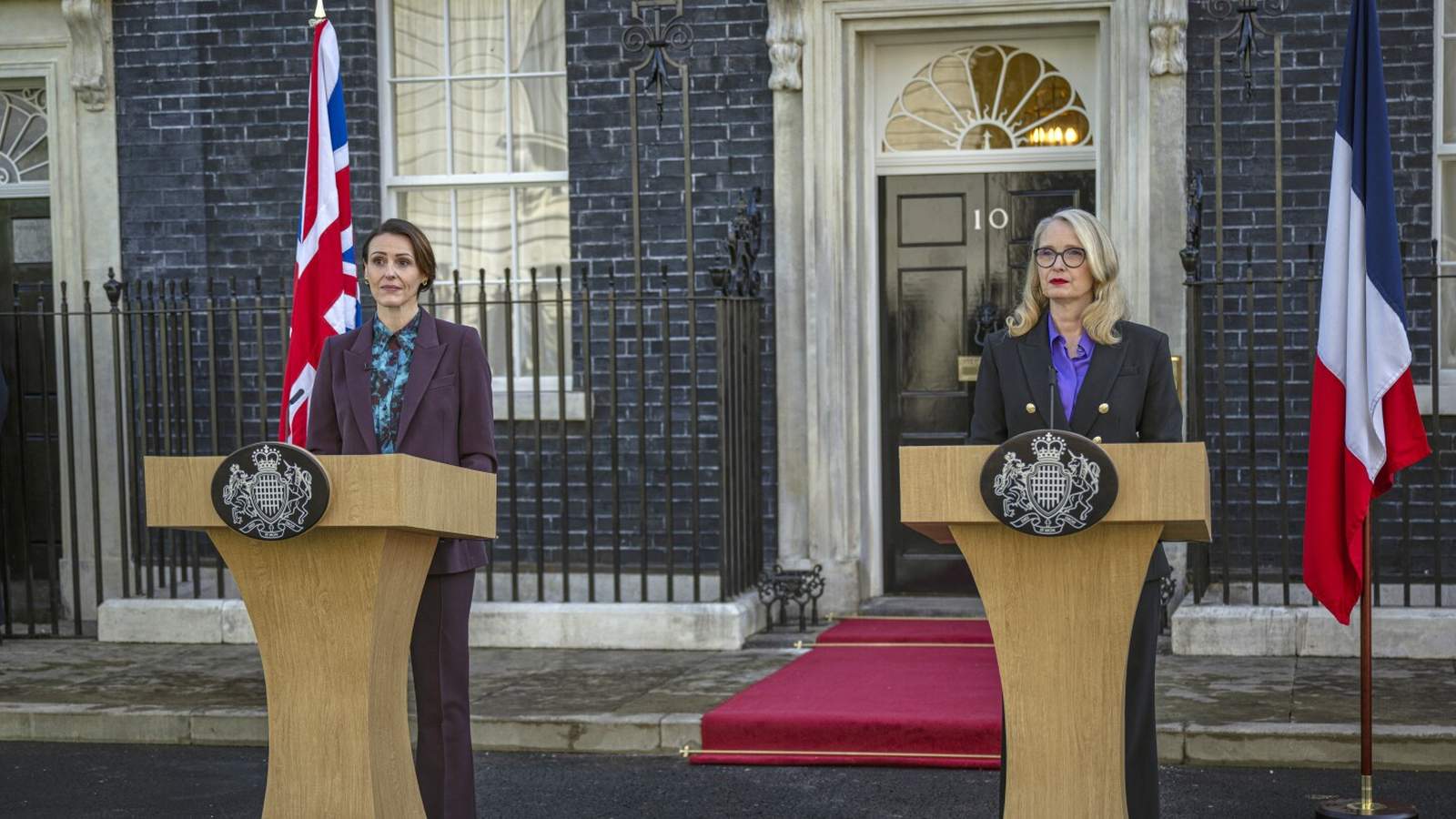
Netflix’s latest political thriller, Hostage, has become a topic of intense conversation since its release on Thursday. Created by Matt Charman, known for his work on Bridge of Spies, this five-episode miniseries intertwines the worlds of high-stakes politics and deeply personal struggles. Featuring powerhouse performances by Suranne Jones and Julie Delpy, the show explores the fragility of leadership under immense pressure, leaving viewers captivated by its dramatic twists and emotional depth.
A Tale of Two Leaders
Set in present-day London, Hostage introduces us to British Prime Minister Abigail Dalton (played by Suranne Jones), a leader grappling with a crumbling healthcare system and economic challenges just eight months into her tenure. Her French counterpart, President Vivienne Toussaint (Julie Delpy), arrives in the UK for a pivotal Anglo-French summit aimed at addressing refugee crises and medical aid shortages. However, the political proceedings quickly unravel into personal chaos when Dalton learns that her husband, Dr. Alex Anderson (Ashley Thomas), has been kidnapped while on a humanitarian mission in French Guiana.
The kidnappers issue a chilling ultimatum: Dalton must resign as Prime Minister in exchange for her husband’s safe return. Meanwhile, Toussaint faces her own crisis—a blackmail threat that could derail her presidency. The series portrays the two women as both rivals and reluctant allies, navigating the treacherous waters of international diplomacy while managing the fallout of their personal lives.
The Challenges of Leadership and Gender
Hostage stands out for its focus on female leaders in a male-dominated political landscape. Dalton and Toussaint are depicted as resilient yet perpetually scrutinized, facing misogyny from colleagues and the public alike. Suranne Jones delivers a compelling performance as Dalton, portraying a leader torn between her duties to her country and her family. Julie Delpy’s Toussaint, on the other hand, is a study in poise and calculation, her icy demeanor masking the vulnerabilities beneath.
The series doesn’t shy away from highlighting the unique challenges faced by women in power. From wardrobe choices designed to command authority to the emotional toll of balancing public and private responsibilities, Hostage delves into the duality of their roles. As Delpy remarked in an interview with AP News, “Wearing heels to make yourself taller or shoulders to not feminize yourself—it’s all part of the game.”
High-Stakes Drama Meets Melodrama
While Hostage is primarily a political thriller, it doesn’t shy away from melodramatic elements. Critics from Variety and The Guardian have noted some implausible plotlines, such as Dr. Anderson’s unprotected travel to a conflict zone, which stretch the boundaries of believability. Additionally, subplots involving Dalton’s strained relationship with her teenage daughter Sylvie add a soap opera quality to the narrative.
However, these elements also make the series accessible, reminding viewers that even heads of state are not immune to personal struggles. The juxtaposition of professional stoicism and private vulnerability adds depth to the characters, making their dilemmas all the more relatable.
A Penultimate Episode That Shines
The fourth episode of Hostage has been widely praised as the highlight of the series. In this chapter, Dalton and Toussaint engage in a rare moment of introspection, reflecting on their journeys into leadership and the sacrifices they’ve made along the way. This poignant exchange captures the emotional toll of power and forces viewers to question the ethical boundaries of leadership. How far should a leader go in sacrificing personal happiness—or even the lives of others—for the greater good?
A Reflection of Political Realities
At its core, Hostage is a cautionary tale about the fragility of political systems. It underscores how quickly governments can descend into chaos, not just from external threats but also from internal vulnerabilities like greed, blackmail, and unchecked ambition. The show’s themes resonate strongly in today’s geopolitical climate, touching on issues like refugee crises, healthcare struggles, and the rise of nationalism.
As noted by Economic Times, the series serves as a reminder of the human cost of governance. Whether it’s Dalton’s desperate attempt to save her husband or Toussaint’s battle to protect her presidency, Hostage lays bare the sacrifices and moral compromises inherent in leadership.
Hostage is far from perfect. Its melodramatic flourishes and occasional plot inconsistencies may not appeal to all viewers. However, the stellar performances by Jones and Delpy, combined with its timely political commentary, make it a must-watch for fans of the genre. As Decider aptly put it, “Stream it.”
Ultimately, Hostage succeeds in blending the personal with the political, delivering a gripping narrative that lingers long after the credits roll.