


Legal Intervention at Fort Leavenworth
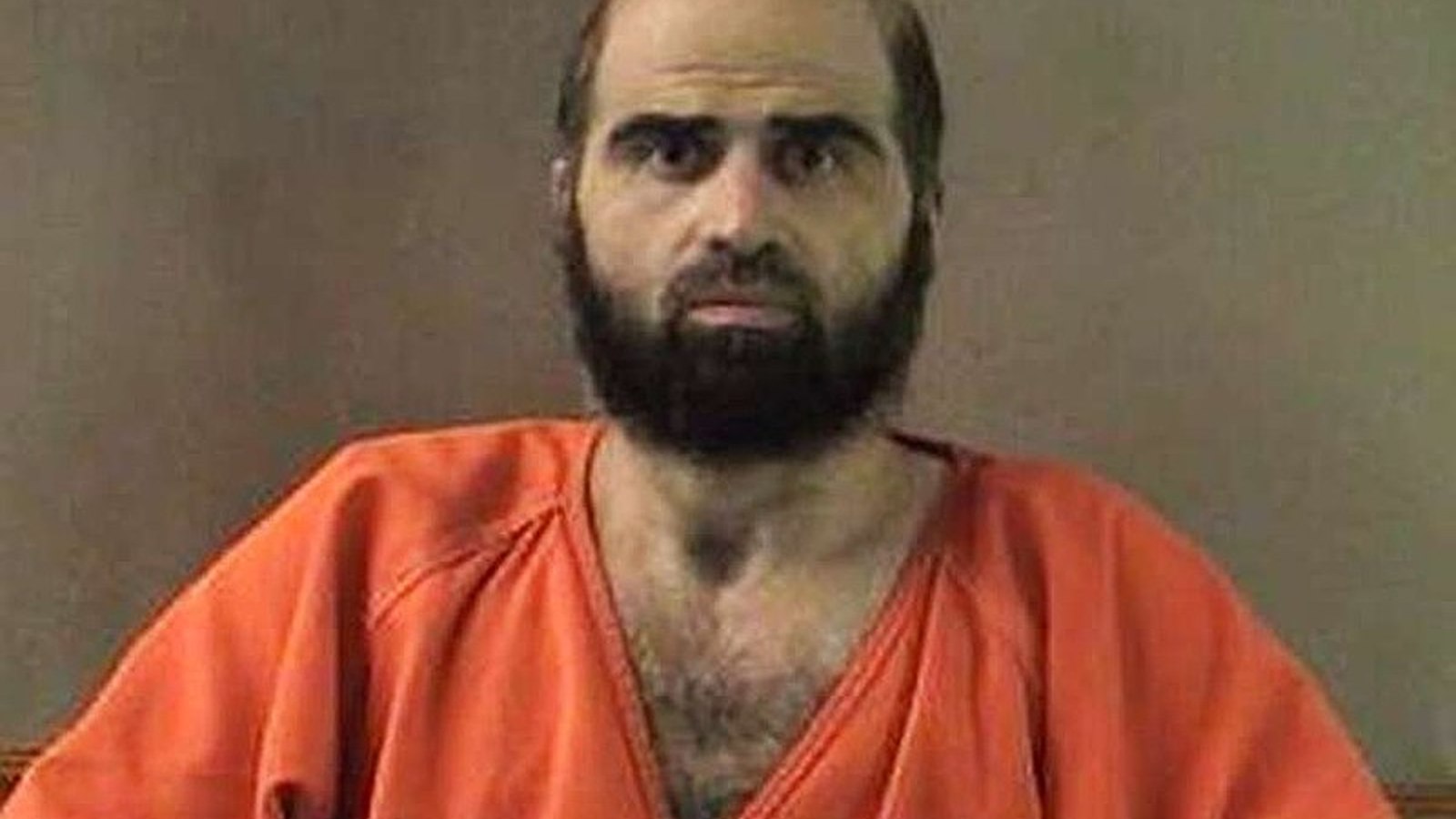
Nidal Hasan, the former Army psychiatrist convicted of the 2009 Fort Hood shooting, filed a formal request in a federal court in Kansas on November 24, 2026, seeking to delay his scheduled execution. The execution, which would be the first federal military execution since 1961 and the first by firing squad since the Second World War, is currently set for December 3. Hasan’s filing, which he signed while representing himself, argues that the military court judgment and the resulting death sentence were obtained in violation of his federal constitutional and statutory rights. As reported by NBC 5, a federal judge has scheduled a hearing for Wednesday morning to address the request. This legal maneuvering threatens to disrupt the administration’s timeline for carrying out the death penalty, a process that has been under intense public and governmental scrutiny since the announcement of the execution date.
The Basis of the Constitutional Challenge
Hasan’s core legal argument centers on claims that he was unfairly restricted during his 2013 court-martial. At that time, Hasan relieved his appointed defense team to represent himself, but the presiding judge barred him from presenting a defense based on “defense of others.” Hasan had intended to argue that he was protecting the Afghan Taliban from what he characterized as an “unlawful attack” by the United States Army. Because this defense was prohibited, Hasan largely remained silent throughout his trial, rested his case without calling witnesses, and declined to provide a closing argument. His current petition seeks to reopen these constitutional questions, suggesting that the original trial’s limitations denied him a fair assessment of his rights. He is being assisted in this effort by lawyers from the American Civil Liberties Union Capital Punishment Project. The legal experts involved are positioning this challenge to suggest that the proceedings were fundamentally flawed, potentially opening the door for extensive appellate review that could stay the execution beyond the December deadline.
The Role of U.S. District Court Judge Tony Mattivi
The petition has been assigned to U.S. District Court Judge Tony Mattivi, a recent appointee confirmed by the Senate in June 2026. Judge Mattivi brings significant experience to the case; his judicial biography notes he served as the lead prosecutor for the capital military commission at Guantanamo Bay, Cuba, from 2009 to 2013, specifically handling the prosecution of an al-Qaida operative involved in the USS Cole bombing. The assignment of a federal judge to a military execution petition marks a critical intersection between the military justice system and the federal judiciary, potentially establishing a complex appellate timeline that could complicate the administration’s stated objectives. His background in high-stakes military justice and national security prosecutions places him in a unique position to evaluate the threshold for constitutional violations in a military court context.
Institutional Friction and Witness Rights
Simultaneously, the execution process has faced intense scrutiny regarding the rights of shooting survivors to witness the event. The Army recently denied requests from three survivors to attend, citing regulations under the Uniform Code of Military Justice that define who is eligible to observe a military execution. The military clarified that because none of the survivors were the direct “victims of the charges” for which Hasan was convicted, they do not qualify under the strict criteria for attendance. This decision has caused significant distress among survivors. Retired Col. Kathy Platoni, who served as Hasan’s supervisor at the time of the attack, expressed deep frustration, stating, “We have faced institutional betrayal after institutional betrayal.” The military’s rejection letter emphasized that the decision was not a commentary on the survivors’ emotional or physical trauma, but a strict adherence to security and space management protocols.
Perspectives on Victim Status and Legacy
The dispute over witness rights underscores a deeper, ongoing struggle regarding the classification of the 2009 attack. Survivors such as Retired Maj. C. Alan Hopewell and Julia Wilson have argued that the military’s rigid adherence to regulations fails to account for the broad physical, emotional, and pecuniary harm suffered by those present during the rampage. These survivors have pushed for the Fort Hood event to be recognized as domestic terrorism rather than mere workplace violence, a reclassification that would change the framing of their victim status within the military bureaucracy. The denial of their attendance requests has solidified their sense of exclusion, with survivors like Col. Platoni noting that the inability to witness the execution deprives them of a final sense of closure or the opportunity to confront the perpetrator. The logistical assertion by the military—citing space limitations and security—has been met with skepticism by those who point to the initial capacity planning for up to 160 witnesses. As the court prepares for Wednesday’s hearing, the procedural conflict between the defendant’s last-minute legal filings and the government’s operational preparations remains the primary obstacle to the scheduled execution date. The intersection of Hasan’s constitutional challenge and the advocacy of the survivors creates an unprecedented environment for this historic military proceeding, as the federal judiciary now must weigh the defendant’s rights against the high-profile nature of the conviction and the systemic friction within the military’s own execution policies. The outcome of the hearing will determine whether the December 3 execution can proceed as planned or if a stay of execution will be granted to allow for further litigation of Hasan’s claims.