


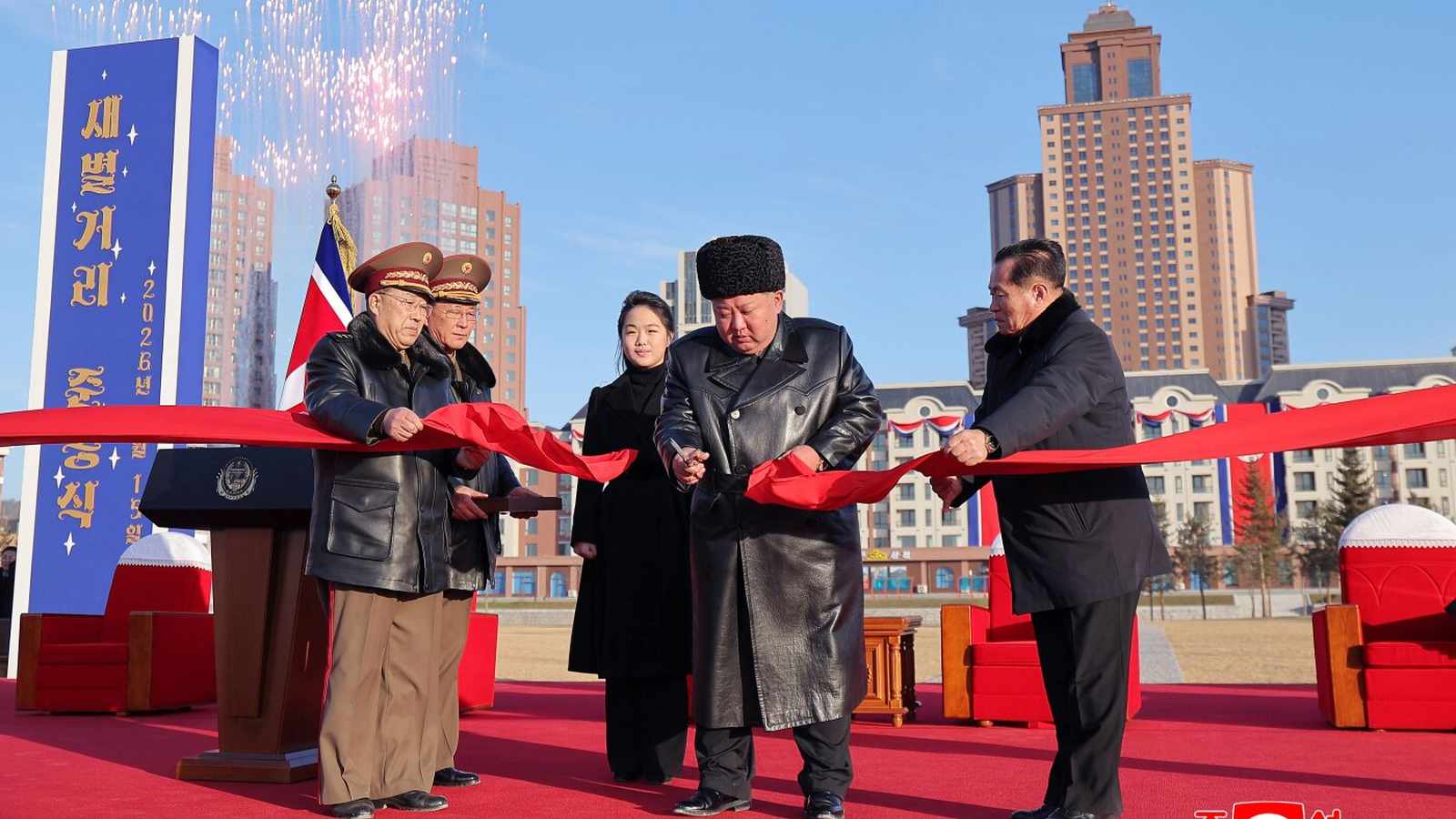
PYONGYANG (Azat TV) – North Korean leader Kim Jong-un yesterday inaugurated a newly constructed street of homes in Pyongyang, Saeppyol Street, dedicated to the families of soldiers killed while supporting Russia’s ongoing war against Ukraine. This highly publicized event, reported by state media on Monday, February 16, 2026, underscores Pyongyang’s deliberate efforts to legitimize its significant military contributions to Moscow and bolster internal unity amidst mounting casualties.
The ceremony, which saw Kim Jong-un accompanied by his teenage daughter, Kim Ju-ae – widely speculated to be his successor – marks a notable public acknowledgment of the human cost of North Korea’s strategic alliance with Russia. Photos released by the official Korean Central News Agency (KCNA) depicted Kim touring the new apartments and speaking with what appeared to be family members of fallen soldiers, with his daughter standing nearby. This public display, analysts suggest, is a calculated political maneuver ahead of an upcoming party congress, aimed at showcasing tangible state support for the sacrifices made.
Pyongyang’s Public Acknowledgment of Fallen Soldiers
During the inauguration, Kim Jong-un delivered a speech emphasizing the nation’s gratitude and support for the soldiers and their families. While the KCNA report did not explicitly mention Russia, Kim’s remarks, released by state media, glorified the ‘heroic martyrs’ who ‘defended the most sacred things by sacrificing their most valuable things.’ He expressed a desire for the bereaved families to ‘take pride in their sons and husbands and live happily,’ hoping the new homes would bring ‘some small comfort.’ This rhetoric aligns with Pyongyang’s intensified propaganda efforts in recent months, which have included establishing a memorial wall and building a museum dedicated to troops deployed to the conflict.
North Korea’s Support for Russia and Estimated Casualties
North Korea has reportedly deployed thousands of troops to fight alongside Russian forces in Ukraine. South Korean and Western intelligence agencies have indicated that this deployment has resulted in significant casualties. South Korea’s National Intelligence Service last week estimated that roughly 6,000 North Korean troops have been killed or wounded during their involvement, a revision from their previous estimate of about 600 fatalities last year. In return for its military assistance, North Korea is understood to be receiving substantial financial aid, military technology, and critical supplies of food and energy from Russia, according to various analysts.
Strategic Motivations Behind the Housing Project
Analysts view the inauguration of Saeppyol Street as a carefully orchestrated political move designed to serve multiple strategic objectives. Hong Min, an analyst at the Korea Institute for National Unification, described the timing as a ‘highly calculated political move to justify its soldier deployment’ ahead of a crucial party congress. The public display of concrete compensation to the families of fallen soldiers acts as a ‘symbolic showcase,’ aimed at bolstering internal unity and curbing potential public discontent over the undisclosed number of casualties. This initiative also serves to overtly legitimize North Korea’s participation in Moscow’s war, reinforcing the narrative of a nation united in its strategic partnerships.
The public unveiling of housing for families of soldiers killed in the Russia-Ukraine war represents a pivotal moment in Pyongyang’s domestic and foreign policy, signaling a firm commitment to its alliance with Moscow while simultaneously attempting to manage the social and political implications of its military involvement on the home front.