


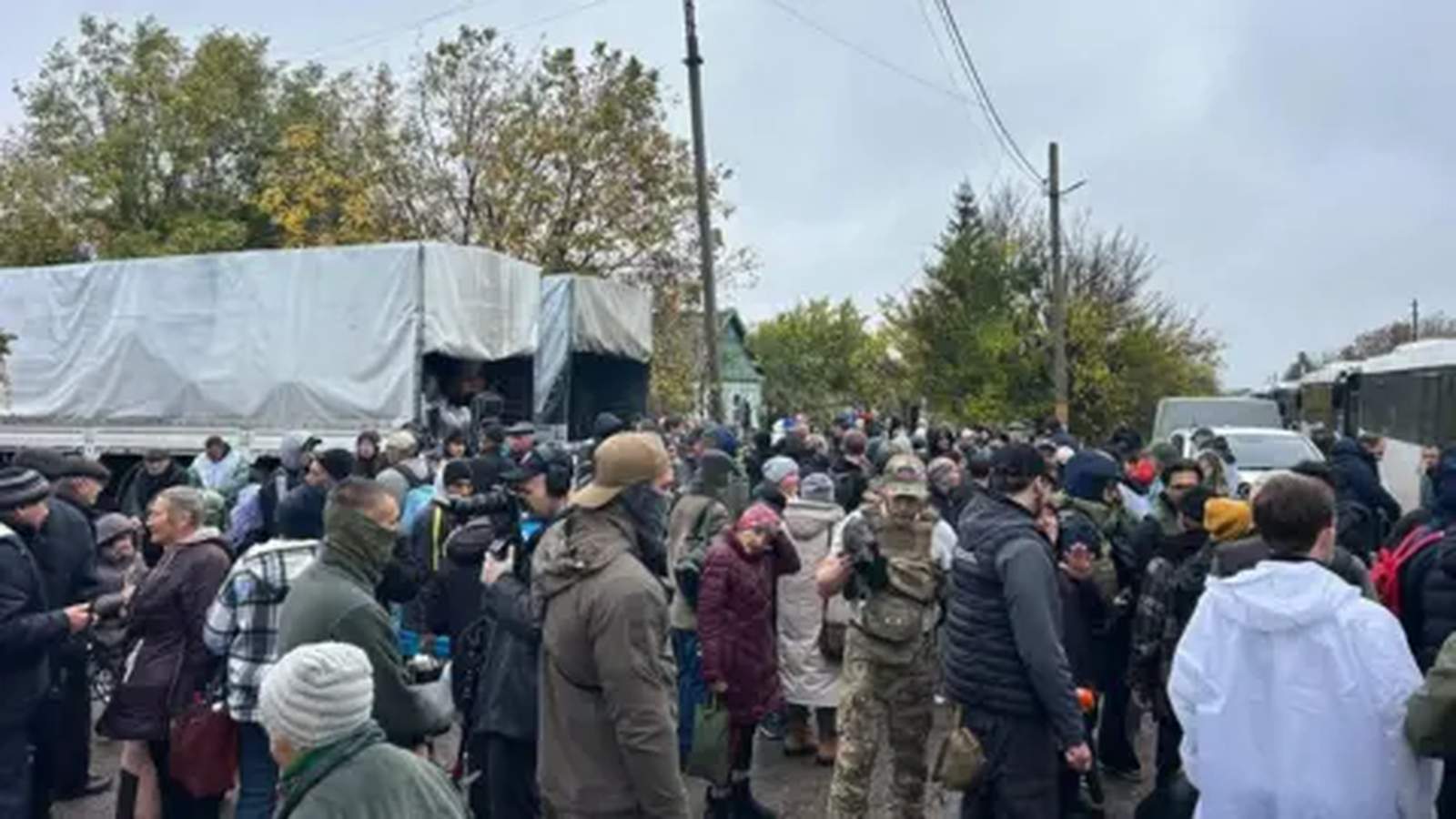
The evacuation of the Russian-occupied Ukrainian city of Oleshky is under way following a localized ceasefire brokered by US First Lady Melania Trump, BBC reported on October 30, 2026. The four-hour window allowed residents to leave via a cleared road corridor, utilizing a convoy of 25 buses and ambulances for those with limited mobility, while several hundred chose to remain despite severe infrastructure shortages.
Ukraine’s human rights ombudsman Dmytro Lubinets and his Russian counterpart Yana Lantratova traveled to Oleshky together on Friday, October 30, marking a historic high-level interaction amid the broader conflict. Evacuees are traveling through Russian-occupied territory to Anapa, flying to Gomel in Belarus, and crossing into Ukraine’s Chernihiv region.
Humanitarian Operation and Logistics
Under the terms of the temporary agreement, the ceasefire has been in force across the Kherson frontline region since Tuesday. The arrangement allowed deminers to clear the road out of Oleshky. A convoy of 25 buses was brought in to accommodate up to 750 departing residents until 14:00 local time, alongside dedicated ambulances for individuals with limited mobility.
Despite the opening of the corridor, several hundred residents chose to remain behind in the devastated town, which has endured extensive infrastructure collapse and a total lack of gas, electricity, and running water. Ukraine’s human rights ombudsman Dmytro Lubinets stated that everyone wishing to leave was provided safe passage, while those staying behind would be eligible for incoming humanitarian assistance.
Russia announced that it had prepared dozens of tons of aid for remaining residents, including food, medicine, hygiene products, and fuel for generators. However, many locals cited personal attachments or logistical hurdles, such as pets, as reasons for staying. Olena, a former resident now living in Kyiv, told the BBC that her elderly family members refused to leave, noting the extreme conditions locals face, including transporting the wounded and deceased in garden wheelbarrows due to destroyed infrastructure.
Before this temporary window, life in Oleshky had deteriorated severely. Following the destruction of the nearby Kakhovka Dam in June 2023, which flooded an estimated 90 percent of the municipality, the city transformed into an isolated combat zone. Prior to the evacuation, the population had plummeted from around 24,000 residents down to fewer than 2,000 people, including approximately 50 children. For months, residents faced an absence of basic supplies, with local administrators noting that successful food deliveries had ceased entirely, forcing remaining citizens to endure starvation conditions, constant drone attacks, and artillery shelling.
High-Level Visit and Political Repercussions
The joint visit by Dmytro Lubinets and Russian counterpart Yana Lantratova marked the first time a Ukrainian official has traveled to Russian-occupied parts of Ukraine since the full-scale invasion began in February 2022. Traveling from Armiansk in Russian-occupied Crimea, the ombudsmen inspected the evacuation points and met with local residents.
While Lubinets defended the cooperation as necessary to save civilian lives, the high-profile interaction drew mixed reactions within Ukraine. Some critics recoiled at seeing a Ukrainian state representative standing alongside an official of the occupying power responsible for widespread devastation. Furthermore, civil society observers highlighted that some residents expressed deep anxiety over the evacuation process, fearing potential coercive screenings and filtration interrogations while traveling through Russian-controlled territories.
Frontline Stakes and Broader Implications
The temporary truce is scheduled to remain in force until the end of Sunday, November 1. While Kherson residents expressed joy at experiencing days of relative peace, observers and local residents have voiced concern that the pause may allow Russian forces to reinforce their military presence along the Dnipro riverbanks ahead of a potential renewed assault.
The Kremlin clarified that the humanitarian evacuation in Oleshky does not signal a willingness to extend the ceasefire to other sectors of the front. Meanwhile, international analysts and Ukrainian observers suggest the arrangement serves to project humanitarian intent and provide a diplomatic boost to Washington ahead of upcoming midterm elections, while foreign journalists invited to the area observe the unfolding logistics.