


A Legacy of Endurance
Mike Burton, a three-time Olympic swimming champion and a trailblazer in distance swimming, has died at age 79, according to his son, Eric Burton. The younger Burton announced the passing on Facebook, noting that his father had been suffering from a long, “grueling battle with Alzheimer’s and dementia.”
Born in Des Moines, Iowa, in 1947, Burton’s path to athletic greatness was forged through adversity. At age 12, a severe accident involving a truck while he was cycling left him with injuries that rendered contact sports like football and baseball impossible. He pivoted to swimming, a decision that would define his life and influence the sport for decades. He moved to California at age one, eventually becoming a collegiate standout at UCLA, where he captured five NCAA individual titles.
Olympic Dominance
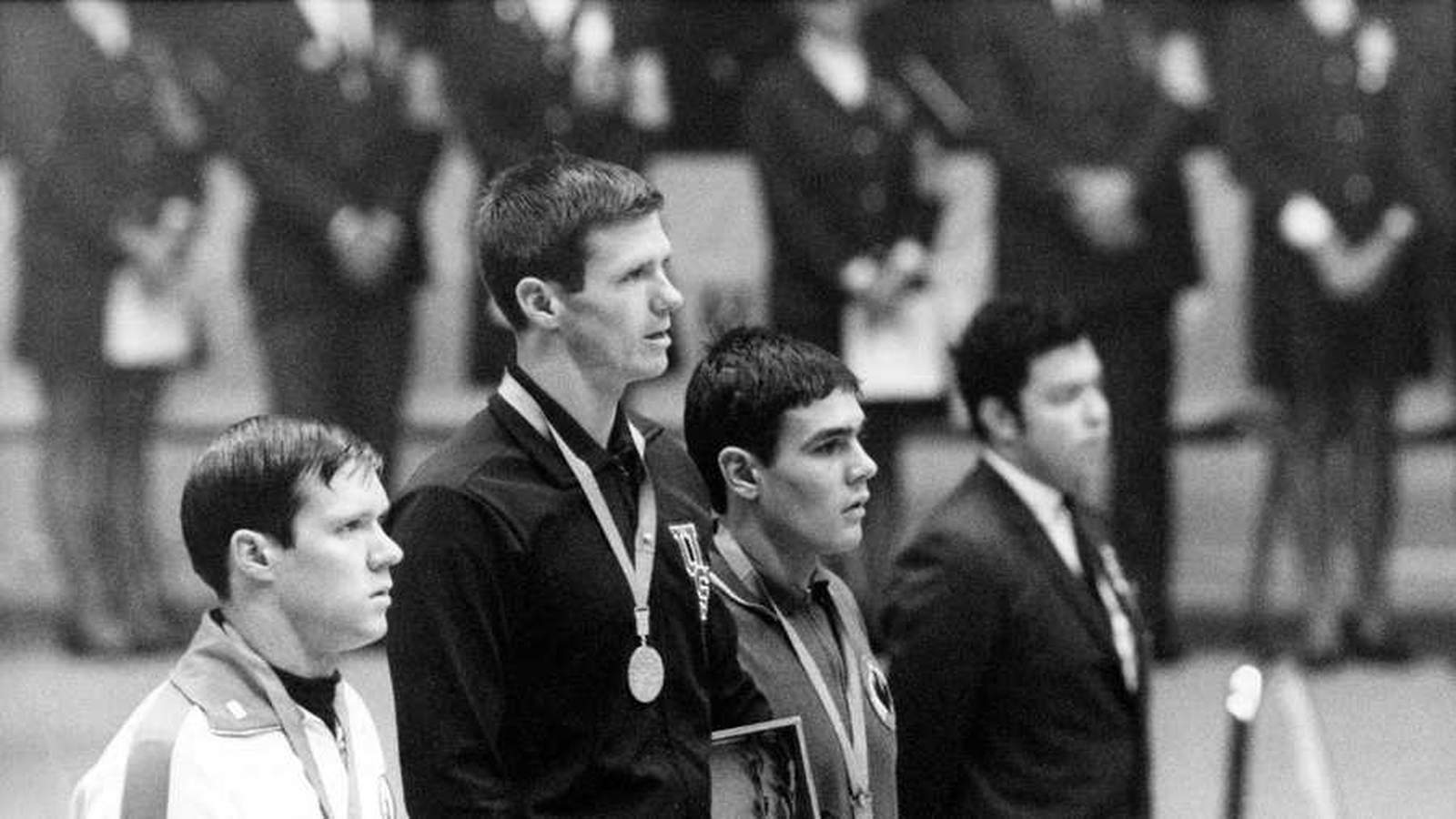
Burton’s international career was defined by his unprecedented command of the distance freestyle events. At the 1968 Mexico City Olympics, he overcame illness to win gold in the 400-meter freestyle and the 1,500-meter freestyle. His victory in the 1,500-meter event, where he defeated teammate John Kinsella by 18 seconds, remains one of the most decisive margins in the history of the event.
He defended his 1,500-meter title at the 1972 Munich Olympics, setting a world record of 15 minutes, 52.58 seconds. This repeat performance was particularly remarkable given that he had struggled with a vitamin deficiency during the spring trials and barely qualified for the U.S. team. His feat of consecutive 1,500-meter gold medals was not replicated by an American until Bobby Finke achieved the same at the 2020 and 2024 Games.
Innovating the Sport
Beyond his medal count, Burton is remembered for pioneering training methodologies that emphasized high-mileage regimens to maximize cardiovascular endurance and stroke efficiency. His approach, which prioritized aerobic capacity, became a blueprint for future distance stars, including four-time Olympic champion Janet Evans.
Following his competitive career, which included being inducted into the International Swimming Hall of Fame in 1977, Burton continued to influence the sport as a coach in Iowa, Washington, and Montana. He leaves behind a legacy of resilience, having transitioned from a life-altering childhood accident to the pinnacle of global athletics.