


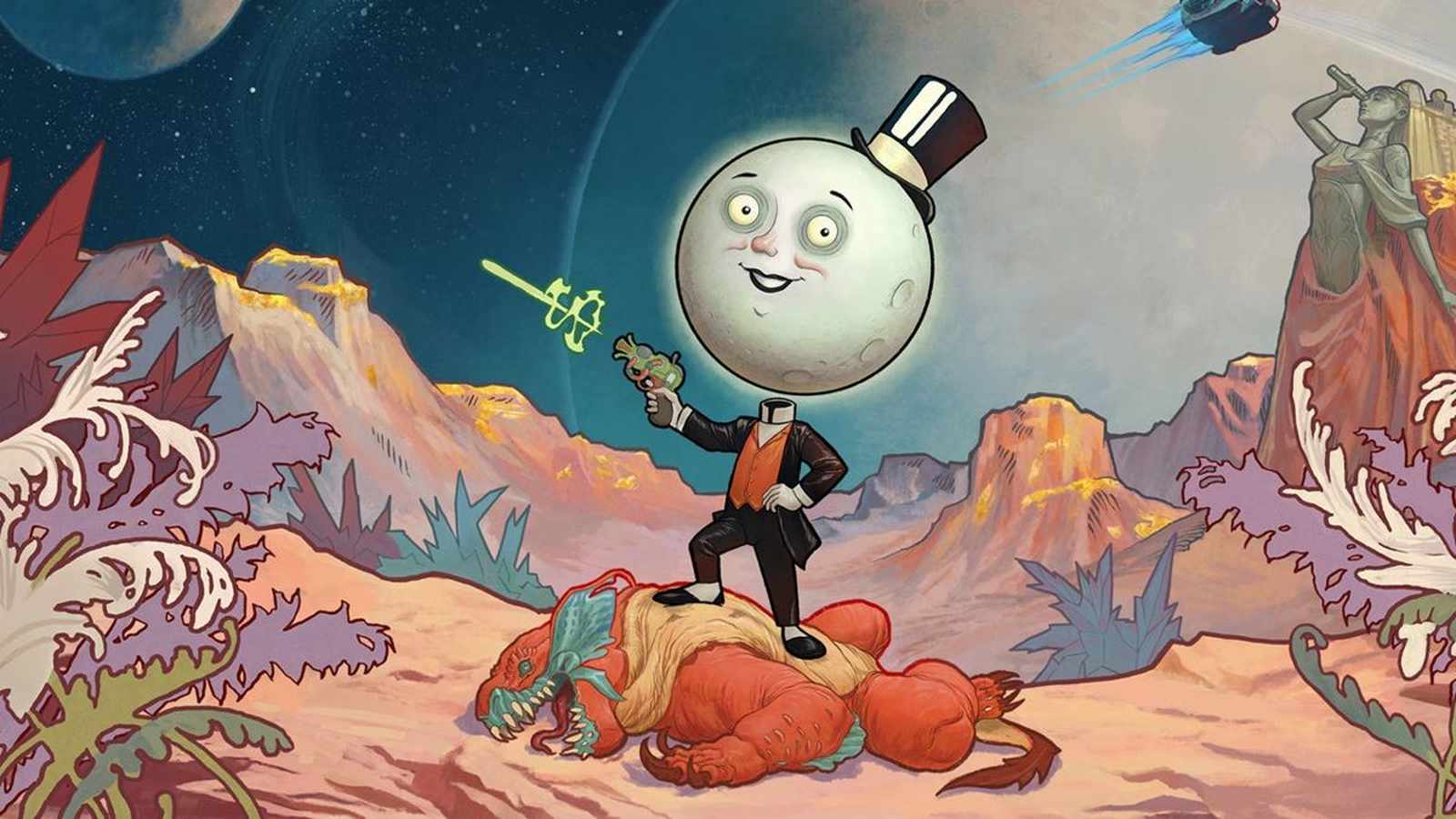
The Satirical Galaxy: Where Capitalism Meets Cosmic Chaos
Step into Arcadia, the setting of The Outer Worlds 2, where the stars aren’t just distant lights—they’re billboards for corporate greed. Obsidian’s sequel launches players into a dystopian galaxy where profit reigns supreme, and every planet feels like a strip mall stretching across the cosmos. If Star Trek showed us a hopeful future, The Outer Worlds 2 offers the darker flipside: a universe where corporations hold the keys to power, and your choices ripple through a system built on exploitation and farce (IGN).
The story takes players far beyond the Halcyon system of the first game, introducing Arcadia—a new region with fresh planets, factions, and dilemmas. The game’s signature satire is still present, but the tone has shifted toward a more grounded, politically charged narrative. Gone are the days of one-dimensional villains; now, every organization is a shade of gray, and deciding which flawed faction deserves your allegiance is anything but simple.
Companions and Factions: Complex Relationships in a Ruthless World
What sets The Outer Worlds 2 apart isn’t just its worldbuilding, but the way it weaves faction politics and companion dynamics into your journey. Each companion represents a different slice of Arcadian society. Tristan, the armored enforcer, embodies the oppressive justice of the Protectorate, while Inez, the entrepreneurial medic, is a walking advertisement for unfettered capitalism. These characters don’t just tag along—they challenge your choices, spar with each other, and push you to confront your own values.
The developers have made clear efforts to increase diversity and representation. The character creator offers a wide range of skin tones, hairstyles—including detailed afro-textured options—and even prosthetic limbs, giving players more freedom to reflect themselves in the game world (Gayming Magazine). While body diversity could go further, the inclusion of these options signals a step toward a more inclusive RPG experience.
Dialogues are sharp, often funny, and occasionally biting. The game’s humor never crosses into crass territory, maintaining a balance between witty banter and serious reflection (Radio Times). There’s even queer representation among companions, though some fans might miss the asexual character Parvati from the previous installment.
Moral Dilemmas and Meaningful Choices
The heart of The Outer Worlds 2 is its web of difficult decisions. Early hours are spent on a revenge quest that feels slow and underwhelming, but once the political machinations kick in, the stakes rise dramatically. You’ll find yourself torn between factions like Auntie’s Choice—a monopolistic pseudo-government masquerading as freedom—and the openly fascistic Protectorate, both vying for control over planets and populations.
Even the seemingly benevolent Order of the Ascendant, which guides humanity through science and predictive models, is not above committing atrocities to avoid foreseen disasters. Every choice carries weight, and there are no truly good answers. Saving innocents might lead to unintended consequences, and the game rarely spells out the significance of your decisions until you’re forced to live with them.
This isn’t just narrative window dressing. The game’s flaw system takes your playstyle and personality quirks, turning them into permanent, gameplay-altering traits. Steal too much and you might become a kleptomaniac, gaining perks but risking trouble with locals. Skip dialogue and you’ll have less time to make choices, trading speed for chaos. These flaws aren’t reversible, making each playthrough uniquely shaped by your actions.
Combat, Exploration, and Accessibility: Improvements and Frustrations
Combat has taken a leap forward since the first game. Gunplay is snappier, mobility enhanced with slides and double jumps, and weapon variety feels tailored to the game’s offbeat universe. From silent shotguns that melt enemies to guns that grow stronger with each kill, the arsenal rewards creative problem-solving and experimentation (IGN).
Customization is deeper, with mods for weapons and armor that let you tweak elemental resistances or trade raw damage for explosive rounds. Still, not everything shines: enemy variety is disappointingly thin, with recycled creature types and finite enemy placements that can leave large areas feeling lifeless after a few hours. The menu system also struggles with clutter, making navigation and gear management a chore, especially for those who love micromanaging their loadouts (Radio Times).
Exploration remains a highlight. Each planet is ruled by different factions, creating distinct atmospheres and challenges. From snowy monasteries to jungle backwaters, environments invite curiosity and reward thorough investigation with side quests, loot, and memorable encounters. Accessibility options are expanded, though there’s room for more features, especially for players seeking easier combat or more body diversity in the character creator (Gayming Magazine).
Replayability and Player Agency: Why You’ll Want to Return
The RPG progression is addictive, with skill points and perks forcing tough choices about your character’s development. Only fifteen perks are available before hitting the level cap, making each decision feel impactful. The flaw system, in particular, encourages multiple playthroughs, as different quirks and consequences shape your experience in unpredictable ways.
Companions evolve over the story, deepening relationships and shifting allegiances based on your actions. Some, like Niles and Valerie, might feel flat at first, but as the narrative unfolds, their roles become clearer and more meaningful. The absence of romance options may disappoint some fans, but the richness of dialogue and character interaction more than compensates.
Side quests and optional content abound, often leading to unexpected stories or moral quandaries. The game doesn’t always signpost major turning points, so attentive players will be rewarded—and surprised—by how their choices echo throughout Arcadia.
Final Verdict: A Corporate Dystopia Worth Exploring
The Outer Worlds 2 doesn’t reinvent the wheel, but it polishes Obsidian’s RPG formula to a high shine. With sharper satire, deeper moral dilemmas, and an expanded cast, the sequel draws players into a galaxy where every decision matters. The slow start and repetitive enemies may frustrate, but the payoff in political intrigue and meaningful character development is worth sticking around for.
For fans of Fallout-style RPGs and newcomers alike, The Outer Worlds 2 is a game that begs to be played—and replayed. Its blend of humor, consequence, and diversity makes it one of the most compelling single-player experiences in recent memory. Just remember: in Arcadia, the price of freedom is never cheap, and every choice leaves a mark.
Obsidian’s latest effort proves that even in a universe dominated by corporations and moral ambiguity, player agency and thoughtful worldbuilding can create an RPG experience that lingers long after the credits roll. The Outer Worlds 2 doesn’t just satirize our world—it challenges us to shape it, one imperfect choice at a time.