


A Milestone Nomination
As of mid-November 2026, the Baseball Writers’ Association of America (BBWAA) has officially mailed out the 2027 National Baseball Hall of Fame ballots to its voting members. Among the 14 newcomers added to the list is former San Francisco Giants third baseman Pablo Sandoval, as reported by Heavy. While the nomination itself is a significant professional honor—a recognition afforded to only a fraction of those who have ever played in Major League Baseball—it arrives with the clear understanding that Sandoval’s path to Cooperstown remains statistically narrow.
Sandoval’s inclusion on the ballot coincides with his formal retirement from professional baseball, a transition made possible by the fact that he had not appeared in an MLB game since July 2021. He joins fellow San Francisco icon Buster Posey on the 2027 ballot, though the two players face vastly different electoral prospects. While Posey is widely expected to secure the necessary support for induction, analysts widely anticipate that Sandoval may struggle to reach the 5% threshold required to remain on the ballot for subsequent years, according to The Athletic.
The Paradox of Peak Performance
The core of the discussion surrounding Sandoval’s candidacy is the stark contrast between his cumulative career statistics and his legendary postseason production. Over a career that spanned stops with the Giants, the Boston Red Sox, and the Atlanta Braves, Sandoval finished with a .278 batting average and 153 home runs. These figures, while respectable, do not align with the standard benchmarks typically required for Hall of Fame induction.
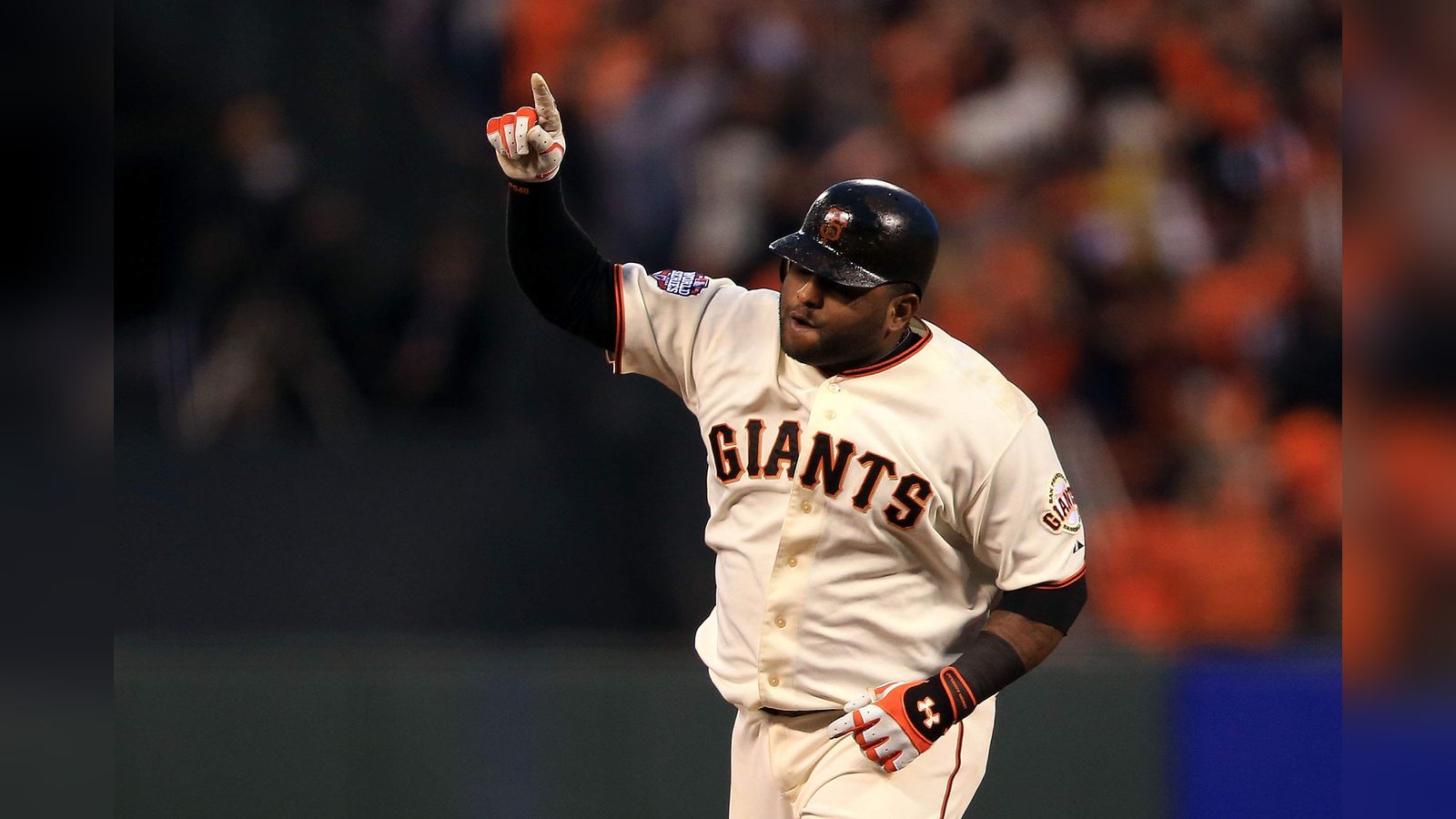
However, Sandoval’s legacy is defined by his extraordinary ability to elevate his game during the most pressurized moments of the baseball calendar. His performance in the 2012 World Series serves as the primary exhibit for his supporters. In Game 1 of that series, Sandoval famously hit three home runs—two of which were against Detroit Tigers ace Justin Verlander—placing him in an exclusive club alongside legends like Babe Ruth, Reggie Jackson, and Albert Pujols. As noted by The Athletic, Sandoval is the only player in that specific group who will not have a plaque in Cooperstown.
Dynastic Contributions and Market Realities
Sandoval was a cornerstone of the San Francisco Giants’ dynasty throughout the 2010s, appearing in all three of the franchise’s World Series victories. His impact extended beyond the 2012 MVP performance; in the 2014 series against the Kansas City Royals, he maintained a consistent offensive presence, recording multiple hits in every victory. Across eight World Series wins, Sandoval hit .545, a statistic that underscores his reputation as a clutch performer.
His career trajectory also includes a significant, though often criticized, five-year tenure with the Boston Red Sox. The contract, valued at $95 million, accounted for the vast majority of his career earnings but failed to produce the consistent output expected in a high-pressure, unforgiving market. The subsequent return to San Francisco, where he was embraced by fans who remembered his peak years, highlights the complex relationship between regional legends and national historical standing.
Evaluating the Legacy
The Hall of Fame voting process inherently favors long-term statistical dominance and sustained excellence over the course of nearly two decades. While Sandoval’s peak moments are undeniably among the most memorable in the modern era, they do not constitute a career-long body of work that meets the criteria set by BBWAA voters. For many observers, Sandoval’s time on the ballot serves as a necessary, albeit brief, opportunity to commemorate his contributions to Giants history. His candidacy highlights a recurring theme in baseball history: the distinction between a player who is a “legend” within a specific franchise and a player whose broader career warrants the highest honor in the sport. As the voting results are tallied, the focus will likely remain on his postseason heroics, cementing his place in the folklore of the Bay Area even if it does not translate into an induction.